Defensive Pessimism When Planning for Success

Posted on:

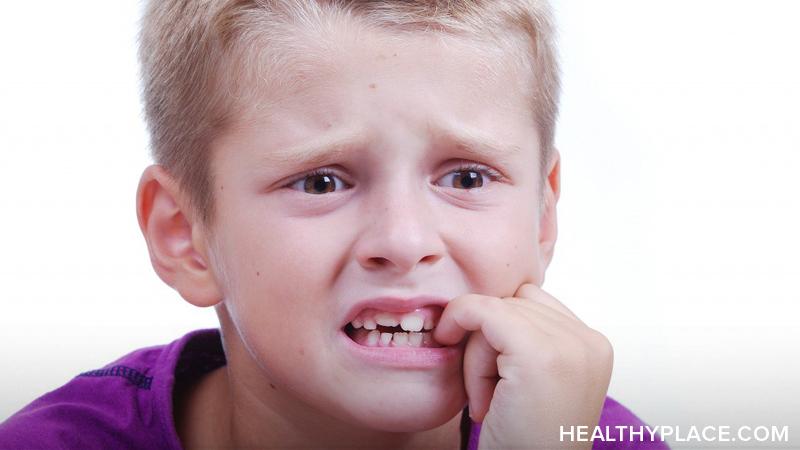
Pessimism is a trait usually associated with negativity and a cynical outlook. But did you know there is another type of pessimism that can play a role in planning for success? Defensive pessimism, as it's called, is a strategy that offers an alternative approach to navigating all the unexpected circumstances life may present.

Defensive Pessimism and Worst-Case Scenarios

In contrast to the ever-optimistic outlook of positive thinking, defensive pessimism is a coping technique that involves setting low expectations and imagining worst-case scenarios, irrespective of how successful previous achievements were. The aim is to reduce anxiety and the pressure of always doing things perfectly.1

You would be forgiven for thinking that images of worst-case scenarios might cause anxiety, not reduce it. Indeed, worrying about things uncontrollably caused me a great deal of apprehension and stress in the past. But the idea behind defensive pessimism is that by envisioning all the possible things that could go wrong, we can prepare effective counteractive measures to deal with them.

For example, imagine entering an important examination with only one pencil. If the pencil breaks and there is nothing else to write with, the exam is as good as over. But by visualizing this situation beforehand and preparing two or three pencils, we have something to fall back on. Likewise, picturing an exam paper filled with difficult questions might motivate us to study harder. Studying hard before an exam is a way of overcoming personal limitations and improving our chances of success.

Isn't Defensive Pessimism Just Common Sense?

When I first read about defensive pessimism, I thought, "Isn't this all just common sense? How is this any different from how I do things already?"

If the weather report says it will rain, I take an umbrella to avoid getting wet. When hiking, I wear sturdy boots to avoid twisting my ankle. But while there appears to be some overlap between the two, there are also distinct differences.

The Merriam-Webster dictionary defines common sense as "sound and prudent judgment based on a simple perception of the situation or facts."2

However, defensive pessimism goes beyond the practicality and rational decision-making of common sense. It encourages us to intentionally focus on avoiding adverse outcomes so that we can plan accordingly, even when common sense might suggest a more optimistic outlook. When used in this way, it can make life less stressful and increase our confidence, especially as it relates to the ability to manage whatever upsets life may throw our way.3

How I Utilize Defensive Pessimism

Much of what I do is very similar to defensive pessimism. I anticipate and deal with potential problems by planning ways to cope with them in advance. Whenever I picture an obstacle or the inherent uncertainty in any situation, I devise a way to deal with it. Doing so helps me channel my energy from focusing on the negative toward proactive planning. However, deliberately setting low expectations is neither intuitive nor easy for me. I must keep working on this if I really want to take full advantage of defensive pessimism.

Making Defensive Pessimism Work for You

Despite being based on negative expectations, defensive pessimism is not about being controlled by the fear of failure. On the contrary, it is part of having a desire to succeed. It prompts us to actively avert unfavorable outcomes by creating backup plans and alternative courses of action.

Balancing negative expectations with positive effort empowers us to stay one step ahead, adapt to changing circumstances, and increase our chances of achieving positive outcomes.

Sources

  1. Skedel, R. (2022, December 5). Defensive Pessimism: Definition & Effectiveness. Choosing Therapy. https://www.choosingtherapy.com/defensive-pessimism/
  2. Merriam-Webster Dictionary. (n.d.). Definition of common sense. Retrieved July 19, 2023, from https://www.merriam-webster.com/dictionary/common%20sense
  3. BetterHelp Editorial Team. (2023, May 30). What Is Defensive Pessimism, And Is It Healthy? BetterHelp. https://www.betterhelp.com/advice/pessimism/what-is-defensive-pessimism-and-is-it-healthy/

How to Tell Your Loved Ones About Your Trauma

Posted on:

Talking about trauma is not an easy feat. But if you're constantly reliving a specific traumatic event or cycling through negative thoughts surrounding the trauma, confiding in a trusted loved one can help you feel less alone. A supportive community is integral to trauma recovery, and you don't have to go through it all alone. You can tell about your trauma.

Telling About Your Trauma and Pushing Past Shame

Telling people you trust about your trauma can help alleviate the burden you carry, but the act of sharing can also stir up a lot of shame. When I first opened up to a high school boyfriend about my childhood sexual assault, I was met with disgust. Eventually, he even held the assault over my head as a form of blackmail during an argument, threatening to tell the entire school — as if it was something I should be ashamed of. This made me never want to tell about my trauma again.

However, I knew I had simply confided in the wrong person. I knew those closest to me would love, respect, and support me if I explained what had happened and how it was impacting me presently. Eventually, I found the courage to speak up again; it was through doing so that I was able to shed my shame, build a supportive community, and begin to heal.

Telling Loved Ones About Your Trauma

You are under no obligation to talk about your trauma; you don't owe anyone your story. But if you feel the desire to share, opening up to the right people can make all the difference.

When I finally decided to tell my family and close friends about my childhood assault, I was shaking every time I sat down to do it. My hands were quivering, my voice was breaking, and my heart felt like it was going to burst out of my chest from beating so hard. But those who love and care about you will not judge you; they'll want to hear you, understand you, and help you in any way they can. 

If I hadn't opened up about my trauma, I never would have sought therapy for it. I never would have understood why dating and intimacy were such challenges for me. I never would have worked through my self-esteem issues or been able to function in my everyday life.

The people in your life — your community of loved ones — are there to support you. Let them listen to you. Let them love you. Let them hold your hand while you heal yourself. 

The Difference Between Tough Love and Verbal Abuse

Posted on:

You may hear the term "tough love" thrown around in conversation. While tough love isn't always verbal abuse, it can sometimes cross the line. Knowing the difference between tough love and verbal abuse can help you refrain from using verbal abuse or being the recipient in a verbally abusive situation

Is Tough Love Verbal Abuse? 

When I think of tough love, I am transported back to my childhood. Having a strict parent was the norm when I grew up long ago. The way society saw discipline was not as many individuals do now. 

Although the premise of tough love is to allow an individual to be responsible and solve a problem on their own, that isn't always the case. In my experience, the tough love of years ago also included verbal abuse as a necessary component to force action by the recipient. 

For discipline to be considered verbally abusive, it may possess the following: 

  • Personal insults
  • Put-downs
  • Threats
  • Yelling or screaming
  • Throwing or hitting items

Individuals may use one or more of these verbally abusive tactics to enforce their tough love on someone. Unfortunately, I've been on the receiving end of many verbal assaults disguised as tough love or strict discipline. Rather than motivate me to do something, it gave me anxiety, depression, and an unhealthy way of looking at love

Can Tough Love Be Effective Without Verbal Abuse? 

Naturally, there are ways to show tough love to someone without being verbally abusive. As a mother of four children, I quickly realized that not every method of handling my kids would work for all of them. I remembered how I felt as a child with tough love and didn't want that for my kids. 

If you are searching for a better way to communicate tough love in your relationships without using verbal abuse, there are alternatives. However, for tough love to work and avoid using verbally abusive tactics, it should come from a person who genuinely cares for the recipient and follows positive reinforcement instead. 

A healthy way to show tough love includes: 

Remember that verbal abuse has no place in a relationship, especially as a tactic for motivating change in a person. The old saying, you catch more flies with honey than vinegar reflects how tough love can be effective. When you use supportive methods that show you care, the recipient is more likely to respond favorably to you. 

Schizoaffective Anxiety Spike Over Upcoming Surgery

Posted on:

I have an extreme case of schizoaffective anxiety, and I’m preparing for major surgery. I’m getting knee replacements in both knees--one at a time. This anxiety spike about surgery is multi-faceted.

A Surgery-Related Anxiety Spike Is Partially About Not Taking Certain Medications Before Surgery

I’m on a lot of medication for my schizoaffective disorder, and I was afraid I’d have to refrain from taking any of it the night before the surgery--not a great idea for me. That’s what happened when I got surgery for a meniscus tear in my left knee. Luckily, I don’t have to do that this time.

I do have to stop taking my birth control pills a week before the first surgery on my right knee. I have to stop taking them because of the possibility of blood clots forming while I’m first recovering and not moving around. This concerns me because I may get my period that week, and I don’t know how I’ll be at cleaning up because I can’t take baths--I can’t get in and out of a bathtub with my knees in such pain or right after surgery. I’ll take showers, but baths are just better than showers as the way for me to clean up during my period. I don’t get my period on the birth control I’m on. I’m also concerned about this medication change because birth control pills help regulate my mood during my cycle.

Physical Therapy After Surgery Is Creating an Anxiety Spike 

Another thing I’m worried about is physical therapy. For the first two weeks after I come home from the hospital, someone will come to my apartment twice a week to coach my physical therapy, and then I’ll go to the clinic for it until the beginning of October. Physical therapy is what I’m most worried about because it’s so important.

Since my car is parked a couple of blocks away and I can’t walk that far, I’ll have to take an Uber to therapy. There’s another taxi service near where I live, but the last time I tried them, they didn’t show up. I’m nervous about taking an Uber because I’ve never done it before. What if they don’t show up, either? I am aware this is a what-if situation, but anxiety is all about exaggerating the worry of what-ifs.

There are some days my husband, Tom, can drive me. He has a day off during the week, and the schedule is rock solid. I’m a little concerned about the days he’s driving me to physical therapy for early evening appointments after he gets out of work. I’m afraid he’ll be running late and won’t be able to take me. Tom and I discussed this, and if he’s going to be too late to take me to physical therapy, he’ll let me know, and I’ll call an Uber. Ugh, I don't like the idea of more Ubers. Ugh, I don't like more surgery anxiety spikes.

My mom said she’d also try to help with driving me to physical therapy.

So, with all these ups and downs about getting to physical therapy, you’d think I’d be happy about the therapists coming to the apartment. Well, I am, except that it means we have to clean. I’m sure we’ll figure that out. I’m sure we’ll figure all of this out. All I’m doing is projecting, jumping to conclusions, and catastrophizing. I'll give it one more try. Along with my support team, I’ll figure it out.

Have you experienced anxiety spikes because of surgery? Share with me below.

Practicing Mindfulness Helps Anxiety

Posted on:

Mindfulness can be a helpful tool for coping with anxiety. Mindfulness is something I have become more familiar with and increasingly utilized over the years as I have practiced it as a strategy for managing my anxiety.

When I am anxious, my immediate stress response includes an increase in my heart rate. I also typically start shaking and trembling. I tend to feel tense throughout my body, I start sweating, and I may even feel dizzy. I also become agitated and sometimes even experience a need to escape my surroundings.

How Mindfulness Helps Anxiety

So how does mindfulness help me? First, I will say that practicing mindfulness meditation, specifically, tends to be very beneficial in my experience. However, I also know I do not always have the opportunity to retreat into a quiet area where I can experience several minutes of peace and calm.

And therefore, being mindful on a daily basis and intentionally using mindfulness when I am anxious can help reduce my anxiety symptoms. Additionally, something I have found is that by practicing mindfulness every day, I have been able to turn to this strategy when I experience stress unexpectedly and I feel overwhelmed by the physical signs of anxiety.

In other words, practicing mindfulness has helped to reduce my emotional reactivity. I've found that, since intentionally using mindfulness strategies, I am less reactive and better equipped to approach a stressful situation logically.

Lastly, mindfulness pertains to focusing on the moment. This is in contrast to anxiety, which, by its nature, is associated with worrying about what might happen in the future or focusing on difficult memories in the past. When I practice mindfulness, I focus on the present instead, not on what happened before or what might happen tomorrow.

How I Practice Mindfulness to Reduce My Anxiety

While it may be ideal in many situations to take the time to meditate, being mindful throughout the day and in stressful situations can have many benefits. These are how I practice mindfulness each day:

  1. The first thing I learned to do was focus on my breath. As I have learned, it is always there, present, and something I can access. So, something that I practice every day is focusing on my breathing.
  2. By focusing on my breathing, I can slow down and focus on what my senses are taking in from the world around me. This allows me to stay in the present moment.
  3. Lastly, when my mind wanders, I bring it right back to the current moment and focus on my breath. Any thoughts I have, whether positive, negative, intrusive, or troubling, I allow to pass by without judgment and without dwelling on them, and I bring my focus back to breathing.

I have found mindfulness to be impactful in helping manage my anxiety. Below, I've shared a video in which I discuss the positive benefits of mindfulness.

Is this something you practice? If so, share your mindfulness strategies in the comments below.

The Link Between Addiction and Teenage Drinking

Posted on:

I left the UK to undergo alcohol treatment in South Africa, so it was inevitable that this would alter my perspective somewhat. However, after spending more time in this new environment, several striking realizations about the UK's negative relationship were crystal clear. After talking to numerous people from the same country and background, there was a common thread of early exposure to alcohol having long-lasting consequences. In short, I learned that teenage drinking can lead to addiction.

My Teenage Drinking Led to Addiction

Like many people who fall into addiction, I was a bit of a loner growing up. I had friends and tried to integrate with my peers, but it never clicked. And then adolescence landed like a tidal wave. I had two options: keep going down that lonely road or make changes to enjoy life more. For better or worse, I went with the latter option. Little did I know that I was unconsciously embarking on a journey that would lead to alcoholism years later.

Social awkwardness and alcohol go hand-in-hand for me. At first, I couldn't handle my booze and frequently became sick after drinking even small amounts. With a bit of practice, however, this went away.

I recall the lightbulb moment -- I didn't like being sober. This would eventually come back to bite me severely and repeatedly until I crossed that invisible line between heavy drinking and full-blown alcoholism.

Breaking the Stereotype of the Alcoholic

Unlike other alcoholics, I wasn't moving away to escape from myself -- I was under no illusions of a future with alcohol. However, I wasn't prepared for the cultural surprise that awaited me at the local Alcoholics Anonymous (AA) meetings where I was staying. 

One evening, an 18-year-old shared her story. The concept of someone that young fully accepting her status as an alcoholic was revolutionary to me. Then, slithers of previous conversations with other people flooded my mind:

"You're not a proper alcoholic."

"You're a young lad and will probably be able to have  a few drinks now and again soon."

"You'll never end up like the unfortunate old men who live in . . ."

I found the stereotype of alcoholics, at least in Northern England, had an age limit, which may explain why three Northern regions are the hardest hit for addiction in the UK.1

Alcoholism Forms at Any Age -- Including in Teenagers

When I left the UK, I was 30, so it was astounding that I still fell into this false consensus of others of being too young to be a proper alcoholic. This girl of 18 made me realize I was harboring the same ideas. And that was me unconsciously leaving the door open to alcohol.

Throughout my life, the consistent pattern has been an inability to deal with life. This stunted my personal growth, allowed me to shift blame, and left me angry and bitter. I was an immature person who seemingly invited chaos to mask my rapidly dissolving mental health.

While this is my story, early alcohol exposure is far from a subjective issue.2 I don't have the answers to this problem, but it's clear to me that teenagers who drink often increase their chances of becoming addicts later in life. 

Let's Start Honest Conversations about Teenage Drinking and Addiction

I will state this with confidence -- we're still avoiding the difficult questions and conversations at a societal level around alcoholism and teenage drinking. And I understand why. To many, alcohol isn't a problem. It's legal, so why rock the boat? To others, their relationship with alcohol wouldn't stand up to medical advice, but it doesn't affect their lives. Everyone beyond that I understand the most: they drink too much, and that's no one else's business. 

Alcohol is a drug that enjoys a special exemption. It's a unique club where it's the only member. You're not an addict -- you're an alcoholic. You drink alcohol, but that's not actually a drug. Yet both of those statements are entirely false. 

Let's begin by changing the conversation and understanding that these perceptions can lead to larger problems for teenagers who drink and their later addictions.

Sources

  1. McCambridge, J., McAlaney, J., & Rowe, R. D. (2011). Adult Consequences of late adolescent alcohol consumption: A Systematic Review of Cohort studies. PLOS Medicine, 8(2), e1000413. https://doi.org/10.1371/journal.pmed.1000413

  2. Robinson, M. D., Shipton, D., Walsh, D. A., Whyte, B., & McCartney, G. (2015). Regional alcohol consumption and alcohol-related mortality in Great Britain: novel insights using retail sales data. BMC Public Health, 15(1). https://doi.org/10.1186/1471-2458-15-1

Depression Is a Disability No Matter What Anyone Says

Posted on:

My depression is a disability. In my six years as a mental health blogger, I have often encountered people who believe that depression is temporary and those who cannot overcome it quickly are weak-willed. Despite various depression awareness campaigns, I have noticed that most people still minimize the effects and consequences of depression. These folks are so close-minded that they hang on to myths and misconceptions even in the face of cold, hard facts. It can be impossible to silence such naysayers for those of us who are living with this condition. But even if we cannot silence them, we must not internalize their misconceptions about depression and realize that depression can be a disability.

Depression Is a Disability 

Depression affects everyone differently -- people with it can be high-functioning, medium-functioning, or low-functioning. It is not a stretch to say that depression is a disability. After all, Merriam-Webster defines a disability as, 

"a physical, mental, cognitive, or developmental condition that impairs, interferes with, or limits a person's ability to engage in certain tasks or actions or participate in typical daily activities and interactions."1

As depression prevents one from doing certain activities as effectively as people without depression, it is a disability. While the level of disability may vary from person to person, there is no doubt that depression is a real illness that impacts people everywhere. In fact, the World Health Organization states that,

"Depression is a leading cause of disability around the world and contributes greatly to the global burden of disease. The effects of depression can be long-lasting or recurrent and can greatly affect a person's ability to function and live a rewarding life."2

Take a look at the common symptoms of depression, and I hope you will see how it prevents one from living the life they want. Depression lowers my productivity at work and prevents me from staying in touch with loved ones, which is why I identify as disabled. Doing so does not mean I see myself as a victim; it means I accept the limitations imposed by depression. And then I do what I can with what I have.  

If You Are Disabled by Depression, Be Your Own Mental Health Advocate

Acceptance is crucial because it helps me adopt a realistic attitude and have a flexible work schedule. It also helps me to tune out naysayers who say ignorant things like, "It's all in your head."

The thing is, very few people are going to understand your mental health condition, let alone make the requisite accommodations to help you function. As a result, you have to advocate for yourself as a person who is disabled by depression or any other mental illness. If you don't stand up for yourself, who will get you the help you need to function to the best of your abilities? Ultimately, what matters most is that you validate your mental health struggles and live accordingly. 

Thanks to the stigma around mental health and depression, it is easy to trivialize or invalidate the impact of depression. Watch the video below to know why it is crucial to be your own mental health advocate. 

Sources

  1. Definition of disability. (2023). In Merriam-Webster Dictionary. https://www.merriam-webster.com/dictionary/disability
  2. World Health Organization: WHO. (2019). Depression. www.who.int. https://www.who.int/health-topics/depression

Getting Past the Fear of Feelings

Posted on:

One surprising part of my mental health recovery journey was experiencing heightened emotions. I had successfully dodged painful feelings for years, developing a fear of feeling. But now that I'm recovering, I've felt my emotions more deeply, in almost an overwhelming way. Fear of feeling can be difficult to navigate, but it ultimately enhances my life experiences.

My Fear of Feeling Didn't Stop Me from Feeling

While struggling with my mental illness, it felt as if I had my emotions on mute because of my fear of feeling. This realization was odd for me because whenever I was asked, "What is bipolar?", I often responded that I "feel my highs very high and my lows very low."

That explanation did personally hold true, although it was not all-encompassing.

I thought, "If I am having high highs and low lows, why do I still feel numb?"

In my depression, my mind went vacant, and during mania, I scavenged for this artificial sense of good.

Looking back, I did have deep feelings, often painful ones, during both depressive and manic episodes. Suicidal ideations and intrusive thoughts were frequent visitors. I felt I didn't have these emotions because I numbed intentionally -- blanketing all the "bad thoughts" under unhealthy coping mechanisms.

While working so hard to repress the bad, I ended up suppressing a lot of my positive emotions as well.

Acknowledging the Fear of Feeling

Through the last several years, I've realized just how much emotion I had been repressing. I remember laughing at inappropriate times while others were upset or being told I was cold and unempathetic by people close to me. I know now how much it had hurt me to hear those things, but at the time, I had brushed it off as that's just who I am. 

In full honesty, I was frightened, and I wondered how I could tap into an emotional state and show sympathy. The thought of opening up that way made me feel vulnerable and wildly uncomfortable. Taking on others' emotions on top of the ones I had struggled to bury felt unbearable and unmanageable. 

At the core of who I was as a person -- those actions did not align with me. I hated that version of myself and knew that was not who I was. I was someone who wanted to love those around me. I wanted to feel the heartache that makes joy even more joyful. I wanted to allow myself to fully experience the dark so that I could, in turn, cherish the light.

Don't Fear Feeling, Embrace Feeling

Once I gave myself permission to feel, every emotion felt deeper. While that meant navigating some overwhelming and unpleasant emotions, it also meant I had the opportunity to embrace the positive ones.

It can be terrifying to feel so vulnerable, and the process of learning how to welcome emotions without becoming consumed by them is a skill that takes practice. Journaling, meditating, and therapy became helpful tools for me to find a proper balance.

Now I'm even known to be a crier. Whether they're tears of happiness, sadness, or frustration, I'm grateful for the opportunity to experience the full spectrum. My relationships have grown stronger, my passions more fulfilling, and my appreciation for life more satisfying. I still struggle not to allow these heightened feelings to envelop and linger, but that is part of the learning process, and I am still on my way.

The fear of feelings is daunting, but the experience of embracing the good emotions, along with the bad, in a healthy way makes life much more fulfilling.


Surrendering to Yourself for Improved Mental Health

Posted on:

Sometimes you need to surrender to yourself. I learned this recently in the most unusual way. To jump right into it: I can't orgasm. Well, that's not entirely true. I can orgasm by myself with relative ease, but I can count the number of times I've orgasmed with another person on one hand, and most of those occasions have been helped along by technology. For a long time, I figured it was just my anatomy; some bodies were built to orgasm, but mine was not. I had other things going for me—it was what it was. 

Recently, though, I've realized that my issue goes far beyond anatomy. Over the past couple of months, I've been on a healing quest. With quite a bit more time than I'm used to, I've been dredging up things I've put aside for years in the name of expediency. These things run the gamut from physical issues, like an inflamed thoracic back, to relational, like my fundamental distrust of men. My inability to orgasm wasn't on that list until my boyfriend suggested it ought to include it. This wasn't selfish on his part but analytical. Often the target of my distrust, he recognized a connection between my presumptions about how heterosexual relationships end up and my serious dearth of pleasure. Perhaps my problem wasn't anatomical but emotional. With this new perspective, I started to explore, and part of what I explored was surrendering to myself. 

The Spiritual Sources of Physical Ailments and Surrendering to Myself

What I found was shocking. My incapacity was emotional, no doubt—I had learned at a very young age to associate anything that smacked of sexuality with shame and grew up believing that sexuality could not be reconciled with wholesomeness and virtue—but it was more than that. It was spiritual. It came right down to the core of me. 

Through myriad journal entries and conversations with myself, I came to discover that there was a part of me so extremely guarded that even I couldn't access it. For years, I'd been trying to trust and surrender myself to my partners, but I couldn't because I hadn't yet learned to trust and surrender to myself. I asked myself why, but I didn't have to wonder for long. I hadn't proved very trustworthy.

My list of grievances against myself was long. I'd let myself believe what other people said about me, owning my identity as a chubby, boyish, unkempt little girl with a voice too deep to ever be feminine; I'd starved myself into a more suitable form, and when my body finally began insisting upon more fuel, I'd gorge it on junk food until the point of nausea, blame it for its "cravings," and punish it with self-flagellation; I'd given my body away to men I didn't really care about solely for their approval; I'd pushed it far past the point of exhaustion, training it into injury and nervous system fatigue. I'd been a horrible steward to myself for most of my life. It was no wonder this deeper part of me kept the doors locked against me. 

Surrendering to Myself

So about a week ago, I did the only thing I could do. I apologized. I owned up to my neglect, and I explained how everything I'd put it through was because of fear. I'd been trying to keep it on a path to keep it safe, and in so doing, I'd made it feel unsafe. I accepted the title I'd earned: my own worst enemy. I told it I was surrendering myself to it. It wasn't going to happen overnight, but with enough dedication, it would happen. 

I can't tell you that everything's solved, but I can tell you that doors are opening. I've put myself back into my body, and results are beginning to trickle in. With a long-distance boyfriend, I've no clue if my spiritual re-alignment will have its initially-intended effect, but the truth is, I don't care anymore. Surrendering to myself was for myself and no one else. Not yet, at least. It feels good to be back in my own fantasies. 

Childhood Trauma Left Me Anxious for 17 Years

Posted on:

When I sit down to think about it, I often trace my anxiety back to James Parker. James Parker caused childhood trauma that left me anxious for years.

James Parker was not the best kid. He smoked weed, got in fights, and stole from others. And, oh yeah, James was my cousin. I remember feeling afraid of James every time I saw him, which was most weekends growing up. Was he going to punch me, embarrass me, or ignore me altogether? There was no way to know for sure, which made me all the more anxious.

Understanding How Childhood Trauma Was the Root of My Social Anxiety

I experience social anxiety, thanks to childhood trauma, on a daily basis. I feel afraid to do normal things in public, like walk, ask for directions, and order food. Naturally, I try to do something about this anxiety, which for me is meditation. And every once in a while, during meditation, I’ll get a long-forgotten memory of childhood trauma involving my cousin. There was that time I thought he was going to drown me in the pool. And the times he would punch me for no reason. And then there are all those times I got the sense that he simply didn’t want me around.

Something about James just made me feel anxious. He was unpredictable. He was even nice at times, which made his meanness seem even scarier.

Anxiety from Childhood Trauma into Adulthood

Nowadays, I get anxious when I’m meeting new people. There’s a fear that they’ll be mean to me or even hit me without warning, just like James.

James was a year older than me and easily overpowered me. He got a natural workout -- hopping walls, running from the cops, doing pullups in juvenile hall.

It’s wild that this hasn’t dawned on me before. I was constantly in fight-or-flight around James. He was the natural leader and could ostracize me at any moment. And I had no way to stop him if he wanted to. This helps explain my worry about being kicked out of the group today.

Wow.

I understand this now on a deeper level. It was the constant anxiety and childhood trauma around James that helps explain why my anxiety is so persistent today, 17 years after spending so much time with him. Would I be different, perhaps less anxious and more confident, if I had never spent time with him?

I’m happy to be understanding this, even if it feels long overdue. I’m ready to peel each layer of this anxiety back, layer by layer, with the help of meditation and my therapist. Then, maybe one day, I’ll be free of the social anxiety caused by my childhood trauma.

This post was written by:

Brandon Grill is a copywriter for mental health professionals. When he’s not writing websites and blogs, he enjoys running, cooking, and spending time with his niece and two nephews. To learn more about Brandon, visit him here.