Domestic Abuse Victims Think They Are The Abuser
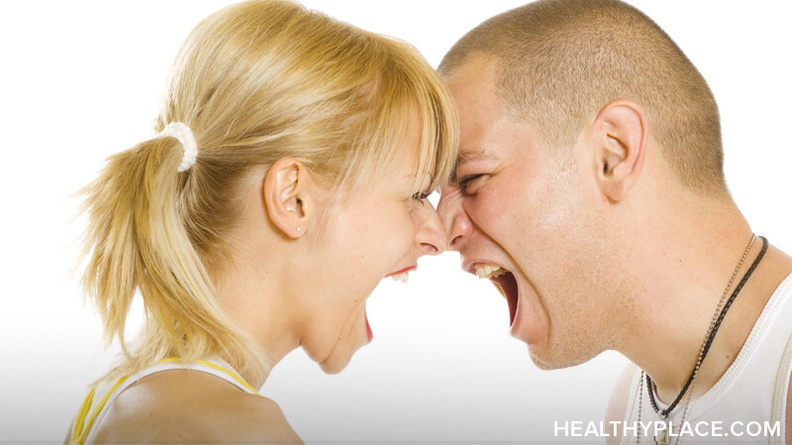
Once upon a time, I didn't realize my ex was abusive. There were many reasons and excuses for deluding myself into thinking the problem was a relationship issue, and that we were equally at fault for the trouble in the marriage.
By the time I came to terms with the fact that my ex was abusing me, that he was an abuser, I also realized that I had abused him, too. I had called him names, allowed my temper to overcome my sense, even slapped his face once and thrown keys at his head hoping my aim would, for once, be perfect.
There are also many reasons and excuses I could give for my abusive behavior. I'm not going to do that though. Instead, I've decided that my actions are my own. No one can make me behave abusively. I've spent many days berating myself for my behavior, and decided, in the end, to forgive myself and learn and do everything I can to create a mentally and emotionally healthy life for myself.
Am I, a Domestic Abuse Victim, the Abuser?
The last thing I wanted to do was hurt another person in any way, but I knew that I had hurt my husband. I recognized that I could become enraged when I felt backed into a corner, and I wanted to know if I was imagining the corner.
Beverly Engel wrote The Emotionally Abusive Relationship: How to Stop Being Abused and how to Stop Abusing to help both victims and abusers change their behaviors. I rarely embodied the role of "the abuser" in my relationship, yet the fear that I was the one causing the problem prompted me to take a hard look at Ms. Engel's ideas about who could become abusive.
Indications That I May Be Abusive
Beverly Engel wrote "...abusive people tend to have certain characteristics that can predispose them to becoming abusive" and they are:
- You feel you must control others, the situation, et cetera,
- You blame other people for your problems,
- You find empathizing with other people is difficult or impossible,
- You feel possessiveness and/or jealous,
- You tend to be emotionally needy and/or have low self-esteem,
- You have poor impulse control,
- You fear being abandoned by those you love,
- You feel angry or suppress your anger,
- You stereotype or objectify others,
- You have high levels of stress and arousal.
On that list, I identified with numbers 5, 6, 7, 8 and 10. Low self-esteem resulted from being unable to trust my own judgment. My lack of impulse control while shopping caused me to visit the returns desk as often as the checkout lanes. I worried that my husband would abandon me, suppressed my anger, and, of course, felt extreme stress to the point of exhibiting most symptoms of posttraumatic stress disorder.
I felt alarmed to find that half of the characteristics of an abuser described me! Immediately I embarked on a self-improvement strategy to address those issues. I set SMART goals, and over the course of just a few months, I actually reigned in my spending and made significant headway in learning to trust myself, manage my temper, and come to terms with the abandonment I felt as a child. The stress level, strangely enough, did not decrease no matter how I tried.
I knew I was becoming a better person. Unfortunately, the same old situations and arguments kept popping up. I excused myself from more conversations than I engaged in with my husband and the gulf between us widened.
The Other Side of Being an Abuser Is Being a Victim
One day, I picked up Ms. Engel's book again and found her list of "Personality Traits That Set One Up for Abuse." In my alarm (I was half an abuser for goodness sake!), I didn't pay close attention to that list because I'd convinced myself that I was responsible for the abuse.
Amazingly, the character traits Ms. Engel listed came eerily close to the issues I'd been working on the past few months. Come to find out, I may have set myself up for abuse because I had a tendency to:
- avoid confrontation at almost any cost (resulting in my suppressed anger)
- believe things are better than they are (it was actually better for me to be the abuser because I could eliminate the problem! Denial...)
- feel responsible for others (sacrificing my dreams for his career goals, lifestyle, etc.)
- blame yourself for relationship problems (all my fault!)
- be afraid of being alone (abandonment: how could I live without him?!)
- doubt your perceptions and intuitions (true - I wanted a protector in the beginning because I didn't trust myself anymore)
- make excuses for other people's behaviors (to the point of casting myself as abuser and him as victim)
- believe that love automatically makes you a better person (I hoped my love for him would make him want to be nicer to me)
There is no doubt in my mind that playing the role of victim in my marriage resulted in my abusive reactions. I also believe that admitting I was abusive set me on the road to eliminating my relationship-manufactured behaviors.
In my mind, my abusive behaviors were a false presentation of who I was. I had learned, created, and used those false behaviors as protection. When I eliminated my "protective shield" and revealed my true self again, I was able to see more clearly the solution to our relationship problems.
For me, solving the problem meant I had to leave the marriage. If I was the only one willing to change, then there would be no change for the two-way street called "our relationship".
-----
Connect with Kellie Jo Holly on facebook or twitter and read more at Verbal Abuse Journals
APA Reference
Jo, K.
(2012, January 9). Domestic Abuse Victims Think They Are The Abuser, HealthyPlace. Retrieved
on 2026, April 10 from https://www.healthyplace.com/blogs/verbalabuseinrelationships/2012/01/victims-think-they-may-be-the-abuser

Author: Kellie Jo Holly
I still have a lot of mental muddiness on whether I’m abused and the abuser. I think maybe I’m both. Sometimes things just get toxic and together you create worse versions of each other. I have a hard time coming to terms with that, because I love the person so much. The idea that I am possibly bringing out his worst side is really painful to face, but it’s probably true. I need to learn to love myself better, and I hope I can because if not then I’ll keep letting people take advantage of that and think it’s alright. Leaving the person I mentally built a pretty false idea of a future with for 8 years is the most heartbreaking thing I’ve faced with the exception of losing someone to death. It’s kind of the same though I suppose. Wish me luck and strength, I’ll need both.
I’d love if you can contact me 407-529-7560 I’m in a really low place and have so many questions..not too worried about having my number out there ? but this has been the most impactful article I’ve read because it sound so much like me and the confusion I’m in not sure “if I’m the abuser” or what has actually happened? Thanks
12 yrs ago I was 3 yrs into my divorce from my first wife . I was in no way looking for anything and this girl was dropped in my lap , and i was swept ofc my feet. No one had made me feel so special and unique b4 . About 3 yrs in we started using drugs and became pregnant with our first child and we cleaned up, 1 yr later we took our great nephew into our home and later adopted this little boy who was a drug baby , his mother shit up the entire pregnancy. The stress and constant doctors and specialist appointments drove us to use again and at one point she went behind my back to another male to get drugs , I naturally assumed it's had been more than that and out of hurt I stepped out only after did I find out she had not cheated but at this point the damage was done. We shortly after found out we were pregnant with num 2 and we both walked away cold turkey and stayed that way for a year at which point she took it upon herself to bring drugs back into our home and i was not man enough to say no. 3 and half yrs down the road the lines are blurred, her insecurities have made her mentally and emiyiinaly abusive , at it finally hurt so bad that one day I snapped and lost control of myself and drag that guilt like heavy chains but she continues to push and prode with intent to hurt and force a reaction so she can then play the role of the victim. And at this point I can no longer tell what is real and what is not or if i am everything she says I am or she is lying to herself , all i want is to b ok and save my family
Thank you for this. I have been really struggling with this for a while. It is very confusing for me. I have PTSD, but still when I look back at every relationship that lead me there all I see is how many times I was the problem...even when they did something wrong its still, to me, that warning sign i missed that I shouldn't have. But I have been trying to sort it all out. Despite possibly 2 abusive relationships (my therapist tells me they were abusive, but I still find it hard to overlook all I did) the relationship I am really struggling with right now is actually a friendship with a girl named Emily. I just started accepting that her telling me that she'd kill herself if I didn't do her chores and other stuff like that for her and constantly shaming me for my disabilities (I am also learning disabled) was abusive after years of my therapist practically shaking me telling me that is not normal friendship and not excusable. We haven't been friends for 2 years, I think I finally accepted she was an abusive friend when I learned she had gone to the funeral of a guy with a disability I used to know and stuck up her nose and laughed at him and all his friends. This was after she had said he had tried to assault her...but as it turns out when she said this happened he was in a coma. It took her victimizing someone else to really get it. But I recently learned she is now a disability rights and anti-abuse advocate in Toronto. And a part of me wants to ask her why she did those things. And a part of me knows there's no point, she thinks anything she does is right and if you tell her otherwise you're in the wrong for hurting her self esteem by sticking up for yourself. In her mind she's always the victim. Once her family came in and helped her move in, and she was the victim cause they didn't do enough for her...that's who she is. But a part of me is like "what if I'm wrong, what if she's changed? What if I just misunderstood everything and I'm the bad friend? Sure, she broke my boundaries out of boardom (not concern for me or mistake, boardom) then insulted them as not being "good enough" for her and demeaned me, but what if that's cause they were stupid boundaries? What if, what if, what if? But a part of me is also mad, and wants the world to know that this person who says she's such an advocate once flat out told me she didn't feel she could be friends with me because I had a mental illness and was too much of a burden and a downer on her (after I'd risked my job to come and see her and she told me she'd kill herself if I didn't). I want people to know I couldn't socialize or talk to friends for almost a year after because it was so emotionally damaging. I want people to know that I stopped talking to her in person because I was afraid of her. On one hand I want her to be ok and hope she's better, but on the other I want someone to point out what she's like cause I don't want her to be able to do this again. But I don't know maybe I am abusive then. Its all very confusing
Hi Rachel,
Thank you so much for sharing that with us. I'm Emma-Marie, co-author of the Verbal Abuse In Relationships blog, and I want you to know that I can identify with a lot of what you're saying.
Firstly, though, your therapist is right -- this was not a healthy friendship and I am glad you don't have this person in your life anymore. It certainly doesn't sound like you imagined any of what happened, though it is common to feel this way. Despite writing this blog and having learned so much about abusive people, I still find myself questioning whether my ex-partner really abused me or whether I made it all up, even though it's there in black and white.
Walking away from your friendship with this girl must have taken considerable strength, so you should be proud of yourself for that. It's also great that you're seeing/were seeing a therapist who can help you work through some of these feelings. Abuse IS complicated, and it makes us feel wretched about ourselves even though we know that other person is to blame. It's also important to note that abuse is often learnt behavior -- perhaps this girl was abused herself going up so she projected this onto others. It doesn't excuse what she did, but there are always reasons why someone is abusive toward others. This blog post might help shed some light on the issue.
It stands to reason, then, that if we spend a considerable time with abusive people, we might pick up some of their traits too. This is normal, and it doesn't make you a bad person. My ex-boyfriend was very controlling, and as a result, I often catch myself needing more control in my current (non-abusive) relationship. What matters is that I catch myself acting a certain way or thinking something he would have thought, and recognizing that it isn't healthy or conducive to a happy relationship. It sounds like you have a lot of insight into what happened and a lot of empathy for yourself and others, so I don't think you can describe yourself as abusive.
Feeling angry at your abuser is a normal, human response. Of course, you want people to know how she made you suffer, and I cannot imagine how hard it is for you to see her preaching to others about the dangers of abuse when she is guilty of some appalling and frankly immoral behavior herself. What you've described is coercive control, which is actually illegal in the UK where I am from.
This is HER path though, and for all you know she has sought help and tried to change her ways. It will not serve you to get involved with her again, so I encourage you to find other ways to express your anger about what happened. I understand that you feel you need justice, and if you really feel that reporting her to the organization she works for is something you can handle, then no one can argue with your right to do that. Just be careful, and make sure you put your own recovery first. Good luck!
I don’t know what to think anymore. Back when we first started dating four years ago, I was very much the victim. I identified way more with the victim list and was always trying and trying and I became afraid of him and myself. But then I snapped. I decided to just not care about it anymore, and I now identify a lot more with the abusive list than anything. He has gotten a lot better at restraining himself but I feel like I made the wrong choices and now I’m stuck this way. I don’t want to leave him (for a lot of reasons) and I know he loves me. On the flip side I am very unhappy but now I feel that is more due to the fact that I’m a lazy, unmotivated person who won’t help herself than because of the abuse I endured for 2.5 years. Even though that’s how I always rationalize it. I can see the person I want to be but I’ve never had the confidence and self esteem to get there on my own, and I feel like I’m just lying to myself now so I can make myself feel better, when in actuality I’m a horrible person who should just leave him regardless of what he feels for me so I don’t hurt him anymore.
I don't think that having a turbulent relationship where both parties stand up for themselves is necessarily an abusive relationship. Abuse happens more when oen person wields or or attempts to gain power over another and uses this power control them. Perhaps what you are experiencing is anger issues, communication problems and your first experience of being with someone very different to you. However your partner has an inalienable right to choose to not stay and work things out. You can ask them to, but trying to change her against her will may constitute abuse. All you can really do is work on yourself. Respect their right to choose to walk away without bad feeling, and you are no longer in an abusive situation.
Hey Maddy! Thanks for checking out Verbal Abuse in Relationships, and thanks for your comment. I think it's not uncommon for some people in domestic abuse situations to think they may be behaving abusive as well because when a hostile encounter occurs, and they are confronted with abusive behaviors, their response may also feel abusive. For instance, when someone pushes you and you push them back or when someone says something really awful with the sole intention of hurting you and you respond by saying something equally as hurtful with that same intent -- it can make the person responding wonder if maybe they are abusive as well. Sometimes relationships are just that toxic, you know? I agree with you in that, not every encounter where there are disagreements and each party is standing up for themselves would be considered an abusive situation. Every relationship has disagreements, sometimes really bad ones. Most people say and do things they may regret later at one point or another, no relationship is perfect and free from conflict. How do we distinguish between an abusive relationship and a normal one that's just in a rough patch or something? I always try to read up on as much as I can, the more info I have stored, the better equipped I am to make those judgments and be able to realize, wait a sec, this relationship is past the point of "unhealthy." One last thing, I totally agree that the number one thing you can do in any situation is work on yourself, and that can be done in a variety of ways like being self-aware, holding yourself accountable and trying to be your best self, and respecting yourself by not letting others treat you poorly. Thanks again for your comment Maddy! Take care!
Check out these articles on the signs and symptoms of abuse: Emotional Abuse: Definitions, Signs, Symptoms, Examples
Physical Abuse Signs and Symptoms
I felt like I met the love of my life in January our first date set us on a whirlwind path. We began dating she was going through a tough time mentally and emotionally, I tried to be there but found us getting into arguements, raised voices and cutting off the phone. I was besides myself because I’d never experienced so much clashing with someone, too many misunderstandings. We continued to date and the love grew.. due to the arguements and clashing there was an escalation I became the abuser in defending myself. It was emotional at first, then mental and physical. We’ve had so many fights that I feel disconnected from her but love her dearly . I’ve had a very tough year, I feel my mental health is deteriorating, I decided to break up with my girl, I truly want to be a better person. Being abused or the abuser is not what I want for myself. She’s not been open to counselling so I have to work on myself. I do have hope I do want be with her but I want to be right. I want her to be right too. I’m processing my role in everything so I can heal but I want her to heal too..
I looked this up because in the beginning of my relationship, my husband was perfect said all the right things promised me the world. Within a few months he began to lose his temper. He wanted to impose strict and irrational rules for my kids. When I would question these rules or disagree with his actions he became angry and loud or shut down verbally while storming around the house. When he is in a bad mood he makes sure everyone knows it. Over the last year it has escalated. He began to get jealous of time spent with my kids and would start a fight about something small but it was always under the same conditions. If it was not his plan or he wasn't involved, he would find a way to make us all feel like we had done something wrong. I have teenagers so naturally we have disagreements. He is super dad when my kids are more distant. When my relationships with my kids couldn't be better he picks at the kids and is flat out mean to them. He has always suddenly become ill in situations where he is not the center of attention. I don't know what is real or not. Just recently after he cornered me in a room I locked myself in to hide from him in, and shut off my phone service so I couldn't call out. I threatened to call the cops and he finally left. He had been to the point where he was always checking up on me, getting angry when I was running errands too long and against me getting a job. I had enough and kicked him out and he went to the ER claiming a suicide attempt I let him come back and after a few days he wanted to act like everything is okay. For months I have told him I need time and we have work to do. He is pushy not giving me my space and snapping at my kids. He ruined a great evening last night and for no real reason. He threatens to take our only car away, shut off my kid's cell phone because they have had enough and are standing up for themselves. He has started say he acts certain ways because he is trying and I am hateful. Today's example was he claimed I sent him a text saying I had said something awful to him. I began to question myself. I went through over a month of texts and no I never said it. But I noticed how angry my replies to him have been. My language is horrible, I am either begging for space and understanding (my kids and I have suffered several tragedies in the last two months) . I have asked for a separation, or a "roommate" like situation until we are financially stable. He refuses and pretends all is good after a couple of days of him playing nice. Then he gets angry when I am not comfortable being intimate. I am almost certain he hid some of my meds I desperately needed. My daughter and I both looked where they are usually kept. He magically found them and was my "rescuer". I feel like I am losing my mind I am paranoid and constantly on edge!!! Between the fact that I HAVE become so angry and distant, paranoid, sucked into mind games and the fact that this would be my 3rd abusive relationship (are the odds of that happening real)? Am I the problem, have I become the abuser? I am questioning whether I am standing up for myself and my kids or if I have become abusive. I am sorry this is so long I am just lost and don't know what to do...,
Hello She,
Your comment touched me because it reminded me of my previous relationship -- the relationship that inspired me to write about verbal abuse in the first place. I remember the emotions you're describing so well: feeling as though I was in the wrong because my partner couldn't admit that he was abusing me, not knowing if I was the problem, feeling as though I was losing my mind. While I was with this man, I became the worst possible version of myself, but that was because his constant gaslighting and manipulating exhausted me and made me feel, well, crazy.
Your situation is particularly troubling because there are children involved, but that doesn't mean you should discount your own feelings about your husband's behavior -- it might not feel like it now, but you are a person who deserves to be treated with respect. You matter, regardless of what your husband says to make you feel otherwise. Please don't ignore your instincts.
Your phrasing makes me wonder, are these children from a previous relationship or are they children you had together? Because it sounds as though this man is dangerous. I wonder if you could ask your children how they feel about him.
What you're describing is classic emotional and verbal abuse, and there is every reason to suggest that his behavior might become physical. Please know that you have the right to stand up for yourself and your kids and that you're not being abusive by asserting yourself. He should respect your request for separation, just as he shouldn't force you to be intimate with him. It doesn't sound as though you are the abuser. It sounds like he is the one who's very much in control, and he's got you questioning your instincts as a way of keeping you under the thumb. His behavior is very much the problem here, and I fear a separation followed by him going to therapy is your best, and only, way forward.
As you mentioned being in abusive relationships before, you may want to check out one of my recent articles, Easy Targets for Verbal Abuse: Why Me? which explores the reasons some people are more likely to end up with abusive partners than others.
Good luck. And don't forget to check out our Resources and Hotlines page for numbers you can call. There are professionals who can help you through your abusive relationship, whatever you decide to do.
Thank you for your response. I have really been at my wits end. We do not have any kids together. My middle
Child can't stand him, my oldest son defends him because he plays video games and his relationship with his biological father is not good. My youngest likes him but is just a happy little girl. I can't get a good read on her because sometimes she seems to be avoiding him. She just suffered an almost life threatening illness and for the most part he has been good to her although still has his jealous moments when her recovery or just my desire to spend time with her. Yesterday he stated he was going to give me space and that he was going stop trying to pretend that we are a happily married couple. Later that night he was furious at me for forgetting to run an errand for him and because my daughter and I wanted to watch the only TV that gets local channels. He is never on this TV but he was last night knowing we were wanting to watch our shows. He was watching reruns of a show we just watched and we have 3 other TVs with streaming available on it. He "let" us have the TV but stormed about and we gave up even trying to watch it. He accused me of doing something again making once again questioning my sanity. After retracing my steps I realized once again I was being accused of something that never happened.
Today he is all sunshine and roses and wanting to plan a 2 week cruise vacation that we CANNOT afford for just us 2?!?!
I'm torn because of my kid's feelings. I also have up my car, I have a Master's degree and am working on getting a job with or without his consent, becoming more financially stable as well as getting my car since I sold mine. I will definitely look into the resources you have . I can't thank you enough. I hate the angry pets I have become in general. I definitely don't want to continue down this path.
I'm not an expert, but this man sounds like a narcissist, right?? Someone who wants all the attention on themselves... so they'll be sweet and try to look like the hero at times, get insanely jealous at times, and even try to match your actions to put the attention back on them (like when he wanted to use the TV he NEVER uses because YOU were using it), etc. Narcissist, right?
I know this post is 3 yrs old..wonder how things turned out? I am in a similar situation now and it sux that u never “run into” any other woman going through the same things at the same time so that u can help each other!! It’s so much harder and more complicated with children involved..I have 4
There's no way or for me! I've tried to get out of my abusive marriage. But i can't. I have no friends or family. All my family Has passed away. No one to help me. I've slowly tried to get control over my own finances but I still don't make enough money to get start up cost to Get out. I'm 46 years old and I work 5 to 6 days a week full time. There's no housing for me that I can afford no one wants a roommate. Even a campground is too damn expensive. I don't see any way out. I'm slowly dying inside. The hours I work don't allow me a 2nd job. I need to sleep sometime. Don't tell me to get a 2nd job or a better paying job because where I live there's none. I've called domestic abuse places, my life is not endanger and I can't prove mental and verbal abuse, and social services. No one wants to guide me or help. I'm alone. What does someone do in my situation?
Call this number 4357532500 if willing to pack up a few things and relocate. Its a nice place they give 30 day's stay and help with resources. And free counseling and therapy on site and do extensions if you are serious and your scars and wounds do not have to be visible they understand abuse its a nice place free food they help with clothing there's WiFi to help you and a phone it's really comfortable and safe your stay its free there's a chubby to lock up your important things and kids are welcome here they will give you your own room if you have kids with a key
Read my last comment on last post..I’m in similar situation...very similar...I wish I could create something to help women in this kind of situation because of you aren’t being hit all the time there really is limited resources and also information even...
I was in a abusive marriage for 46 years and it's never too late to start over getting in a support group helped me and I know I can't go back and get the years I've lost but I know I can move forward and help younger people see and deal with abuse before it takes that much of your life.
I was in a abusive marriage for 46 years and it's never too late to start over getting in a support group helped me and I know I can't go back and get the years I've lost but I know I can move forward and help younger people see and deal with abuse before it takes that much of your life.
It’s so hard to move on with 4 children, 2 very young, when I am doing EVERYTHING by myself since we separated (my call) now I’m thinking even the abuse (still unsure also if that’s what it is because never physical) was easier to deal with than this...maybe he knows it?? I am stretched so thin and no help whatsoever, sometimes I just want him back for the help! As you know abuse isn’t happening ‘all’ the time...I juts feel I traded one problem for another...being a single parent is HARD! And not the “single parent” I hear a lot of women say when they are juts single but have help (physically and financially) but really doing it ALL...and then like I mentioned the confusion because I was half of the arguing and screaming etc. my husband never did what I read about “typical” emotional abuse like name calling or putting down...he’s not even loud...but he is controlling and manipulative-like isolation me, monitoring me, jealous and then he lies and hides lots of things including financial and talking to other ppl I know nothing about etc. always picking fits with me but then it ending up like I’m the one yelling and cursing?? Then blaming me for it all...it’s so confusing!! But just leaving doesn’t feel as empowering as I hear others online because now I’m barelt surviving emotionally, physically, financially with all the kids etc...I know I’m not the first to navigate this, but I almost think staying would be “easier” in some senses...what do I do?? :(
I have been married for 27 years. I have been verbally, and mentally abused majority of the marriage. Here within the last couple of years, I have started to fight back. Now I have became the abuser. I don't like being the abuser...not my character. I am looking forward to the journey back to whom I originally am. Thank you all for shareing.
this was such a good read for me. I'll have to check out that book. I am in the same position with my husband right now. He is abusive but I didn't realize until we were a year into our marriage that that's what it was. I was very young and naive. We're now 4 years in and I have been considering divorce for the past 2, but I've always been too scared of what may come after to go through with it. I started wondering if I was the abuser, myself. I definitely fit some of the criteria on that list. But I realize that I was not like that until my relationship with my husband began.
I have moved out on my own, and am in a separation period with my husband, working on myself. Even through all of this, his abusive behaviors continue. It's been 2 weeks and I'm finding any hope to revive the marriage quickly slipping away. My solitude feels better than his company.
All the love in the world cannot fix an abusive relationship if one or both partners cannot express it in a healthy way. A lesson I've learned the hard way.
Yes, I've gone through very much the same learning process. The same steps in the same order I think! It's not helped by the fact that abuse usually includes blaming the other person for what they're not doing, but the abuser is. We used to have round-and-round 'discussions' in which I'd be baffled when he mentioned things I had no memory of, and he'd say I was either lying or suffering with false memories, in other words inventing the past whether deliberately or unknowingly.
Such a relief to understand that he was doing exactly that - I still haven't worked out whether he knows it (lying) or not (delusions) but I've stopped trying to understand the WHY of his behaviour, I just treat it like bad weather now and if you can see it coming you don't question its right to happen, but you do shut the windows and bring the garden furniture inside when the storm's coming. ;)
Your story is very similar to mine. I too had to walk away from a marriage years ago. I reached the point where I feared that the emotional / verbal abuse was going to move towards physical abuse. It has been a long time since this happened, I've moved far away and started over, but I'm still scared. Feeling PTSD symptoms and can't seem to move on. I want so desperately to be whole again. Any thoughts and help would be greatly appreciated. Thank you.
Can relate to this article - I did feel guilty for my actions both known & unknown but I have forgiven myself because I was responding to and trying to defend myself from the real abuser. The only way to prevent yourself from becoming an abuser is to leave the abusive relationship a.s.a.p. and become a better you i.e. work on your own weaknesses. The longer you stay in it the more likely you begin to mirror each others behaviour. In Islam there is a Hadith (Prophet's advice) which says something like "A woman (wife) is a reflection of the man (Husband)" i.e. if you have a abusive husband - the wife will react and behave accordingly either in fear or retaliation, if a husband is loving & kind etc the wife will react accordingly with love, obedience and respect.
Needed to read this...I don’t know which is worse ...the guilt I feel for (also) stooping so low as to hit or yell myself or if I am in a really hidden abusive situation that caused all of this from me in the first place..I want to know the truth of it all and a lot of places will make you feel “justified “ at all costs for also being “abusive” mainly because I’m a woman?? Not sure...but I’m juts so confused and what is what anymore...
OMG this is what I am going through right now! I need to get this book... I actually slapped my wife because she wouldn't stop berating me... wouldn't let me walk away... she had a breakdown after her mom died and her meds just haven't been right yet.... I left and I am willing to work with her in counseling but I also need to get my life back... and control of me.... glad I'm not the only one....