Eating Disorders Treatment Centers

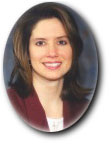
Noelle Kerr-Price, Psy.D. is an eating disorders treatment specialist and staff psychologist at Remuda Ranch Programs for Anorexia and Bulimia.
We cover what an eating disorder treatment center is, what goes on there, the eating disorder warning signs that indicate you need inpatient treatment, how much it costs, and whether treating the physical symptoms of an eating disorder is enough or are the psychological issues just as important.
David Roberts is the HealthyPlace.com moderator
The people in blue are audience members.
David Roberts: Welcome to HealthyPlace.com and our chat conference on "Eating Disorder Treatment Centers." I'm David Roberts, the moderator for tonight's chat. Our guest is Noelle Kerr-Price, Psy.D. Dr. Kerr-Price is a Staff Psychologist at Remuda Ranch Programs for Anorexia and Bulimia, a specialized treatment center exclusively dedicated to women and adolescent girls suffering from anorexia, bulimia, and related issues. Her primary fields of expertise are eating disorders coupled with psychological assessment. Good Evening Dr. Kerr-Price and welcome to HealthyPlace.com. Just so we are all clear on the subject, what is an eating disorders treatment center?
Dr. Kerr-Price: An eating disorder treatment center is a place where girls and women go in order to receive intensive help for their eating disorders.
David Roberts: There's regular counseling, where you see a therapist in his/her office. There's outpatient treatment centers. And inpatient treatment centers. How does one know which is best for their particular situation?
Dr. Kerr-Price: You have just described different levels of treatment. Eating disorders vary in their severity and so require different levels of help depending on the individual. The greater the problem with the disorder, the more likely an intensive program is needed to help manage it. Less severe disorders may only need the help of an outpatient therapist once or twice a week. Again, it depends on the needs of the individual.
David Roberts: When you say "greater the problem" -- how is that measured?
Dr. Kerr-Price: In the mental health field, one means of determining the level of treatment needed is found in established "practice guidelines" in treating eating disorder patients. For instance, if a person has lost a substantial amount of weight and is struggling to function in many areas of life, like work, relationships, etc., then this would be a clue that the problem is intense and so needs intense help.
David Roberts: What other signs would be an indication that one needs inpatient treatment?
Dr. Kerr-Price: Certainly other physical symptoms such as poor vital signs, heart and/or kidney problems. Psychologically, depression and strong anxiety tend to occur.
David Roberts: We have a very large eating disorders community here at HealthyPlace.com and, of course, we hear all sorts of stories about what goes on inside a treatment center. What is it like to be inside an eating disorders treatment center?
Dr. Kerr-Price: Centers vary of course, so I can best speak about the one where I work, Remuda Ranch. We have a setting that is designed to be different than the traditional sterile hospital setting so as to provide a comfortable environment. Many different types of groups occur as does individual and group therapy. A lot of assistance is offered at meal times also, as we anticipate those to be hard times in the day.
David Roberts: What's the average stay?
Dr. Kerr-Price: For our adolescent patients, it is generally 60 days. For our adults, it ranges between 45-60 days.
David Roberts: We have a few audience questions, Dr., that I'd like you answer, then we'll continue with our discussion. Here's the first question:
riverrat0515: Why do most inpatient hospitals have you stay only 28 to 30 days?
Dr. Kerr-Price: Sometimes it's a matter of what insurance may cover in terms of cost. Other times, it is the design of the program itself.
David Roberts: What is the cost of being an inpatient at Remuda Ranch?
Dr. Kerr-Price: Frankly, I would be hard pressed to give a set figure simply because I know Remuda Ranch tries hard to work with families on the costs along with what their insurance will cover.
David Roberts: I understand, but just to give our audience some idea...for 30-days is it about $10,000 or is it $30,000 or more?
Dr. Kerr-Price: Given that our length of stay is longer than thirty days, it would be greater than $30,000. We are probably comparable to a hospital stay. But we work individually with each family and with the insurance companies to get the most benefits.
becgra: Is it true that Remuda is biblically oriented
David Roberts: and what does "biblically-based" mean in terms of treatment?
Dr. Kerr-Price: Yes, that is true. We are a Christian treatment center in which we maintain as a focus a Christ-centered approach. We include components of the Christian faith into each facet of the treatment as we believe that Christ offers healing.
|
|
julesaldrich: What if I have learned the basics of recovery, but haven't been able to put it all together? Could Remuda Ranch still be a benefit to me?
Dr. Kerr-Price: It really could because sometimes people need assistance doing just that, putting it into practice rather than continuing to try by oneself.
David Roberts: I think several of our audience members are wondering if recovery is possible, even if you've been a long-time sufferer -- let's say 10+ years or more.
Dr. Kerr-Price: It is possible. Motivation is very important. The duration of the disorder does bring disadvantages, like causing a woman to feel it has become her identity and so she may wonder what she may do without it. But, it is possible.
David Roberts: We've also heard stories of people going to a treatment center and coming out and starting right back into the eating disorder behaviors. What should one expect when their stay is over?
Dr. Kerr-Price: When one finishes treatment and is preparing for the next phase of recovery, I anticipate that the person would be afraid of relapse. However, this can be a healthy fear if it is not extreme because some anxiety can help us to make good decisions and be safe.
David Roberts: I'm going to post a few audience comments relating to what we've been talking about so far, then we'll continue with more questions:
regmeg: Recovery is possible. I have had my eating disorder since I was 12 and I am 42. There is always hope.
DoriLyn: I am an alumni from Remuda. 6 months recovered.
David Roberts: One thing I'd like your reaction to -- since we've had other specialists on our chat and they've always focused on the psychological aspect of recovery. There's new research out that says treating the physical symptoms vs. the psychological problems is the most effective way to treat someone with an eating disorder. When treating the physical symptoms, the researchers found that remission rates were about 75% for patients with either anorexia or bulimia nervosa. What do you think of that?
Dr. Kerr-Price: I know the research you're referring to and that does sound impressive. However, a flaw in that study, which was the same thing they acknowledged needing to do, was that they didn't actually compare their treatment of the physical symptoms to standard treatment of eating disorders. Therefore, it is difficult to interpret that form of treatment as being superior to what is standard practice.
David Roberts: Do you think then that it's important to get to the psychological root of one's eating disorder in order to have a sustained recovery?
Dr. Kerr-Price: Absolutely! Eating disorders are not just about the food. In fact, there is usually much more going on needing psychological attention than just treating the physical symptoms.
David Roberts: Here's the next audience question:
angelface_dee1: I have been to a treatment center and I have been out for a year now and still I struggle with it every day. Is it possible to ever be fully recovered without any eating disorder behavior? Is it possible to have a full recovery without any eating disorder behavior in your life?
Dr. Kerr-Price: I realize professionals in the field of eating disorder treatment may differ in opinion, but I believe it is possible to have complete recovery.
Mark_and_Christine: Any thoughts on programs for younger patients? Most programs are for 14 and over, but unfortunately 9 and 10 year olds with eating disorders are out there?
Dr. Kerr-Price: We do work with some girls as young as 11 or 12, depending on the circumstances. However, I am not very familiar with eating disorders treatment centers that serve girls as young as 9 or 10.
Mark_and_Christine: What would be the circumstances that would have you consider an 11-year-old? Additionally, with younger patients, I think the family will have to be more involved which may be hard with sleep-away programs.
Dr. Kerr-Price: Our medical director and the program directors help to assess when it is appropriate to have an 11-year-old come here. You're right about the difficulties with younger kids being away. That may be why programs for them are so hard to find.
David Roberts: Here's a specific question about what goes on inside a treatment center like Remuda:
CindyD: Is it true that patients aren't allowed to go to the restroom without the door open or someone standing there to see that they don't purge? And does that rule apply to those that are anorexic and don't purge anyway?
Dr. Kerr-Price: We do have some rules like that but, typically, such a rule as that is not imposed throughout the length of the patient's stay. For instance, just during her first few days and following meals, for example. We apply the same rules to girls with anorexia because of the risk they may try to exercise.
|
|
David Roberts: Out of curiosity, are most people who go inpatient "forced" into that type of treatment because of their medical condition? Or do they realize things have gotten out of hand and they elect to come in?
Dr. Kerr-Price: Either may occur. Often in the case of adolescents, they might not choose this for themselves but their parents recognize the need. Others, including some adolescents, do see their need for help and desire recovery desperately.
Lost_Count: Is it common to jump from one eating disorder to another. I was bulimic for 12 years and then began seeing a therapist. Though I no longer purge, I still have episodes of binging. How do you break through the cycle?
Dr. Kerr-Price: Switching from one form of the eating disorder to another does happen. Breaking the cycle requires seeking the help needed to understand the issues behind the behaviors and receiving help in making the behavioral changes.
David Roberts: Recovering from an eating disorder on your own -- is that possible or next to impossible?
Dr. Kerr-Price: It is possible but much less likely than receiving help through a team of professionals who can address the different components of the disorder.
David Roberts: Here's an audience comment:
tinyowl: It's possible, moderator, to recover on your own. I was bulimic for 10 years and recovered from it without help
David Roberts: In reference to tinyowl's comment above, I think that's wonderful. But just from my experience here at HealthyPlace.com and doing these conferences, most cannot recover on their own.
David Roberts: Earlier, you were talking about patients needing assistance during meals. Here's a question on that:
becgra: What type of assistance during meals?
Dr. Kerr-Price: Sometimes people become very distressed when trying to eat a meal because of the fears they have around food. So, assistance can include talking them through it, encouragement, distraction, etc. Also, it may entail helping the person recognize what she does with her food, like cutting it into small pieces ( a food ritual), or eating her meal at too quick a pace.
tator: What about the medical aspects of treatment? I have a jejunostomy tube and am wondering about medical support that is needed?
Dr. Kerr-Price: Our treatment includes the help of a primary care physician who can assess everything from heart functioning to vital signs, to liver functions, kidneys... The list goes on. Since I am not an M.D., I am unable to answer the second portion of your question.
David Roberts: Do you have people who come to Remuda and are treated for medical problems, as well as psychological issues, or are the medical issues handled at a medical hospital?
Dr. Kerr-Price: Definitely. Often eating disorders create physical problems that need to be addressed. In the instance of someone who is severely medically compromised, say to the point of not being cleared to travel here, then she would go to a medical facility first for stabilization.
Galiena: What about the families of these girls/women? Are there support for them while their loved ones are in your facility? Places to stay, etc?
Dr. Kerr-Price: For our adolescent and adult patients, they and their families get to experience a "family week" which is an important piece of treatment so that family is included in the process. Also, adolescents have weekly teleconferences with their families and therapist to deal with issues.
Lost_Count: Is there a waiting list to enter your program?
Dr. Kerr-Price: Often yes, but the length does vary so sometimes, the wait may be less. For instance, currently, we have some space available.
dancer81: The doctor said that they currently have space available. I was wondering how lengthy the process is to be accepted into their program and if that takes a long time to do?
Dr. Kerr-Price: The process may vary for different families but I do know that, sometimes, people come very soon after the initial call is made to us.
David Roberts: Dr. Kerr-Price, does one need to be referred by a therapist or medical doctor to get into an eating disorders treatment center or can one self-refer?
Dr. Kerr-Price: One can self-refer.
angelface_dee1: Have you ever seen anyone actually recover?
Dr. Kerr-Price: Yes, I have known many individuals who once had eating disorders and are now symptom-free.
|
|
David Roberts: And can you define "recovery" for us? What does that mean exactly in terms of someone with anorexia or bulimia? Does that have to mean symptom-free?
Dr. Kerr-Price: "Recovery" is a continuum. Someone may not exhibit enough eating disorder symptoms to meet criteria for an eating disorder diagnosis but may still struggle with the desires for instance. Hopefully, one can reach a place of being absolutely free of the disorder but purging half as much as one did at one time is progress on the recovery continuum.
dancerchic: I've had an eating disorder that has taken over my life yet I'm not underweight. I've done an intensive outpatient program and now my therapists are suggesting inpatient. Would you suggest inpatient even if the person's weight isn't below normal?
Dr. Kerr-Price: At times, that is very appropriate despite not being underweight. If the disorder has taken over your life, then help is definitely needed.
julesaldrich: I have been in and out of recovery several times, do not really have fear foods, but just seem to fall back especially when my life is stressed. Often, when I begin to feel healthy, I get scared of being "too healthy." I am wondering if Remuda would be right, or if maybe I just need to find a great therapist at this point?
Dr. Kerr-Price: Although it is difficult for me to say with any certainty because I don't know you, perhaps connecting with a therapist who knows eating disorders well would be a place to start now. That person could help assess if a more intensive program is necessary.
David Roberts: Dr. Kerr-Price, thank you for being our guest this evening and for sharing this information with us. And to those in the audience, thank you for coming and participating. I hope you found it helpful. We have a very large and active eating disorders community here at HealthyPlace.com. Also, if you found our site beneficial, I hope you'll pass our URL around to your friends, mail list buddies, and others. http://www.healthyplace.com
Thank you, again, Dr. Kerr-Price for coming tonight and staying late to answer everyone's questions.
Dr. Kerr-Price: Thank you very much and thanks to the audience for joining us.
David Roberts: Good night, everyone.
Disclaimer: We are not recommending or endorsing any of the suggestions of our guest. In fact, we strongly encourage you to talk over any therapies, remedies or suggestions with your doctor BEFORE you implement them or make any changes in your treatment.
|
|
APA Reference
Tracy, N.
(2007, February 26). Eating Disorders Treatment Centers, HealthyPlace. Retrieved
on 2024, April 26 from https://www.healthyplace.com/eating-disorders/transcripts/eating-disorders-treatment-centers