Eating Disorders Hospitalization

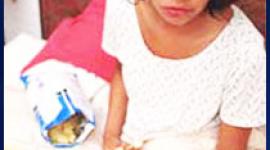
Bob M: Our topic tonight is Eating Disorders Hospitalization. We have two sets of guests, with two different perspectives on it. Our first guests are Rick and Donna Huddleston. They are from South Carolina. They have a 13-year-old daughter named Sarah, who besides having other medical problems, suffers from a severe eating disorder. During a really difficult period for them, they put up a website and told Sarah's story. There were periodic updates on what was happening. I'm going to start by having Rick and Donna tell us a bit about Sarah's health situation and then we'll get into how difficult it was to get her the proper treatment. Good Evening Rick and Donna. Welcome to the Concerned Counseling Website. I know it's been very difficult for you, as well as Sarah, over these last few months. Can you share with us a bit about Sarah's condition and her eating disorder?
Donna Huddleston: Sarah developed an eating disorder at age 12. It started when she went through a huge surge of hormones. She did not want all the changes that were happening i.e.: curves. She started by watching her diet first. Then she found out she had to have emergency surgery for scoliosis (the result of rapid growth + brittle bone disease). She was told she could not exercise for a year. After surgery she started watching her fat intake, which progressed on to no fat, to angry outbursts about food. Ultimately, that resulted in her hospitalization for the rage. They put her on Zyprexa, a new drug at the time. It is now known it should not be given to those with an eating disorder. She flipped into full blown bulimia. She was taking in 6000+ calories a day. The doctors got her off the Zyprexa, and stable for a bit, but then Sarah proceeded back into the bulimia. Finally, she ended up in the hospital again with 2.0 potassium. It was decided by all that residential treatment was needed. We have no programs avail here in South Carolina. She is now in California at the Montecatini Treatment Center.
Bob M: I want to add here, that Sarah was very ill and desperately in need of treatment for her eating disorder. You had a great deal of trouble getting her hospitalized. Please tell us about that. I think it's very important for many people here to realize how badly you wanted to get Sarah help.
Rick Huddleston: Sarah's problems with eating are very complex, as most are, and here in Columbia, the only type of treatment is what we consider "old typical". They are only there to stabilize and release. Even the local "experts" at Charter Rivers Hospital, were unprepared and incapable of helping. They misdiagnosed her, would not listen to us (marking us as problem parents). This was, in part, due to Sarah's behavior. She would never act out anywhere but home and mostly direct her anger at Donna. After 3-4 hospitalizations, we knew we were in trouble, and had to look elsewhere. Typical treatment there was a "forced" meal (sometimes catered by a food preparation service), full of grease, and not very balanced, followed by a forced sitting at the nurses station for 1 to 2 hours. This would be the extent, with the exception of medications, and counseling. But these groups were mostly comprised of kids with serious drug, alcohol, or ones having been raped or abused. Obviously, this was not a good place for a young girl with no self-image and feeling totally out of control of her life.
Bob M: And, so to clarify, she was not at an eating disorders specialty treatment center at this point. Please continue Rick.
Rick Huddleston: True Bob. But in South Carolina, there are NO specialty centers that really understand and can treat ED. We did find the local expert in Charleston. He looked at Sarah, charted her weight, and said "she is ok".
Bob M: I understand. And, as many in previous audiences for our e.d. conferences mention, there are many places across America, in small and midsize towns, that don't have eating disorders treatment centers, or even specialists, for eating disorders. So what did you do Donna?
Donna Huddleston: Most of the residential facilities we found would not admit teens, or only had an out-patient program wherever the facility was located. That would involve us moving, which we could not do. We contacted Remuda Ranch. Our insurance would pay in full, but they wanted $71,000 up-front, in cash, "then the insurance can reimburse you", I was told. We then located a place called Montecatini in Carlsbad CA. It is usually minimum of 8 months+ for residential, in-patient, treatment.
Bob M: I don't want to gloss over this...you got to Remuda and they asked you for $71,000 cash. Were you expecting that? And what did you do?
Donna Huddleston: No! I was NOT expecting that! We had to go through a fine toothed comb investigation of our finances. They knew we could not afford it out-of-pocket. Even with letters to Remuda from the insurance companies, they asked for the money up-front. I asked if everyone paid this way and I was told "Yes". I later found out they are a for-profit facility. I told them I could not do this and then moved on. We had to get Sarah into the right place quickly. At 5'4" she was down to 88 pounds.
Bob M: If you are just joining us, our guests are Rick and Donna Huddleston. We are talking about the ordeal they had to go through to get their now 13.5-year-old daughter, Sarah, proper in-patient treatment for her eating disorder. I'm Bob McMillan, the moderator. Just thought I'd introduce myself because there are some new people in the audience tonight. I want to welcome everyone to our site. I hope you'll get some useful information from tonight's conference.
Rick Huddleston: We did NOT expect to be told to pay up front! Remuda told us to mortgage the house, borrow from relatives, take a loan, drain retirement, etc. All that, even with letters from our insurance stating they would pay.
Donna Huddleston: They also asked for the names, addresses and phone number of relatives so they could check with them about helping with payment.
Rick Huddleston: In all, we spent around 3 months tracking down every lead for long-term residential eating disorders treatment we could find.
|
|
Bob M: As we continue with this story, I want those of you in the audience who are younger and sometimes point out that your parents wouldn't understand or do anything, to listen to this. And I truly believe, while the Huddleston's are wonderful and inspirational people, there are many good parents like them out there. So you left there and went onto California to a small residential treatment facility where Sarah is today. But before you could get her in, what happened?
Rick Huddleston: We had all areas covered except for one. In California, Montecatini falls under the Community Licensing Bureau. We had to get an approval (exception to age) waiver from them. This had been given before, so we did not expect any problems. We had Sarah hospitalized with her potassium down and knew we had to make the trip and take our chances. Once there, we met the "bureaucrat from hell". She thought she knew better than anyone. Although she has no medical training, and no medical knowledge, and never had been exposed to anyone with an eating disorder, she fought us for a week, basing her rejection on the 48 hours program about the little girl with ED.
Donna Huddleston: Also, keep in mind we were already in California at this point, with Sarah.
Rick Huddleston: She sat across the table from Sarah and told her to her face to go home!
Bob M: So you needed to get this special permission from the state of California for her to be treated there because she was a minor and you were from South Carolina. How did you get it?
Donna Huddleston: Just because she was under 16, it did not matter the state of residence. But they had issued this waiver for 5 others under 16 before Sarah.
Rick Huddleston: Being the way we are, we left the meeting, contacted a few internet friends, and within 48 hours had the Governors from California and South Carolina, as well as officials from Washington, pushing to get her in. Also the local NBC affiliate got involved doing interviews and preparing a story for airing. We were in California for 9 days and finally the Governor's office was on the phone to this lady at 4:45 p.m. on Friday "ordering" her to write the waiver. Sarah was now down to 74 pounds and at the point of turning critically ill.
Donna Huddleston: The licensing board gave us the name of the San Luis Del Rey hospital and told us to take her there. We contacted them by phone, just to check their "program" and was told by the director of SLDR to fight for Montecatini. By this time, Sarah's body had begun to turn on itself. Within a few days, she would have to be hospitalized or dead.
Bob M: I spoke with Donna this afternoon. She told me in detail about Sarah's eating disorder, how bad the bulimia had gotten. At one point, Sarah was binge-purging several times a day. Her binges were so strong, Donna and Rick chained the refrigerator closed.
Donna Huddleston: And padlocked the cabinets.
Bob M: In addition, Sarah is a strong-headed young lady and she constantly fought her parents on the treatment issue. What was it like Rick or Donna, when you first got Sarah to the doors of the eating disorders treatment center?
Rick Huddleston: Bob, you have a way of understating the facts:) At the time we left for Montecatini, Sarah had admitted to herself that she had a problem and was ready to start treatment. She asked us for only one thing. The last day in town, she wanted to go to school (the first day in months), so she could tell her friends goodbye, and tell them why she had been out, where she was going, and just how sick she was. Until this time, we had been visited by DJJ (Dept. Juvenile Justice, or Social Services in South Carolina), after being turned in by Sarah for abuse. We had the police at our house 3 times and Sarah was arrested for Criminal Domestic Violence once.
Donna Huddleston: It was the week of National Eating Disorders Awareness Week when Sarah went to school that day. I had begged the schools here to do something that week and they refused. So Sarah, herself, spent the day telling her friends goodbye and explaining what an eating disorder was.
Rick Huddleston: It was a long and very destructive year, not just for Sarah, and her health, but the emotional and financial toll it took on the entire family.
Bob M: She's been in now for about 11 weeks. What's it been like? Do you hear from her? And by the way, just so everyone knows, this program Sarah is in runs about 9-12 months.
Donna Huddleston: She is allowed to call home every Wed and Sun.
Rick Huddleston: The program at Montecatini is very intense and busy. We hear from her 2 times a week and travel to California for family counseling every 6 weeks and stay a week each time. Her day is filled with exercise, sessions (both group and individual), shopping, cooking, and school. The girls there are completely self sufficient, having to plan everything themselves (of course, under close scrutiny of the staff).
Donna Huddleston: The first 6 weeks, she would not talk in group or to anyone about her feelings. When we got there after the first 6 weeks, we got her to open up and she has been working on her issues now. I did get her call Wed. night though and she was back to the "I want to come home and get back to my "normal" weight" stuff. She weighs ~100 pounds now, with a goal weight of 110. That terrifies her. We got her out of her panic today with a potential compromise. She told the Dr. ALL of her friends are thinner than her. So we are off on a round to do a photo album of her friends now. We will take it to her in two weeks. And if it is okay with the parents, they will tell us their kids' weights. Most are not as thin as Sarah perceives. The Dr. hopes this will help allay some of her fears.
Bob M: So, 6 weeks into the program and she is still struggling. That's how difficult it can be sometimes to tangle with an eating disorder. I also want to mention, that many Eating Disorders Treatment Centers around the country, DO NOT require cash up front if you have insurance coverage. Here are some audience questions:
|
|
BloomBiz: What made her finally WANT treatment?
Donna Huddleston: It came down to going into treatment or the state hospital. Her moods were becoming more violent, and that was not Sarah's real personality. Also, a friend from the net with a long history of struggling through her eating disorder talked to Sarah, encouraging her to get help.
Rick Huddleston: Bob, we did not mean to say all eating disorders treatment centers ask for cash up front. Remuda is a "highly" advertised facility, which I believe leads parent into a false sense of help.
Bob M: I understand your position. I just wanted to clarify that for the audience because I didn't want anyone to think that if they didn't have $71,000, they couldn't get treatment.
HelenSMH: They will not let her leave right? She has to stay for the entire 9 to 12 mo. right?
Rick Huddleston: As a minor, yes, she has to stay, or "run away". This is NOT a lockdown facility, and they keep the girls in public a lot. It is the staff and Sarah who must decide when she is ready to leave, and Sarah (when not engrossed in her disease) agrees.
Donna Huddleston: Also to clarify, all other places we called would accept insurance. The problem was that the other residential programs were of short duration, and we knew Sarah needed a longer, extended stay to deal with her problem.
Bob M: The treatment facility though has a policy about what happens if you go back to your old eating disorder habits. Can you explain that, Donna?
Donna Huddleston: If Sarah skips one meal, she is "out" technically. They are really strict about that. We managed to get her to agree to eat after our conversation today. She was on the verge of refusing. We have had to go to "tough love" at this point. Sarah knows if she does not cooperate she will be escorted home by State Police Marshals and taken to the state hospital here. It is extremely difficult being that "hard", but if we give in, I know we will lose her.
Coral: Do you think that being there for so many months, in the long run, is going to be more help than a shorter program?
Donna Huddleston: Sarah is very stubborn and I hope someday she uses it to her benefit. We knew a 1-2 month program would not work, and we are seeing that already as she is in week 11.
Bob M: And she is still being combative and wanting to get out of there at times. And remember, we are also dealing with a 13-year-old, not an adult who can rationally think things through based on experience.
Donna Huddleston: She is not combative physically with them, just mentally, stating at times she is not going to eat.
Rick Huddleston: It is not only the age, but Sarah has been through more than most adults...medically and emotionally. Her natural father left many scars which are taking their toll as well. If she can get through this in 3 months, or if it takes 3 years, all we want is for her to get well.
Bob M: Here are a couple of audience comments, then more questions:
HelenSMH: Oh god. I've also been to the state hospital in Columbia, South Carolina. I wish she could know that's not a place she wants to be. I was only there for three days. That's the minimum stay. It was awful.
Jordyn: Remuda looks at each case individually and does financial interviews with each case. How did you start your search for a treatment center?
Donna Huddleston: You are right Helen! Right now she is in a plush, beautiful house, on a golf course, in a regular bedroom with a roommate.
Rick Huddleston: We started by searching the web. We called and interviewed many facilities. We called the National Eating Disorders Organization, and also contacted our internet friends who are recovering for their help also. In Columbia, the doctors and hospitals were of no help. We were left to our own devices. Also, my insurance company did a lot of research for us as well.
Gloomy: I don't know if I can ask this, but what started her eating disorder?
Donna Huddleston: Sarah feels abandonment with her natural father. She is now back in touch, but it was a bit too late. There was no other kind of physical abuse. He was just never a "father" to her. Rick has adopted Sarah since we married.
Rick Huddleston: Briefly, problems with her biological father leaving her with a feeling of abandonment, a divorce, a new marriage, a move, medical problems, which together gave her a sense of total loss of control.
Bob M: Well, I have to say the two of you are wonderful parents. I know this must be exhausting, physically and emotionally for you. But you have done everything possible and a whole lot more. By the way, is your insurance covering the whole bill, or are you having to pay out of pocket now. And what do you think the bill will come to when the 9-12 months is over?
Rick Huddleston: Our insurance is paying the bill at Montecatini (which is about 20% the cost of normal hospitalization), but....does anyone have a lot of frequent flyer miles they would like to donate? :)
Donna Huddleston: By the way, we have 4 other kids that have survived all this. We constantly strive to keep communication open, as all of them are feeling the loss of our attention for the last few years.
Rick Huddleston: The stay alone is approximately $20,000 per month, plus our expenses for travel, meals, lodging. I haven't totaled it yet, but I would estimate out-of-pocket will be around $30K. To put that in context. Sarah went thru $12,000 in groceries in less than a year, $4000 in clothing, and several thousand in destruction of property.
|
|
Bob M: For those of you just coming in, we mentioned earlier that Sarah was manic binge-purging to the extent her parents had to chain the refrigerator closed and lock the cabinets. Again, thank you for being here tonight, for being an inspiration to many. We all hope Sarah is able to recover and move on in her life.
Rick Huddleston: Manic binge-purge. I haven't thought of it quite that way, but it seems appropriate.
Donna Huddleston: All of the girls in program ( I say girls, but as of our last trip ranged from Sarah's age to 33, average age 20) told us how lucky we were to get her into treatment early. I just pray it works.
Rick Huddleston: I just hope that others can be helped. There is so little information on the parents side of this, and what the toll on the family is. Perhaps a topic for a future session?
Bob M: I think that's an excellent idea Rick and I plan to do that in the near future. Thanks again for coming.
Bob M: Before I move on, I also want to mention, that Rick and Donna said they were thankful that Sarah was able to get treatment relatively early on. That she didn't suffer with her eating disorder for years before getting treatment. That is so critical. If you've been to our other eating disorders conferences, you know our expert guests, like Dr. Harry Brandt, from the St. Joseph's Center for Eating Disorders, always stress how much easier and more effective the treatment is when you get it early on.
Rick Huddleston: One final comment from me. It is imperative that the patient admits and seeks eating disorders treatment. As with all addictions, if Sarah did not recognize it, there is no way she could be treated by anyone.
Bob M: We have a second guest coming, so please give me one minute to take a break. Our next guest, Diana, has been out of hospitalization and free from her eating disorder for 3 years. She'll be detailing her experiences and taking your questions in a moment.
Bob M: Our next guest is Diana. Diana is 24. She suffered from anorexia, then with bulimia for nearly 6 years, before checking into a residential treatment facility as a last-ditch effort to deal with her eating disorder. When she came out 8 weeks later, it was the start of a new life for her. Good evening Diana and welcome to the Concerned Counseling website.
DianaK: Hi Bob. Thanks for having me. I was here when Rick and Donna were talking. What amazing people! But you made a good point Bob. I think many parents would do what they did for their children. I remember when I was 16 dealing with my situation, I was afraid to tell my parents. Afraid they would be angry, I would be punished in some way, or rejected by them. And I speak with many kids today and I tell them that's because you are angry at yourself for having the eating disorder and you project that your parents will be angry too. In most instances, parents care about their children and will do anything they reasonably, and even beyond reason, that they can do to help. It is very painful for them too.
Bob M: Please tell us very briefly what your condition was like before you checked into the treatment center.
DianaK: I was in very bad shape. I had been a restrictive anorexic for 2 years, before moving onto bulimia, and then thinking, like most of us do, that I could control it. I soon found that I had both and was completely out of control. I know everyone in the audience can't see me in person, so I'm going to mention that I'm 5'-6" and now 130 pounds. I was all the way down to 87 pounds. If that tells you anything.
Bob M: What was it like the first day you went through the doors at the treatment center?
DianaK: I was scared out of my mind. I didn't know what to expect. I was 20 years old. My parents forced me in. I didn't want to be there, but I knew deep inside I had to be. There was a lot of paperwork to fill out. Fortunately, my parents had insurance. Most of the $45,000+ was covered. I think my parents paid about $5,000 from their own pockets. When you get there, it's different from what you might imagine. It was a very nice place. Clean, very residential, like home. I sort of imagined the old movies, where they lock you up inside with the "crazies" and you never get out.
Bob M: Did you start therapy right away?(therapy for eating disorders)
DianaK: I guess you can call it that. The dr. and nurses come out to greet you and then there's that scary moment where you say goodbye to your parents and they begin taking you back into the hospital wing. You just want to grab on and say, "don't leave me here". I met my roommate and like where Sarah is, they had a rule. If you don't eat, you don't stay. So for the first night, I ate very little from my plate. But at least I ate.
Bob M: What was the most helpful part of being in-patient vs. out-patient...seeing a therapist at his/her office.
DianaK: Let me tell you this, and everyone who has an eating disorder knows this: it's like heroin, you will do anything to continue the eating disorder. You will lie to everyone. Tell them whatever they want to hear. I found myself at my worst point, fighting for my anorexia and bulimia. Can you imagine that?! I wanted it so bad, I fought for it. Being inside the treatment center, they were very strict and constantly watched over me. But that's what I needed to break my habit. And they also gave me constant support throughout the day. There were private therapy sessions and group sessions and meetings with the nutritionist and my therapist. So, I was kept pretty busy.
Bob M: Here are a couple of audience questions Diana:
Trina: Huh? So that was helpful- lying in therapy was helpful?
DianaK: Good question Trina. No. It was not helpful. I was only hurting and fooling myself. I guess the point I was trying to get across, is that for some of us out-patient is not enough. If your eating disorder has grabbed a hold of your life and visiting a therapist one or two days a week isn't enough, then you need in-patient treatment.
|
|
Monica: What made you stay and eat instead of not eating and running away?
DianaK: When I first got in, the very first days, there were times when I didn't want to eat, but remembered the policy. It literally made me tremble. Also, having others who were a little further along in the treatment and my therapists there along side me, really helped. I knew this was going to be my last chance. And it took a lot of willpower sometimes to force food down me and then not throw it up again. The other thing was, I was physically ill from my eating disorder and I kept telling myself you have to beat it.
Maigen: I don't think that I'm quite ready to get better yet. How do you know when its time for a treatment center or if there really is any reason for one? I still feel like I can control this most days. Is it when there are more bad days than good or what?
DianaK: That's a difficult question Maigen. For me, I knew going to the therapist's office wasn't helping me. I had tried very hard stopping several times over a 6 year span, but couldn't. I would stop for a few days, my longest was 9 days, then start right back up. Also Maigen, I hope you don't have to learn this the hard way, you never really control your eating disorder. That's your mind fooling you. It always controls you. It's just at the beginning, you think it doesn't. As time moves on, it takes a firmer control.
Shelby: I guess I am confused, but I thought that you are never FREE from the eating disorder....you just learn how to accept yourself. Am I not right?
DianaK: I think you are right Shelby. I think once it gets to the point where I was, there is always a temptation to go back--especially if I get really stressed out or depressed. That's one of the things I learned in therapy. If you know what's going to kick you back into your old habits, you have to look at yourself and your situation and say I can't do that. This is not good for me.
Bob M: What was the most important thing(s) you learned while you were in therapy, in-patient?
DianaK: I learned about myself. Ever since I was very young, I was shy. I always let people boss me around, didn't want to hurt anybody, and felt very intimidated by others. Because of that, I kept all my feelings inside. When you do that to an extreme, your body breaks. I've learned how to care for myself, that I matter. That my feelings and thoughts matter. Also, that if I don't express myself, how can anyone help me or communicate with me, or know what I am thinking. So to sum it up, I learned how to cope better and deal with life better.
Bob M: We are talking with Diana...24 years old now. She suffered for 6 years with anorexia, then bulimia, and a combination of both illnesses. Diana finally went in-patient as a last ditch effort to save herself...and was there for nearly 2 months. Now, it's been 3 years since she came out. When you finished with the in-patient program, how did you feel on that last day as you walked out the door?
DianaK: That's not an easy question. Really, and I'm starting to tear remembering this, I was afraid then too. I remember thinking I can't leave these people, my entire support system, and make it on my own. My first reaction was to think of going back to my old friend--bulimia. The therapist had warned my parents about this. Apparently, it's common for many people with eating disorders. My parents took a month off from work, first my mom for 2 weeks, then my dad. They watched over me day and night. I had therapy with my regular therapist in his office 3 days a week in the beginning. And I joined a very small support group, there were 3 of us in the entire city apparently who had an e.d., and we got together 3 days a week and talked and supported each other. I can't tell you how important having support and people who care about you, around you, really is.
Marti1: Diana, do you still go to an outpatient therapist and what have you learned in terms of relapse prevention?
Bob M: Also, if you are interested in getting in or out of patient treatment at the St. Joseph's Center for Eating Disorders, you can fill out the form on the website and they will contact you and answer all your questions. It is one of the top eating disorders treatment programs in the country. They are located near Baltimore, Md.
DianaK: Yes, I still go even though it's been 3 years since I've been out of the hospital. I go about 2 times a month. That's not just for my eating disorder, but to also deal with my other issues and just to kind of keep me grounded. It helps keep things from building up. As far as relapses, like George Washington said, I cannot tell a lie. I relapsed once, about 4 months after I left the hospital, for a period of about 3 days. I worked up the courage to tell my therapist and I got through it with the help of her and my parents and the others in my support group. What I've learned Trina is that you have to recognize the signs of a relapse and what will lead you back down that path. For instance, if I get into a relationship with someone, and it's not right, I can't continually struggle with it. Or, I can't let work stress me out too much. I have a lot of responsibility at my job. However, I have to say to myself, if I don't get any sleep and I start getting angry or depressed, I'm right back where I started. So you have to be aware of what your mind and body can cope with and not go beyond those limits. The second thing is: if you have a relapse, the important thing to recognize is that you don't have to continue with the behavior. Do something about it right away. And forgive yourself, for you are only human.
Bob M: Here's an audience comment:
JoO: Congratulations Diana K...you sound like you have come a long way and faced up to many of your 'ghosts'. I to have an eating disorder -- different than yours -- but the emotional stuff -- not feeling good enough to say no, and keeping things inside are the same and destroy both body and mind. I admire you very much...keep on fighting your fight -- you're winning!!
Stacy: How do you find a good treatment program/hospital?
Bob M: That's an excellent question. I would talk with your therapists. I would call around to the various eating disorders treatment centers and see what they have to offer. And then I'd talk with other former patients and see what they have to say. They have a national reputation. Several people from our site have gone there and said it's been a wonderful program that has really helped them. If you are interested, visit St. Joseph's link for more info. Once you get to the St. Joseph's page, there's a form to fill out for more info.
Bob M: I just noticed it's nearly 10:30 central, 11:30 eastern. We've been going for 2.5. hours. I want to thank you for coming Diana. The insights you offered are valuable. I think it also let's everyone know that it's alright to be scared of the unknown, what treatment will mean and what's ahead in life.
DianaK: And the other part of it is Bob, you have to fight for yourself. You can't sit around and say this will never happen to me because as time goes on, the eating disorder becomes stronger and life becomes a lot rougher. If there is just one message I could bring tonight it would be: TAKE A CHANCE on yourself. Give yourself the opportunity to work through your eating disorder and do it with a PROFESSIONAL. I know it's tough. I've been there. But it's worth it. Trust me. If you've been to hell, anything else is like being in heaven. Good night everyone and thanks again for having me.
Bob M: I hope tonight's conference was helpful to everyone and there was some good information and good karma you can carry with you.
Bob M: Good Night everyone.
|
|
APA Reference
Gluck, S.
(2007, February 26). Eating Disorders Hospitalization, HealthyPlace. Retrieved
on 2026, August 6 from https://www.healthyplace.com/eating-disorders/transcripts/eating-disorders-hospitalization