Shock Therapy...IT'S BACK
By SANDRA G. BOODMAN
The Washington Post
September 24 1996, Page Z14
Table of Contents
- Anecdotal Miracles
- Vanished Memories
- The Old and New
- Sketchy Data
- Suicide Preventive?
- Questions about Memory Loss Persist
- Experts' Ties to the Shock Machine Industry
- Elderly Women Most Common Patients
- Instances of Involuntary Electroshock
- Discovered in 1938, Electroshock Has Fluctuated in Popularity
- Famous Patients Who Have Had Electroshock
It is unlike any other treatment in psychiatry, a therapy that still arouses such passionate controversy after 60 years that supporters and opponents cannot even agree on its name.
Proponents call it electroconvulsive therapy, or ECT. They say it is an unfairly maligned, poorly understood and remarkably effective treatment for intractable depression.
Critics call it by its old name: electroshock. They claim that it temporarily "lifts" depression by causing transient personality changes similar to those seen in head injury patients: euphoria, confusion and memory loss.
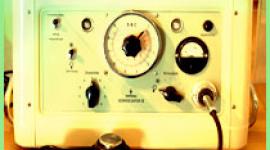
Both camps agree that ECT, which is administered annually to an estimated 100,000 Americans, most of them women, is a simple procedure -- so simple that an ad for the most widely used shock machine tells doctors they need only set a dial to a patient's age e and press a button.
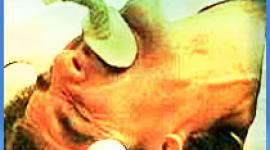
 Electrodes connected to an ECT machine, which resembles a stereo receiver, are attached to the scalp of a patient who has received general anesthesia and a muscle relaxant. With the flip of a switch the machine delivers enough electricity to power a light bulb for a fraction of a second. The current causes a brief convulsion, reflected in the involuntary twitching of the patient's toe. A few minutes later the patient wakes up severely confused and without any memory of events surrounding the treatment, which is typically repeated three times a week for about a month.
No one knows how or why ECT works, or what the convulsion, similar to a grand mal epileptic seizure, does to the brain. But many psychiatrists and some patients who have undergone ECT say it succeeds when all else -- drugs, psychotherapy, hospitalization -- have failed. The American Psychiatric Association (APA) says that about 80 percent of patients who undergo ECT show substantial improvement. By contrast antidepressant drugs, the cornerstone of treatment for depression, are effective for 60 to 70 percent of patients.
"ECT is one of God's gifts to mankind," said Max Fink, a professor of psychiatry at the State University of New York at Stony Brook. "There is nothing like it, nothing equal to it in efficacy or safety in all of psychiatry," declared Fink, who is so committed to the treatment that he remembers the precise date in 1952 that he first administered it.
There is no doubt that mainstream medicine is solidly behind ECT. The National Institutes of Health has endorsed it and for years has funded research into the treatment. The National Alliance for the Mentally Ill, an influential lobbying group composed of relatives of people with chronic mental illness, supports the use of ECT as does the National Depressive and Manic Depressive Association, an organization composed of psychiatric patients. The APA, the Washington-based trade association that represents t he nation's psychiatrists, has long battled efforts by lawmakers to regulate or restrict shock therapy and in recent years has sought to make ECT a first-line therapy for depression and other mental illnesses, rather than the treatment of last resort.
And the Food and Drug Administration has proposed relaxing restrictions on the use of ECT machines, even though the devices have never undergone the rigorous safety testing that has been required of medical devices for the past two decades. (Because the machines had been used for years before the passage of the 1976 Medical Device Act, they were grandfathered in with the understanding that they would someday undergo testing for safety and effectiveness.)
Many of the nation's most prestigious teaching hospitals -- Massachusetts General in Boston, the Mayo Clinic, the University of Iowa, New York's Columbia Presbyterian, Duke University Medical Center, Chicago's Rush-Presbyterian-St. Luke's -- regularly administer ECT. In the past three years a few of these institutions have begun to use the treatment on children, some as young as 8.
Managed care organizations, which have sharply cut back on reimbursement for psychiatric treatment, apparently look with favor upon ECT, even though it is performed in a hospital and typically requires the presence of two physicians -- a psychiatrist and an anesthesiologist -- and, sometimes, a cardiologist as well. The cost per treatment ranges from $300 to more than $1,000 and takes about 15 minutes.
Medicare, the federal government's insurance program for the elderly, which has become the single biggest source of reimbursement for ECT, pays psychiatrists more to do ECT than to perform medication checks or psychotherapy. Increasingly, the treatment is being administered on an outpatient basis.
In the Washington area more than a dozen hospitals perform ECT, according to Frank Moscarillo, executive director of the Washington Society for ECT and chief of the ECT service at Sibley Hospital, a private hospital in Northwest Washington. Moscarillo said that Sibley administers about 1,000 ECT treatments annually, more than all other local hospitals combined.
"With the insurance companies there isn't a limit [for ECT] like there is for psychotherapy," said Gary Litovitz, medical director of Dominion Hospital, a private 100-bed psychiatric facility in Falls Church. "That's because it's a concrete treatment they can get their hands around. We have not run into a situation where a managed care company cut us off prematurely."
Anecdotal Miracles
Because of the stigma of psychiatric illness in general and of shock treatment in particular, most patients do not openly discuss their experiences. Among the few who have is talk show host Dick Cavett, who underwent ECT in 1980. In a 1992 account of his treatment Cavett told People magazine that he had suffered from periodic, debilitating depressions since 1959 when he graduated from Yale. In 1975 a psychiatrist prescribed an antidepressant that worked so well that once Cavett felt better, he simply stopped taking it.
His worst depression occurred in May 1980 when he became so agitated that he was taken off a London-bound Concorde jet and driven to Columbia-Presbyterian Hospital. There he was treated with ECT. "I was so disoriented I couldn't figure out what they were asking me to sign, but I signed [the release for treatment] anyway," he wrote.
"In my case ECT was miraculous," he continued. "My wife was dubious, but when she came into my room afterward, I sat up and said, `Look who's back among the living.' It was like a magic wand." Cavett, who was in the hospital for six weeks, said that he has taken antidepressants ever since.
Twice in the past six years writer Martha Manning, who for years practiced as a clinical psychologist in Northern Virginia, has undergone a series of ECT treatments. In her 1994 book entitled "Undercurrents," Manning wrote that months of psychotherapy and numerous antidepressants failed to arrest her precipitous slide into suicidal depression. When her psychologist Kay Redfield Jamison suggested shock treatments, Manning was horrified. She had been trained to regard shock as a risky and barbaric procedure reserved for those who had exhausted every other option. Ultimately Manning decided that she had too.
In 1990 she underwent six ECT treatments while a patient at Arlington Hospital. She said she suffered permanent memory loss for events surrounding the treatment and was so confused for several weeks that she got lost driving around her neighborhood and didn't remember her sister's visit 24 hours after it occurred.
"It is scary, despite anybody's promises to the contrary," Manning said in an interview. Although some of her memories before and during ECT have been forever obliterated, Manning said she suffered no other lasting problems. "I felt I got 30 IQ points back" once the depression lifted.
"I was lucky," said Manning, who says her depression is now controlled by medication. "ECT was safe for me and very, very helpful. It was a break in the action, not a cure."
"I'm coming from a position of seeing ECT at its best," added Manning, who said she would have ECT again if she needed it. "I'm sure there are other people who've seen it at its worst."
Vanished Memories
Ted Chabasinski is one of those people.
A lawyer in Berkeley, Calif., Chabasinski, 59, says he has spent years trying to recover from the dozens of ECT treatments he underwent more than a half-century ago. At age 6, he was taken from a foster family in the Bronx and sent to New York's Bellevue Hospital to be treated by the late child psychiatrist Lauretta Bender.
As a child Chabasinski was precocious but very withdrawn, behaviors that a social worker who regularly visited the foster family believed were the beginnings of schizophrenia, the same illness from which his mother, who was poor and unmarried, suffered. " At the time hereditary causes of mental illness were fashionable," he said.
Chabasinski was one of the first children to receive shock treatments, which were administered without anesthesia or muscle relaxants. "It made me want to die," he recalled. "I remember that they would stick a rag in my mouth so I wouldn't bite through my tongue and that it took three attendants to hold me down. I knew that in the mornings that I didn't get any breakfast I was going to get shock treatment." He spent the next 10 years in a state mental hospital.
Bender, who shocked 100 children, the youngest of whom was 3, abandoned the use of ECT in the 1950s. She is best known as the co-developer of a widely used neuropsychological test that bears her name, not as a pioneer in the use of ECT on children. That work was discredited by researchers who found that the children she treated either showed no improvement or got worse.
The experience left Chabasinski with the conviction that ECT was barbaric and should be outlawed. He convinced residents of his adopted hometown; in 1982 Berkeley voters overwhelmingly passed a referendum banning the treatment. That law was overturned by a court after the APA challenged its constitutionality.
The Old and the New
There is little dispute that ECT administered before the late 1960s, commonly referred to as "unmodified," was different from later treatment. When Chabasinski underwent ECT, patients did not routinely receive general anesthesia and muscle paralyzing drug s to prevent muscle spasms and fractures, as well as continuous oxygen to protect the brain. Nor was there monitoring by an electroencephalogram. All of these are standard today. In the old days shock machines used sine-wave electricity, a different -- and ECT supporters say riskier -- form of electrical impulse than the brief pulse current dispensed by contemporary machines.
But critics contend that these changes are largely cosmetic and that "modified" ECT merely obscures one of the most disturbing manifestations of earlier treatments -- a patient grimacing and jerking during a convulsion. Some opponents say that the newer machines are actually more dangerous because the intensity of the current is greater. Others note that modified treatment requires that patients undergo repeated general anesthesia, which carries its own risks.
"The characteristics of the treatment that caused people to be outraged and shocked are now kind of masked so that the procedure looks rather benign," said New York psychiatrist Hugh L. Polk, an ECT opponent who is medical director of the Glendale Mental Health Clinic in Queens.
"The basic treatment hasn't changed," he added. "It involves passing a large amount of electricity through people's brains. There's no denying that ECT is a profound shock to the brain, [an organ that is] enormously complicated and of which we have only t he barest understanding."
Fifty years after Chabasinski was treated at Bellevue, Theresa E. Adamchik, a 39-year-old computer technician, underwent ECT as an outpatient at a hospital in Austin, Tex. Adamchik said that two years of therapy, antidepressants and repeated hospitalizations had failed to alleviate an unremitting depression caused in part by the breakup of her second marriage.
Adamchik said she agreed to have the treatments, which were covered by her health maintenance organization, after doctors assured her "it would snap me right out of my depression." When she asked about memory loss, she said, "They told me it would kill as many brain cells as if I went out and got drunk one night."
But Adamchik said that her memory problems persisted much longer than her doctors had predicted. "It's very strange. Sometimes there are memories without emotions and emotions without memories. I have flashes of things -- bits and pieces," she said. The treatments also erased memories of events that occurred years earlier, such as the 1978 funeral of her 2-year-old son, who drowned in a backyard swimming pool.
Adamchik said that although she has returned to work and is no longer depressed, she would never again consent to shock treatments. "I didn't have any memory problems before ECT," she said. "I do now. Sometimes I'll be in the middle of a sentence and I'll just forget what I'm talking about."
Sketchy Data
One of the chief problems in evaluating the effectiveness of ECT, noted University of Maryland anesthesiologist Beatrice L. Selvin, who reviewed more than 100 ECT studies conducted since the 1940s, is that "even the more recent literature is still rife with contradictory findings. . . . few research papers report well-controlled studies, similar procedures, measurements, techniques, protocols or data analyses," Selvin concluded in a 1987 article in the journal Anesthesiology. Her conclusion echoes a 1985 report by an NIH consensus conference, which cited the poor quality of ECT research.
A 1993 APA fact sheet said that at least 80 percent of patients with severe, intractable depression will show substantial improvement after ECT. Studies have shown that after a course of six to 12 treatments 80 percent of patients have better scores on a commonly used test to measure depression, usually the Hamilton depression scale.
But what the APA fact sheet does not mention is that improvement is only temporary and that the relapse rate is high. No study has demonstrated an effect from ECT longer than four weeks, which is why growing numbers of psychiatrists are recommending monthly maintenance, or "booster," shock treatments, even though there is little evidence that these are effective.
Many studies indicate that the relapse rate is high even for patients who take antidepressant drugs after ECT. A 1993 study by researchers at Columbia University published in the New England Journal of Medicine, found that while 79 percent of patients got better after ECT -- one week after their last treatment they had improved scores on the Hamilton scale -- 59 percent were depressed two months later.
Richard D. Weiner, a Duke University psychiatrist who is chairman of the APA's ECT task force, says that ECT is not a cure for depression. "ECT is a treatment that's used to bring someone out of an episode," said Weiner, who compares it to the use of antibiotics to treat pneumonia.
Yet other psychiatrists may not be as convinced of ECT's effectiveness. An article by researchers at Harvard Medical School published last year in the American Journal of Psychiatry found such disparities in the use of ECT in 317 metropolitan areas in the United States that they called the treatment "among the highest variation procedures in medicine." The researchers, who attributed the disparities to doubts about ECT, found that the popularity of the treatment was "strongly associated with the presence of an academic medical center."
ECT use was highest in several relatively small metropolitan areas: Rochester, Minn. (Mayo Clinic), Charlottesville (University of Virginia), Iowa City (University of Iowa Hospitals), Ann Arbor (University of Michigan) and Raleigh-Durham (Duke University Medical Center).
Another unresolved question about ECT is its mortality rate. According to the 1990 APA report, one in 10,000 patients dies as a result of modern ECT. This figure is derived from a study of deaths within 24 hours of ECT reported to California officials between 1977 and 1983.
But more recent statistics suggest that the death rate may be higher. Three years ago, Texas became the only state to require doctors to report deaths of patients that occur within 14 days of shock treatment and one of only four states to require any reporting of ECT. Officials at the Texas Department of Mental Health and Mental Retardation report that between June 1, 1993, and September 1, 1996, they received reports of 21 deaths among an estimated 2,000 patients.
"Texas collects data no one else collects," said Steven P. Shon, the department's medical director. The state, however, does not require an autopsy in these cases. "We need to be very careful" of attributing these deaths to ECT, he added. "Unless there's an autopsy, there's no way to make a causal connection."
Records show that four deaths were suicides, all of which occurred less than one week after ECT. One man died in an automobile accident in which he was a passenger. In four cases the cause of death was listed as cardiac arrest or heart attack. One patient died of lung cancer. Two deaths were complications of general anesthesia. In eight cases there was no information on the cause of death. At least two-thirds of patients were over 65, and in nearly every case treatment was funded by Medicare or Medicaid.
Suicide Preventive?
One of the most common reasons cited by doctors for performing ECT is that it prevents suicide. The report of the 1985 NIH Consensus Conference states that "the immediate risk of suicide" that can't be managed by other treatments "is a clear indication for consideration of ECT."
In fact there is no proof that ECT prevents suicide. Some critics suggest that there is anecdotal evidence that the confusion and memory loss after treatment may even precipitate suicide in some people. They point to Ernest Hemingway, who shot himself in July 1961, days after being released from the Mayo Clinic where he had received more than 20 shock treatments. Before his death Hemingway complained to his biographer A.E. Hotchner, "What is the sense of ruining my head and erasing my memory, which is my capital, and putting me out of business? It was a brilliant cure, but we lost the patient."
A 1986 study by Indiana University researchers of 1,500 psychiatric patients found that those who committed suicide five to seven years after hospitalization were somewhat more likely to have had ECT than those who died from other causes.
The researchers, who also reviewed the literature on ECT and suicide, concluded that these findings "do not support the commonly held belief that ECT exerts long-range protective effects against suicide."
"It appears to us that the undeniable efficacy of ECT to dissipate depression and symptoms of suicidal thinking and behavior has generalized to the belief that it has long-range protective effects," concluded the researchers in an article in Convulsive Therapy, a journal for ECT practitioners.
Another factor in ECT's growing popularity is economic, suggests Tampa psychiatrist Walter E. Afield. It can be summed up in one word: reimbursement.
"Shock is coming back, I think, because of the change in psychiatric reimbursement," said Afield, former a consultant to Johns Hopkins Hospital who founded one of the nation's first managed mental health care companies. "[Insurers] no longer will pay psychiatrists to do psychotherapy, but they will pay for shock or for medical tests."
"We're being pushed as a specialty to do what's going to pay," said Afield, who is not opposed to ECT, but to its indiscriminate use. "Finances are dictating the treatment. In the old days when insurance companies paid for long-term hospitalization, we had patients who were hospitalized for a long time. Who pays the bill determines what kind of treatment gets done."
The growing popularity of ECT concerns some psychiatrists. "It's better than it used to be, but I have grave reservations about it," said Boston area psychiatrist Daniel B. Fisher, who has never recommended ECT for a patient. "I see it now being used as a quick and easy and not very lasting solution and that worries me."
Questions About Memory Loss Persist
Does ECT cause long-term memory loss?
The model consent form drafted by the American Psychiatric Association and copied by hospitals says that "perhaps 1 in 200" patients report lasting memory problems. "The reasons for these rare reports of long-lasting memory impairment are not fully understood," it concludes.
Critics such as David Oaks, director of the Support Coalition of Eugene, Ore., an advocacy group composed of former psychiatric patients, say that the 1 in 200 statistic is a sham. "It's totally fictional and without scientific justification and is designed to be reassuring," said Oaks. Complaints about long-term memory loss are widespread among patients, Oaks said. Some insist that ECT wiped out memories of distant events, such as high school, or impaired their ability to learn new material.
Harold A. Sackeim, chief of biological psychiatry at the New York State Psychiatric Institute and a member of the APA's six-member shock therapy task force, says that the 1 in 200 figure is not derived from any scientific studies. It is, Sackeim said, "an impressionistic number" provided by New York psychiatrist and ECT advocate Max Fink in 1979. The figure will likely be deleted from future APA reports, Sackeim said.
No one knows how many patients suffer from severe memory problems, said Sackeim, although he believes that the number is quite small.
"I know it happens because I've seen it," he said. He attributes such cases to improperly performed ECT. Yet even when properly administered, Sackeim notes that greater memory loss is more likely after bilateral treatment -- when electrodes are attached t o both sides of the head -- rather than one side. Because doctors believe bilateral ECT is more effective, it is administered more often, experts say.
While blaming ECT for memory problems is understandable, it may not be accurate, noted Larry R. Squire, a neuroscientist at the University of California at San Diego.
In a series of studies in the 1970s and 1980s Squire, a memory expert who has spent years studying ECT, compared more than 100 patients who underwent ECT with those who never had the treatment. He found that memories from the days shortly before, during and after shock treatments were probably lost forever. In addition, some patients demonstrated memory problems for events up to six months before ECT and as long as six months after treatment ended.
After six months, however, Squire said that ECT patients "perform as well on new learning tests and on remote memory tests as they performed before treatment" and as well as a control group of patients who never had ECT.
The widespread perception that ECT has permanently impaired memory is "an easy way to explain impairment," Squire said in interview. When patients are pressured to have ECT, he said, "outrage . . . combined with a sense of loss or low sense of self-esteem " could account for such a belief, even if there is no empirical evidence to support it.
Some psychiatrists are skeptical of Squire's hypothesis. They question the ability of standard tests to detect subtle memory problems and point to their own clinical experiences with patients.
Daniel B. Fisher, a psychiatrist and director of a community mental health center near Boston, has "grave reservations" about ECT's effects on memory and says he has never recommended it to a patient.
"The variability is still there, the unpredictability and uncertainty about the nature of the side effects," said Fisher, who has a doctorate in neurochemistry and worked as a neuroscientist at the National Institute of Mental Health before he went to medical school. "You see these people who can perform routine functions [after ECT] but have lost some of the more complex skills." Among them, he said, is a woman he treated who coped adequately with everyday life but no longer remembered how to play the piano.
ECT Experts' Ties to Shock Machine Industry
Among the small fraternity of electroshock experts, psychiatrist Richard Abrams is widely regarded as one of the most prominent.
Abrams, 59, who retired recently as a professor at the University of Health Sciences/Chicago Medical School, is the author of psychiatry's standard textbook on ECT. He is a member of the editorial board of several psychiatric journals. The American Psychiatric Association's 1990 task force report on ECT is studded with references to more than 60 articles he has authored. Abrams, whose interest in ECT dates back to his residency in 1960s, has served on the elite committee that planned the National Institutes of Health's 1985 consensus conference on ECT. In addition he has long been a sought-after expert defense witness on behalf of doctors or hospitals sued by patients who allege that ECT damaged their brains.
What is less well known is that Abrams owns Somatics, one of the world's largest ECT machine companies. Based in Lake Bluff, Ill., Somatics manufactures at least half of the ECT machines sold worldwide, Abrams said. Most of the rest are made by MECTA, a privately held company in Lake Oswego, Ore.
Yet Abrams's 340-page textbook never mentions his financial interest in Somatics, the company he founded in 1983 with Conrad Melton Swartz, 49, a professor of psychiatry at East Carolina University in Greenville, N.C. Neither does the 1994 instruction manual for the device written by Abrams and Swartz, the company's sole owners and directors, which contains extensive biographical information.
Financial ties between device manufacturers, drug companies and biotech firms "are a growing reality of health care and a growing problem," said Arthur L. Caplan, director of the Center for Bioethics at the University of Pennsylvania School of Medicine.
For doctors "the questions that such financial conflicts of interest generate are, do patients get adequate full disclosure of options or are you skewing how you present the facts because you have a financial stake in the treatment and you personally profit from it every time it's used?" Caplan asked.
"It's especially disturbing with ECT because it's so controversial" and public mistrust of the treatment is so great, he added.
Abrams said his publisher at Oxford University Press knew about his ownership of Somatics. "No one ever suggested I list it," said Abrams. "Why should it be?" Abrams said he has disclosed his directorship of Somatics after several medical journals began requiring information about potential conflicts of interest. Caplan said that a growing number of medical journals are requiring disclosure of payments greater than $1,000.
Abrams said he sees "no specific conflict" between his role as an ECT expert and his ownership of a company that makes shock machines. He said he has not decided whether to list his ownership in the third edition of his book, which is due out next year.
Abrams declined to say how much he has earned from Somatics. Approximately 1,250 machines, priced at nearly $10,000, have been sold to hospitals worldwide, he said. Between 150 and 200 machines are sold annually, according to Abrams. Somatics also sells reusable mouthguards for $29, which are designed to minimize the risks of chipped teeth or a lacerated tongue.
Swartz, 49, declined to be interviewed. Last year USA Today reported that he considered his financial interest in Somatics to be "a non-issue." Swartz is quoted as saying that the company was founded to provide better machines and to "advance ECT."
"Psychiatrists don't make much money and by practicing ECT they can bring their income almost up to the level of the family practitioner or internist," Swartz is quoted as saying. Swartz also said that the profits from Somatics are comparable to having an additional psychiatry practice. (Last year psychiatrists earned an average of $132,000, according to the American Medical Association.)
Abrams and Swartz are not the only ECT experts with financial ties to the industry.
Max Fink, 73, a professor of psychiatry at the State University of New York at Stony Brook, whose passionate advocacy is widely credited with reviving interest in ECT, receives royalties from two videos he made a decade ago. Fink is one of six ECT experts who served on the APA's 1990 ECT task force, which drafted guidelines for the treatment.
In 1986 he made two videos about ECT, one for patients and their families, the other for hospital staff. Each sells for $350 and is used by hospitals that administer ECT. Fink said that Somatics paid him $18,000 for the rights to the videotapes; he said he receives 8 percent of the royalties. He declined to disclose how much money he has earned from the videos.
Duke University's Richard D. Weiner, 51, chairman of the APA task force on ECT, appears on a MECTA videotape. Weiner said he served as a consultant to the company about 10 years ago but has not "received any money directly" for his services. Instead MECTA deposited between $3,000 and $5,000 in a university account that Weiner controls which, according to a Duke spokesman, is earmarked for "research support and other educational functions."
Harold A. Sackeim, director of ECT research at New York's Columbia-Presbyterian Hospital, is also a member of the APA task force on ECT. Sackeim, who has consulted for both MECTA and Somatics, says he has not accepted cash payments from the manufacturers because he does not want to be perceived as "benefiting personally" from ECT. Instead both companies have made payments to his lab. Sackeim estimates that his lab has received about $1,000 from Somatics and "several tens of thousands of dollars" from MECTA.
Ethicist Caplan said that he believes such donations raise fewer ethical questions than do direct payments to a doctor or an equity interest in a company. Even so, he said, it is up to physicians who receive such payments to disclose this to the public an d especially to prospective patients.
"There needs to be full disclosure in writing and the information needs to be repeated over and over again," Caplan said. "Doctors need to give patients the opportunity to ask questions if they want, not to make those decisions for them by saying they won 't be interested."
Changes in Population and Insurance Make Elderly Women Most Common Patients
Forty years ago, the typical ECT patient resembled Randall P. McMurphy, the antihero immortalized by actor Jack Nicholson in "One Flew Over the Cuckoo's Nest." Like McMurphy, ECT recipients tended to be under 40, male and impoverished -- patients confined to state mental hospitals, often against their will.
These days the typical ECT patient is an elderly white woman -- clinically depressed, and usually middle or upper middle class -- who has signed herself into a private hospital. Because she is over 65 her bill is paid, in whole or in part, by Medicare, the federal government's insurance program for the elderly.
The profound shift in the demographics of ECT reflects several factors, experts say. Among them are the dramatic growth of the nation's elderly population and of Medicare; a growing awareness by doctors of the problem of geriatric depression, and the push by insurers that psychiatrists provide more fast-acting "medical" treatments and less talk therapy.
A 1990 report by the American Psychiatric Association concluded that advanced age is no bar to ECT; it cited the case of a 102-year-old patient who received the treatment. Because some psychiatrists believe shock therapy works faster and is less risky than drugs, it is increasingly being administered to elderly patients. Frank Moscarillo, director of ECT at Washington's Sibley Hospital, said the typical patient at his hospital is over 60. His oldest patient was 98, "a little old lady" in Moscarillo's words.
But some published studies have found that shock treatment can be risky, particularly for elderly patients with significant medical problems. They include the following:
-
A 1993 study by Brown University psychiatrists of 65 hospitalized patients over age 80 found that those who received ECT had a higher mortality rate up to three years after treatment than did a group treated with medication. Of 28 patients who received drugs, 3.6 percent were dead after one year. Of 37 patients who got ECT, 27 percent were dead within a year. The authors concluded that the differences in death rates were not primarily due to ECT, but to the fact that ECT patients had more serious physical problems.
-
A 1987 study of 136 patients by researchers at Washington University in St. Louis found that complications after ECT, including severe confusion and heart and lung problems, increased with age.
-
A 1984 study by doctors at New York Hospital-Cornell Medical Center found that geriatric patients developed significantly more complications, not all of them reversible, after ECT than did younger patients. Problems included irregular heartbeats, heart failure and aspiration pneumonia, which occurs when an anesthetized patient inhales vomit into the lungs. All three conditions can be fatal.
-
A 1982 study of 42 ECT patients at New York's Payne Whitney Clinic found that 28 percent developed heart problems after ECT. Seventy percent of patients previously known to have cardiac problems experienced complications.
-
Even so, all of the researchers concluded that the potential benefits of ECT for depressed elderly patients tend to outweigh the risks. Shock, they say, is effective in quickly treating life-threatening dehydration or weight loss caused by severe depression.
Instances of involuntary electroshock
At the same time, there is concern that the elderly are particularly vulnerable to inappropriate or dangerous treatments.
Last year the Illinois Appellate Court ruled that ECT was too risky and not in the best interests of Lucille Austwick, an 82-year-old nursing home patient who suffers from dementia and chronic depression.
The state's highest court reversed the decision of a lower court in Chicago that had ordered Austwick, a retired telephone operator, to undergo as many as 12 ECT treatments at Rush-Presbyterian-St. Luke's Hospital against her will. Austwick, who has no family, had previously been declared incompetent by a court.
In a strongly worded opinion the judges detailed contradictions in the testimony of Austwick's psychiatrist, who said he had sought a court order "because medication therapy would take a long time [and] he felt it would be better to get [the patient] out of here [the hospital] rather than stay here and spend time and money."
In Wisconsin, the state agency that protects the rights of the mentally ill last year issued a report detailing nine cases in which patients at St. Mary's Hospital in Madison received ECT against their will or without proper informed consent.
All but one of the patients was over 60 and female. Two were coerced into having ECT, the report by the Wisconsin Coalition on Advocacy stated. In another case the hospital threatened to get a court order to administer shock over a spouse's objections, investigators said.
The agency concluded that "medical and nursing practices surrounding ECT at St. Mary's psychiatric unit may not consistently reflect the minimum standards required by state law and relevant professional standards."
Hospital officials denied that St. Mary's had violated patients' rights. They noted that regulatory officials had not taken any action. The hospital made changes in its ECT consent documents, but not as a result of the commission's report, officials said.
Discovered in 1938, Electroshock Has Fluctuated in Popularity
Even its most ardent defenders agree that ECT arouses primitive fears: of being struck by lightning, of Dr. Frankenstein's experiments, of electrocution and the electric chair.
"ECT is something that just because of its nature doesn't look good," said Richard D. Weiner, chairman of the American Psychiatric Association's 1990 task force on ECT and an associate professor of psychiatry at Duke University Medical Center. "You're talking about putting electricity on top of somebody's head."
"ECT is a bizarre treatment," agreed Harold A. Sackeim, chief of the ECT service at New York's Columbia-Presbyterian Hospital. "In terms of its surface features, it has a horrific aspect to it."
For thousands of years, the notion of using electricity to treat illness has held a fascination for doctors. In 47 A.D. Roman healers applied electric eels to the heads of headache sufferers. In the 1920s and '30s American and European psychiatrists began treating some mental illnesses by inducing epileptic-like convulsions through massive doses of insulin and other drugs. They discovered that some patients showed dramatic, albeit temporary, improvement.
ECT was discovered somewhat by accident in 1938 after an Italian psychiatrist adapted a pair of tongs used to stun hogs before slaughter and applied them to the temples of a 39-year-old engineer from Milan, shocking him out of a delirious state in which h e spoke only gibberish.
By the 1940s insulin coma and electric shock treatments were widely used in American mental hospitals, especially the overcrowded public institutions that housed as many as 8,000 patients and as few as 10 doctors.
Historical accounts are replete with examples of shock used to subdue and punish patients, sometimes under the guise of treatment. Particularly troublesome patients received hundreds of shocks, often several in a single day.
"ECT stands practically alone among the medical/surgical interventions in that misuse was not the goal of curing but of controlling the patients for the benefits of the hospital staff," medical historian David J. Rothman of Columbia University told an NIH consensus conference in 1985. "Whatever the misuse of penicillin or coronary artery bypass grafts, the issue of staff convenience was not nearly as prominent as with ECT."
The invention of Thorazine and other antipsychotic drugs led to a decline in the use of ECT. So did published accounts of abusive treatment. The most famous was "One Flew Over the Cuckoo's Nest," Ken Kesey's 1962 novel based on his experiences in an Oregon state mental hospital, which in 1975 was made into a movie starring Jack Nicholson.
By the mid-1970s ECT had fallen into disrepute. Psychiatrists increasingly turned to drugs, which were cheaper and easier to administer and aroused less opposition. In addition, a series of landmark cases involving the abuses of shock therapy helped form the basis for patients' rights and informed consent legislation.
The late 1980s marked a resurgence in the use of ECT, and in recent years ECT opponents in a few states have tried to restrict or ban the treatment. In 1993 the Church of Scientology, which opposes psychiatric treatment, and several groups of anti-ECT activists helped persuade Texas lawmakers to bar ECT for children under 16 and to require hospitals to report deaths within 14 days of treatment.
Last year a bill to ban ECT was the subject of a two-day public hearing before a Texas legislative committee that heard testimony from 58 witnesses. That bill died in committee but its sponsors predict it will be resurrected next year when the legislature reconvenes.
FAMOUS PATIENTS WHO HAD ECT:
Ernest Hemingway fatally shot himself after being released from the Mayo Clinic, where he had undergone ECT.
James Forrestal, the first U.S. secretary of defense, committed suicide in 1949. Forrestal, 57, had received a series of insulin coma treatments, a precursor of ECT.
Poet Sylvia Plath described her shock treatments in her 1971 book, "The Bell Jar." She wrote, "with each flash a great jolt drubbed me till I thought my bones would break and the sap fly out of me like a split plant."
Former Sen. Thomas Eagleton (D-Mo.) was forced to relinquish his spot as vice presidential candidate on the Democratic ticket in 1972.
Performer and political activist Paul Robeson underwent a series of ECT treatments in London in 1961.
At 17, rock star Lou Reed was given shock treatments designed to "cure" his homosexuality at a New York state mental hospital.
Film actress Frances Farmer received shock treatments while confined to a state mental hospital in Washington.
New Zealand writer Janet Frame described her harrowing experiences with ECT in a 1961 autobiography.
Former Boston Red Sox outfielder Jimmy Piersall wrote that ECT helped pull him out of a serious depression in the early 1950s.
Vaslav Nijinksy, the famed ballet dancer, underwent a series of insulin coma treatments in Europe in the 1930s.
Writer Zelda Fitzgerald underwent insulin coma treatments, a precursor of ECT, at a North Carolina hospital.
Literary critic Seymour Krim, a chronicler of the Beat Generation, received ECT in the late 1950s.
Movie actress Gene Tierney underwent eight shock treatments in 1955, according to her autobiography.
Pulitzer prize-winning poet Robert Lowell was hospitalized repeatedly for manic depression and alcoholism.
Film star Vivien Leigh, pictured in "Gone with the Wind," received shock treatments.
Talk show host Dick Cavett had a series of ECT treatments in 1980. "In my case, ECT was miraculous," he wrote.
Robert Pirsig described his experiences with ECT in his 1974 best-selling book, "Zen and the Art of Motorcycle Maintenance."
Piano virtuoso Vladimir Horowitz received shock treatments for depression and later returned to the concert stage.
Concert pianist Oscar Levant described his 18 ECT treatments in his book "Memoirs of an Amnesiac."
Letters to the Washington Post on the "Shock Therapy" Article
I was impressed with the evenhandedness of "Shock Therapy: It's Back" [Cover, September 24]. I had 12 shock treatments in early 1995 and 17 early this year. The results? I have major memory loss of at least the past two years. I still get somewhat confused when driving, even in familiar areas.
I retired from my job between the two series of treatments, and there were three different retirement parties for me. I have no recollection of any of them. I have kept a daily journal for the past two years. Most of it is so unfamiliar to me that it could have been written by somebody else.
Another result of the treatments is that I am alive to write this; I did not kill myself. I believe that my "cure," if any of us can be cured of our maladies of the mind and of the soul, will come from my continuing talk therapy. Recovering from depression is real work, and neither pill nor machine can substitute for the labor involved.
A fellow human who has been trained can make the work of recovery just bearable, but possible. It is the human touch that makes the difference; the hand that can reach to the bottom of the barrel to find me, that can give a shove from behind or a pull from ahead and that can squeeze my hand in encouragement as we move ahead together.
I have the utmost respect for people in the mental health fields. I intensely hope that researchers will be doing studies that will shed more light on the memory problems connected with ECT [electroconvulsive therapy]. There is research going on into treatments with similarities to ECT and continuing research into many aspects of depressive illness.
With managed care doing its part, perhaps we can look forward to bringing down the true costs of serious depression, which are suffering, broken physical health, broken homes, lost productivity and suicide.
Ann M. Hargrove
Arlington
The superb article raised serious questions not only about the procedure's usefulness but about its safety.
The American Psychiatric Association's model informed consent form, which many ECT facilities use at least in part, makes false claims on two safety issues: that "perhaps 1 in 200" ECT patients report lasting memory problems and that one in 10,000 patients dies as a result of ECT.
The crucial question is not, "Does ECT cause lasting memory problems?" but, "How severe and disabling are they?"
The article reported on a group of more than 2,000 ECT patients in Texas that had a death rate of roughly one in 100. It also cited a 1993 study of 65 hospitalized patients over 80 years of age, 28 of whom were treated with medications and 37 with ECT. Within a year, one in the medicated group and 10 in the ECT group were dead.
In these and other ways, psychiatrists are misleading tens of thousands of patients annually into accepting ECT.
I underwent electroshock involuntarily in 1963.
Leonard Roy Frank
San Francisco
As a psychiatric survivor of more than 50 insulin subcoma shocks, shock critic and anti-psychiatry activist, I congratulate you for publishing a sound and well-researched critique. Electroshock is increasing at an alarming rate as a psychiatric pacification weapon north and south of the (U.S.-Canada) border.
Don Weitz
Toronto
I am a former teacher and registered nurse whose life was forever changed by 13 outpatient ECTs I received in 1983. Shock "therapy" totally and permanently disabled me.
EEGs [electroencephalograms] verify the extensive damage shock did to my brain. Fifteen to 20 years of my life were simply erased; only small bits and pieces have returned. I was also left with short-term memory impairment and serious cognitive deficits.
It is beyond me how the government and the FDA can take issues such as the labeling of orange juice as "concentrated" or "fresh" as important to the American people while disregarding issues such as shock machines. There is no government inspection of ECT devices.
Shock "therapy" took my past, my college education, my musical abilities, even the knowledge that my children were, in fact, my children. I call ECT a rape of the soul.
Barbara C. Cody, BS, RN
Hoffman Estates, Ill.
Your cover story correctly notes that electroconvulsive therapy is broadly considered by organized medicine to be a treatment of proven efficacy against severe depression. However, it is inaccurate in stating that the American Psychiatric Association "has sought to make ECT a first-line therapy for depression and other mental illnesses, rather than a treatment of last resort."
The APA Task Force Report on ECT recommends that the treatment be used only when other forms of therapy, such as medications or psychotherapy, have not been effective or cannot be tolerated, and in life-threatening cases when other treatments will not work quickly enough.
It is significant that the National Alliance for the Mentally Ill and the National Depressive and Manic-Depressive Association, two major organizations representing patients and families, support the appropriate use of ECT.
Melvin Sabshin, MD
Medical director
American Psychiatric Association
Washington
In 1995, Texas State Reps. Dawnna Dukes, Billy Clemmons and I introduced bipartisan legislation in the House of Representatives to outlaw the use in Texas of the barbaric psychiatric treatment known as electroshock therapy. We were aided by advocacy groups like the National Association for the Advancement of Colored People (NAACP), the National Organization for Women (NOW) and the World Association of Electroshock Survivors.
Our legislation died in committee. Fortunately, Texas has a law requiring detailed reporting on the use of shock therapy. As your story pointed out, vulnerable elderly women are the primary targets.
Since introducing my bill, I have met with and heard from scores of human "after-shock" victims who were treated like lab rats and now suffer permanent new afflictions such as memory loss, learning disabilities and seizure disorders. Few people are properly warned of the known dangers of shock treatment.
Senfronia Thompson
State representative
Austin
next: Shock Treatment Victim Supports ECT Lawsuit
~ all Shocked! ECT articles
~ depression library articles
~ all articles on depression
APA Reference
Staff, H.
(1996, September 24). Shock Therapy...IT'S BACK, HealthyPlace. Retrieved
on 2026, October 16 from https://www.healthyplace.com/depression/articles/shock-therapyits-back