Why The Courage to Heal Isn't on My Recommended Reading List
The Courage to Heal is a self-help book – “A Guide for Women Survivors of Child Sexual Abuse” - that has enjoyed widespread popularity among both those living with Dissociative Identity Disorder and many of their treatment providers since its first publication in 1988. I first read it six years ago and found it helpful in some ways. But subsequent readings have illuminated for me the book’s biggest flaw: its reckless approach to traumatic memory.
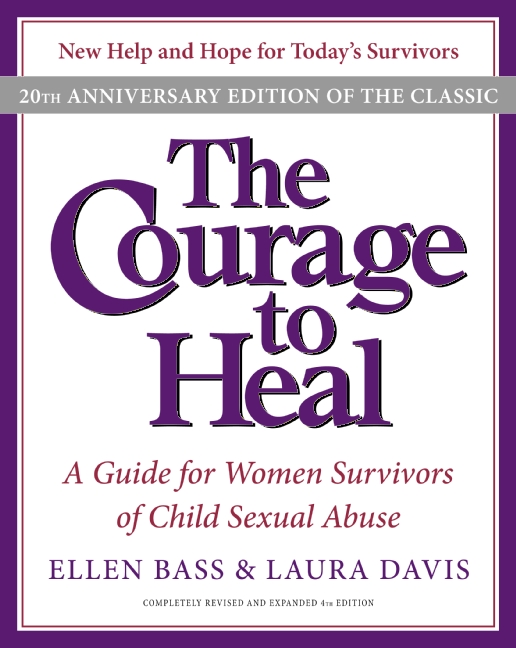 If you are unable to remember any specific instances [of abuse] but still have a feeling that something abusive happened to you, it probably did. - The Courage to Heal, 1st edition
A Hunch Isn't A Traumatic Memory
Thanks in large part to Laura Davis and Ellen Bass, authors of The Courage to Heal, this if-you-suspect-it-happened-then-it-probably-did idea is still circulating among pockets of Dissociative Identity Disorder treatment providers and sufferers. While I respect instinct, referring to hunches as memories is at best absurd and at worst dangerous. There is no scientific data to support something so disturbingly reminiscent of witch hunt logic and in fact, there's plenty of research that speaks to the opposite. The Innocence Project, an organization working to overturn wrongful convictions primarily through DNA testing, reports:
Eyewitness misidentification is the single greatest cause of wrongful convictions nationwide, playing a role in more than 75% of convictions overturned through DNA testing.
While eyewitness testimony can be persuasive evidence before a judge or jury, 30 years of strong social science research has proven that eyewitness identification is often unreliable. Research shows that the human mind is not like a tape recorder; we neither record events exactly as we see them, nor recall them like a tape that has been rewound. Instead, witness memory is like any other evidence at a crime scene; it must be preserved carefully and retrieved methodically, or it can be contaminated.
Traumatic memory is not infallible. I believe it's vital for both those of us living with Dissociative Identity Disorder and our treatment providers to remain aware of that fact.
Let's Not Make Assumptions about Traumatic Memory
As uncomfortable as it is, living with Dissociative Identity Disorder means making peace with a fair amount ambiguity. It's tempting to try and rid ourselves of that discomfort by jumping to conclusions about traumatic memory, which is precisely what I believe The Courage to Heal promotes, purposefully or not. But we owe it to ourselves to exercise more caution than that. Those of us with DID have the capacity to discern our own truth without relying on hunches to do so. And our treatment providers should be able to aid us in that endeavor without minimizing feelings or inflating the facts.
As for the book ... I appreciate the authors' compassionate message to people struggling with their pasts. I just wish they'd delivered that message with more balance, and a healthy respect for the potential ramifications of confusing hunches with memories.
As a reminder, Dissociative Living reflects my own research, experiences, thoughts, and opinions; all of which may differ from yours. You are the authority on your own truth. As such, and as always, I encourage readers to offer their own perspectives.
APA Reference
Gray, H.
(2011, March 3). Why The Courage to Heal Isn't on My Recommended Reading List, HealthyPlace. Retrieved
on 2026, May 13 from https://www.healthyplace.com/blogs/dissociativeliving/2011/03/why-the-courage-to-heal-isnt-on-my-recommended-reading-list
Author: Holly Gray
On the other hand . . .
I read this book many years ago, just as I was entering the turmoil of remembering, questioning and doubting myself all the way (as I'd been covertly taught over a lifetime). I happened to mention to my two sisters one day, "This is so strange but I've been diagnosed with PTSD." Both my sisters surprised me by responding, "Me too."
THEN I happened upon an old book manuscript that my now deceased father had written (not published), wherein the protagonist was obviously based upon himself and he rapes his "fiancee," who had my unusual name. Yes, truly.
Then I made myself look at the peculiar memory I always had where he violently threatened me but somehow I had never been able to recall what came before or after the episode. I had to admit that was a bit strange.
The pressures and powers to forget sexual abuse are great, both in family and society. In fact, I've come to the sad conclusion that the vast majority of survivors never really deal with their childhood wounds (a neglect for which there are always repercussions).
To critique an encouragement of people trusting their intuition in such matters is really getting the prescription dangerously wrong.
You folks have no idea of the bravery and fortitude it took for the authors to write The Courage to Heal. I respect your opinion about the faults of the book, but it has helped thousands of people understand the origin of their misery and more credit should be given them. I'm so tired of unbalanced critique.
Yes, yes! Thank you Wendy Williams. Glad to hear a "voice."
Thank you, Wendy Williams. This book helped me enormously. I have done a profound amount of healing with the many many tools they teach. I'd been in therapy at many times throughout my life and childhood. I'd been reading plenty of self-help books and books on the science of the brain and brain waves. But nothing has ever helped me heal from my childhood sex abuse as profoundly and deeply as the things I learned from this book. I am in a wonderful 12 step program for survivors now- something this book also led me to try- and many of the other women in my group have also found this book to be in invaluable and cherished resource for healing. To the author of this article I would say: Everyone is different- if it didn't help you for whatever reason, you should absolutely look for that thing that does. But I don't think it's fair to invalidate the experience of hundreds of thousands of women who HAVE found this book to be a powerful and effective healing guide. Why get online just to bash a tool that so so many find to be a beacon through the dark? Why try to turn others away from finding a potential healing source just because it didn't work for you specifically? That doesn't seem to be coming from a very loving place. This book was written to be of service to others. In what spirit was this negative article written? You could be potentially robbing someone of a powerful healing tool.
Because of this book, I have come so very far, especially in my sexual healing, something I did NOT want to address. And this book is the thing that blew the lid open for me and made me face how much of the way I related to partners was stemming from my history of abuse. It made me finally ready to heal those scars as well, and choose a path that has led me to the most fulfilling and healing relationship and level of intimacy I never thought was possible for me. This book gives you MANY concrete practical tools, for women who have all sorts of different types of abuse and upbringings. It's not at all geared only to women who have repressed memories or D.I.D. That seems like a pretty small portion of the book. Most of the book is comprised of common symptoms most survivors share, how this trauma affects our daily lives, and tools to implement to heal from these negative affects and become more whole, complete and happy. It also contains many many stories of actual survivors, all of which have very real and detailed memories. This book can apply and be profoundly helpful to ANY woman with any level of child abuse in her past, any level of memories, any level of side effects from the trauma. And the stories of other survivors shared in the book are so powerful, encouraging, beautiful, inspiring. You can see yourself in at least one of them, most likely many. This book made me feel less alone, and less like a freak. I've spent a lifetime analyzing myself and studying human psychology as an adult- I feel I know myself and why my mind works the way it does far better than the average person. I pride myself on my level of self awareness and self understanding. And yet this book helped me connect so many more dots than I could imagine. It was a rapid year of advanced healing, the year I worked through this book. It's astounding what I got from it. It facilitated a journey toward my truest and most healthy self.
And in terms of any other books survivors find helpful in healing from child sex abuse, know that THIS book is the one that paved the way for them. The first edition of this book came out in 1984 at a time when there were no other well-known readily available resources for survivors. It was still believed by many in the psychology community that incest was a one in a million statistic. There were no guidelines for helping children or adult women in therapy for this type of trauma, because no one was talking about it, let alone studying it or teaching coping skills for it. This book was written by a survivor and a woman who worked with survivors with the intention of being a lifeline for women when there was no where else to turn. THIS book got the conversation going and blew the lid open on just how big a problem incest and child sex abuse were in this country. It addressed the taboo and let women step out of the shadows into the light- to stop hiding their past and trauma as though it was a shameful dirty secret. To accept their past, and to face it and work THROUGH it rather than bury it and let it slowly destroy or end their life. And it gave numerous, clear, practical steps and tools anyone could utilize as they embarked on their healing process with this book as that cherished friend hiding their hand every step of the way.
It's wonderful their are so many books and tools now for people who have survived the most heinous of traumas, but those other helpful guides do not cancel out the invaluable and profound godsend this book has been for millions of survivors. It facilitated a total shift in perspective on the subject of incest and child sex abuse and heralded in a new and brighter era in healing.
These authors deserve their due, and I for one am forever grateful- more grateful than I could ever express in words.
May all of us find self-love, acceptance, peace, healing, and joy.
You folks HAVE NO IDEA of the bravery and hard work it took to bring The Courage to Heal into the light back then and help thousands of people think about the fact that perhaps their misery had something to do with incest/childhood sexual assault. I respect your opinion but cite you for your lack of mention about what GOOD the book did for so many.
I agree with your review. The book did have some helpful things but I felt like they spent too much time on the "if-you-suspect-it-happened-then-it-probably-did" idea and on writing exercises to help you to prob into lost memories. I am a survivor of childhood sexual abuse and my memories are mostly all there and corroborated by family members. I already had enough horrible memories, flashbacks, and nightmares, I did not need to dig up more. The book really did not address PTSD and trauma recovery of actual memories nor the consequences and possible solutions of dealing with severally dysfunctional family dynamics. The best help I found has been in more resent books that focus more on PTSD/trauma recovery and reading research literature about my specific type of CSA. It was here that I found out that my reactions were normal for someone that had been through so much trauma and offered suggestions toward possible solutions or comfort through the healing process. Of course therapy and identification with others with problems similar to mine has been of the most benefit.
I agree with the statement that if you think it happened, it probably did, because I think alot of the abuse I suffered was because of what I perceived it to be as a child. For example, if as a young girl I didn't like walking past the bathroom to see my nude father sitting on the toilet and it scared me, or if when I walked by, I would discretely close the door so I wouldn't have to see him, and he would slam it back open and yell. Some people may think that's not sexual abuse, I think it is because of how it made me feel, and he knew us girls (there were 3 of us) didn't like it when he did that.
I am not saying this is the only type of abuse I suffered, it isn't, and unfortunately, far worse.
I am also aware that in some families this same situation might not have bothered anyone in the family. They may be the kind of family that accepts a father walking around nude making his coffee in the morning, and something like my example may not phase them. But that wasn't us and that wasn't my family.
If the author is talking about perception and how its time for victims of parental sexual abuse to come to terms with only actual abuse they can remember and not fragments or feelings - I think that's wrong.
Stephanie, your reply means a lot to me and I just want to thank you for sharing. I relate, and I wish you didn't have to go through that painful journey.
"DID is scary and traumatizing enough without the belief that more is to come" I agree wholeheartedly. I never liked the statement, "It gets worse before it gets better." Yes, there's that hump before you can coast again when you're running uphill, and many things are harder before they get easier. However, nothing should continually get worse in an effort to be better. If it keeps getting worse and worse, then it's probably the wrong approach.
I have had both experiences. I have abuse that I completely remember (wish I could forget) and I also had "memories" of earlier abuse come up during EMDR. Those were false, some based on truths or nightmares, filled in with fears, and feelings about that person's role in the abuse that I know happened. What I realize now is everyone's experience is valid, and we don't need to explain it in a story that anyone else will deem traumatic. If something traumatizes us, it traumatizes us.
Treatments in general need to be careful that they are helping rather than harming. Feelings are real, but that doesn't mean they always need be explained. Peace can happen when we stop looking in the way we thought we needed to as long as we don't lose hope. Trusting intuition and being curious and open (even to the fact that what we were originally curious and open to may not be true) is different from chasing a hunch, and one of the mindful practices I love most is Letting go: not fighting or going after something that comes into your awareness. It's hard, but it gets easier (imagine that, it doesn't get worse and worse before it gets better...it just starts off hard, and gets easier).
I finally opened this book, because I've been so afraid of it for its bad rep. So far, it's not nearly as bad as I had made it up to be in my head. I just had a bad experience with dissociation (not even DID, just feeling severely ungrounded/disconnected from the present and back in the trauma during trauma therapy). It's been five years since starting trauma therapy, and there is peace on the other side. I agree with most everything that was said, from all perspectives, and I just wanted to share my two cents. I'm glad the new additions caution the possibly-harmful statement. Feelings are real and deserve care, and we are also real and deserve to live now.
We do not have hunches for no reason and any feeling exist for a reason. The degree society protects parents is out of this world. Children pay the hefty price and remain silent so mothers, fathers and uncles remain untouched. People love this labelling game DID OR OCD etc etc. but why not help these victims acknowledge the truth from their bodies. By saying that all these doubts (hunches) are lies is quieting indeed someone can sigh and move on but the body remembers everything and will try to make the trauma known by symptoms only then are we ready to talk about the past and maybe something happened so traumatic that forgetting was the best choice otherwise the pain is unbearable for us children. Now as adults we have to break the wall of silence. Sexual abuse of children exists and many are in jail for that among them parents.
Are you familiar with the moral panic/mass hysteria in the 1980s and early 1990s that destroyed thousands of lives, including many small children who had been convinced they were abused when they had not been, known as The Satanic Panic? Books like this fueled it. Sybil actually started it in 1973 and Michelle Remembers (a ripoff of Sybil with Satanic Cults) contributed to the fasicination with Recovered Memory Therapy in 1980. The panic started coming out of quack therapist offices and into public view that same year. Both books were full of lies and later debunked. DID, previously MPD, was not even an official diagnosis until these works of fiction came out, prompting feminists and therapists to have it recgonized. Cases suddenly shot from 90 speculative in 200 years to thousands upon thousand in 1980, all thanks to these books. Families were destroyed, people committed suicide, women and children were instutionalized for years, and several victimology feminists raked in the money while promoting this garbage. People still try to stop this book from being published and still want Ellen Bass and Laura Davis behind bars, where they belong, along with several other well known radical feminists and horrific therapists.
"Me thinks thou doth protest too much." You sound like a perpetrator of child sex abuse wanting to silence victims and the truth. So... you are passionately declaring you feel the ones who belong in JAIL are the women who wrote a book during a time when there were no readily available resources that helped HUNDREDS OF THOUSANDS of women heal, including myself, who have undeniable clear memories of a lifetime of abuse, but not the child molesters? Hmmm... it seems clear which team you are on.
There is one other thing I wwould like to add. Most of the women/radical feminists who wrote books of this nature had zero qualifications. A few did, like Feminist Therapist Judith Herman who wrote Trauma and Recovery and Father Daughter Incest. She happened to be practicing RMT, which resulted in multi million dollar malpractice lawsuits, while writing those highly acclaimed books (which should be discredited as opposed to handed out in women's studies classes) but most authors perpetuating the recovered memory & incest survivors machines had no background in therapy or psychology. They did a lot to damage and discredit actual victims, and watered down the serious nature of the crime.
My therapist says she used to recommend The Courage to Heal to patients until she realized there was vicarious traumatization from the stories within. She wants me to try to find something similar... about the stages of trauma recovery and what is to be expected. Can someone please recommend a book like this? (Not a workbook). Thanks so much.
I remember reading this book when I was just a wee snapper. It was the first to validate my experiences of abuse that I didn't really understand. In the aloneness of my world I found a comparison of feeling and meaning that, whilst I could not connect with in terms of my own experience, made sense in the words provided. I love this book and I get others experiences but for me it was the first place where my difference from others was reflected with another's heart.. I still feel the connection that these women created. For me it was a herstorical moment in time..
I've found all of the comments to this blog very interesting. I am such a realist, that thinking about having memories that are invented or operating on a hunch, is something I would never go for.
I have a number of memories of assault and sexual abuse fro 8 to 16 years of age. All my life I have struggled with myself and culd not understand why I didn't seem to be like "normal people" (whatever that is). I have DID and PTSD and Depression. For many years I wouldn't consider any help with any of this. Then one day I mentioned the abuse to the right person, and to another, and both had been victims of incest. They strongly suggested that I get a therapist to work through the issues and find the answers I needed so that I didn't have to go on living on the verge of suicide and emotional crisis.
The Courage To Heal book and workbook were suggested to me because I wasn't able to accept the idea of therapy. I made the purchase and those first few steps were very difficult. I found myself in the pages of these books, and realized that just maybe this was my core problem all along.
After working through quite a bit of the books I went back to the section on getting a therapist. I still didn't like the idea, and had no intention of being in therapy for 20 years like these friends of mine. After a few months I decided that I really did need professional help. Now I have a good therapist with many years of treating childhood sexual abuse and PTSD. This is probably the most positive thing I have done for myself in my entire life.
While the authors of Courage To Heal may not be "professionals" they shared enough of their own experiences and knowledge that it gave me a starting point to recover. My therapist and I are now working through their workbook together, and she adds her take along with what I read. It is very difficult and emotional work, but it feels very right. I haven't found anything in the latest version of the books that is anything other than good for my recovery. With that said, I'd like to leave you with the idea that this book may not be for everyone, but for some it's worth its weigh in gold.
ny destroyed families...so much needless suffering.
All so Ellen can make money from her (sorry) lesbian fantasy.
I took my 75 yr old mother and wife to a meeting downtown Sacramento being put on by the Calif Dept of Mental Health Professional Licensing. They had a meeting to address the 60,000 families destroyed by Ellen Bass's travesty of truth.
135 couples... old old couples were there pleading to stop the nonsense stemming from "Courage to Heal". We just stood in the back of the standing room only room/ Man and wife teams one after another for 3 hrs gave their storuies of lunatic (but state licensed) MFTs who were using the CTHeal book to convince depressed and vulnerable 35-45 yr old women that their own fathers had molested them. Not one shread of protection from the state from this travisty. It had just happened too my own family when my depressed older sister fell prey to this nonsense. I myself met with her mislead therapist. And after finding the 2 books at the time that dipsroved the whole nonsense (Making Monsters and The MYth of Repressed Memory) and how the lesbian based MMFTs "mafia" ...quite true even tho the state dept of licensing was only then becoming aware of the issue. And all of it was stemming from that horrible Book... and it prove untruth.
It took years to recognize this travesty. And every person in that room is dead today. except me and my wife. we were the youngest people there. And after it was over we just looked at each other and said "...everyone here...every innocent misaccused peorson here... will be dead by the time Ellen Bass's book is proven to be a lie.
And guess what, its just what the Authors of Courage to Heal planned on.
What a horrible thing to happen in our country. No different at all from the Salem Witch Trials... no different at all. May Ms Bass rot... I have no nice words for her.
Well it is easy to criticise a book with the knowledge from today. It was written in a time when hardly anyone wanted to know about abuse and all is effects nor was there any proper research into the subject. Anyone who suffered from DID ect had nothing to find a way through it. There was not a lot knowledge about how memories work then but I believe that our body and our instinct do give us the signs when something is not right. It is a self-help-book nothing scientific or professional so taking care and using your own witts is essential in my opinion. And I do not know but the word "probably" never made me think "something has happened". It made me think "There is a possibility but now find out if it is true!" Well sadly for me it is true. Still don't have all the memories but I think I don't need them really. There is a reason why my mind does not want them to come up and when it is time they will.
And as someone wrote before: It is never good to just rely on one book.
But thanks for the blog-post and for all those comments. I think everyone of you is very brave!!!!!
Hi Lisa,
Thanks for reading and taking the time to comment. I see your points about the time period. Understand, I am not out to vilify Ellen Bass and Laura Davis. However, as you say, "There was not a lot knowledge about how memories work then ...." Yet Bass and Davis wrote a book without any scientific backing that implicitly claims to know how memory works and actively sought to help women remember abusive histories. Like I said to Memoryvictim above, I believe their motives were good. Still, I can't, in good conscience, cite this book as a helpful resource, except as an example of what not to do.
Holly
…..”it seems that what’s offensive to you is my belief that recovered memories are sometimes accurate.”
This the only ad hominem that I have seen so for on this blog. No wonder you would not defend it. Frankly I was surprised to see it from you.
i think we're using definitions of memory that are a bit broad. there are several different types of memory and several different types of traumatic memory. narrative memory is inherently unstable. somatic memory has been proven to be very very accurate for what it is and the information it encodes.
This is a great post. It's been a long time since I looked at this book. I think it has to be seen in the context of what was known back in 1990 and how people thought about trauma. It's a book that can prop up people new to healing. I don't think it has helped when looked at long-term. It has added fuel to the fire. But that fire has been necessary, I think. The debate, while an ugly one, is not what it was back 20 years ago. I have not looked at recent editions, so I don't know what changes were made. If I were the authors, I would have made totally new books instead of new editions because of the hard views on both sides. But, that's me. I would have tried to make a new contribution.
I think everyone needs to understand that this is a "cool aid" book. It's not serious. Both authors (Bass and Davis) wrote a self-help book, and multiple follow up editions, from a perspective of authority, without having any clinical background or credentials.
When I first read this 20 years ago, yes, I had a sense of validation. But this quickly gave way to anger, because I realized that they were only serving to set up an "us" versus "them" stance.
Hi Paul,
Thanks so much for offering your perspective.
You spoke of a sense of validation. That's the value I see in this book ... that it offers people who *were* traumatized and yet never received any protection, let alone compassion or empathy the salve of validating their pain.
"But this quickly gave way to anger, because I realized that they were only serving to set up an “us” versus “them” stance."
Yes, exactly. And that helps no one. All it does is create more polarization and diminish the possibility of people who are struggling with legitimate recovered memories being taken seriously. I hear complaint after complaint about "the false memory camp" and they are almost without exception steeped in circular logic and ad hominem arguments (which is true for the other side too, obviously). That bothers me because engaging in that kind of us and them thinking only encourages *more* judgment, *more* accusations of lying and manipulative therapy, *more* vitriol. And what I ultimately want for people struggling with legitimate recovered memories is validation and support, not accusations and hate. And that's not going to happen if we continue to rely on the approach to traumatic memory that Bass and Davis espouse.
Honestly, I thought we'd gotten way beyond that. But I wrote this post when I realized that no, this book and its theories are still very entrenched in some circles.
Holly
....."it seems that what’s offensive to you is my belief that recovered memories are sometimes accurate."
Can you find anything that I have said on this blog that supports your statement.
Holly
....."And it quite certainly includes the assumption that anyone who entertains the thought that they might have been abused is somehow participating in a movement, or has an agenda."
I frequently say or write things that I later wish to amend or clarify. Parts of this statement are unbelievably offensive to me, and based on your other posts I doubt you meant what you said.
“anyone who entertains the thought that they might have been abused”???????
First of all you may be adding emphasis to the word ‘movement’ that I am not. But more importantly, the idea of “entertaining the thought” that they “may” have been abused is outrageous. That is how all this hoopla started. That is how it began with my daughter. After reading the courage to heal, she began to ‘entertain’ the idea that she had been abused. That is what set the stage for a false recovered memory. Please tell me this was just an unfortunate choice of words.
Memoryvictim,
I agree with you that that's an unfortunate choice of words. But it was your choice, not mine.
Memoryvictim: By “movement” I mean any entertainment of abuse by anyone based on a recovered memory without corroborative evidence.
I was merely responding by pointing out that it's not at all outrageous for someone who grew up in an abusive home, who lives with chronic intrusive images (a symptom of PTSD) of things she doesn't actually remember to consider that those things might actually have happened. That isn't outrageous at all and I can only assume you're misunderstanding me altogether if you, a man of science and logic, can't see how it's perfectly reasonable to consider exactly that in a situation like the one I've described. I am not talking about a well-adjusted, perfectly healthy human being with no history of trauma whatsoever suddenly thinking, "Gee, I wonder if I might have been abused." And my comment was meant to point out to you that that isn't the only scenario in which recovered memories of abuse come into the equation.
I'm sorry if I've offended you. That wasn't my intention at all. But unless I'm missing the point altogether, it seems that what's offensive to you is my belief that recovered memories are sometimes accurate. If that's the case, I'm sorry to say I cannot amend the offense. Sometimes recovered memories are false, sometimes they are legitimate.
I want to remind you that I wrote this article in *criticism* of The Courage to Heal and the approach to traumatic memory that it encourages.
....."Thank you for having the courage to do so here."
Thank you for your compliment but it does not require any courage to post here anonymously. What takes courage is to live my life with the people I have known for years in a rather small community while aware of the fact that many of them may think that I did something horrible based on an accusation resulting from a recovered memory. That, my friend, has taxed my courage.
I have not referred to the other victims. You see my daughter lost a loving father for 6 years. She lost her number one fan for that period of time. It is painful now to watch her try to recover the lost time with me and to see the sorrow in her eyes. She trusted a therapist that told her not to question those recovered memories, and to separate herself from the “abuser.”
Holly, do you want to talk about courage? How do you think it feels for her? How much courage did it take for her to send me a letter after 6 years of no contact? How difficult was it for her to face me knowing how much pain it caused me? She is very excited that I am back in her life. But, I can tell she feels shame from what has occurred.
How different would our lives have been with a responsible therapist? Her siblings are victims also. We all walked around bleeding for 6 years. What if her therapist had an open mind and took the time to read the statistical FACTS regarding the unreliability of recovered memories? What if the therapist had simply steered her in the direction of seeking corroborative evidence at the very beginning? What if the therapist had requested a meeting with her mother to simply ask if she had seen, heard, or even suspected any abuse?
Now Holly, I have a huge amount of respect for you so please don’t think my terse tone is directed at you because it is not. It is directed at a mindset that refuses to examine the VERIFIED FACTS regarding the unreliability of recovered memories.
Holly you have been very gracious toward me and I thank you. I love your honesty. I think my time here should end soon. I am a real flesh and blood person and my goal was to illustrate that an illogical and unscientific approach to recovered memories has real life consequences. I am living those consequences and so is my sweet daughter.
I am thankful to that she is back in my life. I am also thankful for you and your candor.
By "movement" I mean any entertainment of abuse by anyone based on a recovered memory without corroborative evidence.
Ah. Well I guess we'll have to agree to disagree on that point. I see nothing wrong at all with, for instance, a woman who's been plagued with nightmares all of her life; who grew up in a violent, abusive home - abuse she never forgot, mind you, and can be corroborated by others; who suffers post-traumatic stress disorder and dissociative identity disorder; and lives with constant intrusive images of specific instances of abuse she cannot remember and has no evidence whatsoever for; and no matter how hard she tries, cannot make any of it stop; ... I see nothing wrong with that woman going into therapy and discussing those problems, including the intrusive images of things she cannot remember. And I further don't see anything wrong with that woman wondering, "Gee, did those things I see really happen to me?" That's not having an agenda, or jumping on some bandwagon. That's being a human being who's trying to make sense of the nightmares, the anxiety, the images.
If, however, that woman landed in therapy with a clinician who lacked the education and experience to treat that material with neutrality and curiosity, without suggesting or leading; and was told repeatedly, by someone she believes is an authority, that the only explanation for her experiences is that her intrusive images of things she cannot remember must have happened precisely as she sees them ... well then I absolutely see something wrong.
I wrote this article because I too believe there's something wrong with making assumptions about memory - but that includes the assumption that memories cannot be repressed. And it quite certainly includes the assumption that anyone who entertains the thought that they might have been abused is somehow participating in a movement, or has an agenda. That's "us" and "them" thinking. And it's just as illogical as crying abuse every time you have a bad dream.
JR
…..”Memoryvictim: I’m sorry this happened to you - however I must point out, if you are able to accept this, that some of those who claim to you that they were falsely accused may be simply lying.”
Thank you for your sympathetic comment. I do appreciate it.
I hope I don’t come off as combative if I comment negatively on a few of the things you have said. I feel that your comments taken in their entirety are favorable to my thinking and I appreciate you calling into question the “therapy tactics.”
With that said, I don’t see how the issue of denials by parties that are actually guilty follows rationally from this discussion. I would guess that close to 100 percent of the actual guilty deny the accusations. And I we all know that 100 percent of the innocent will deny them. So if you accept my suspicion that nearly 100 percent of the guilty will deny the charges, then we are not left with any useful information. Since the denial rate of the innocent and guilty are both virtually 100 percent, it follows logically that denials from the accused have little or no significance in determining guilt.
In all other cases the accused is presumed innocent until proved guilty. Not so with accusations of sexual abuse based on recovered memories.
In November of 1995, Dateline asked 502 adults, “If someone has been charged and acquitted in a child abuse case, would you still be suspicious of them?” Poll results showed that 12 percent not sure, 11 percent said no, that an acquittal would remove all suspicions and an overwhelming majority, 77 percent said yes, they would still be suspicious, even if the suspect was cleared.
When it comes to accusations of abuse based on recovered memories, logic is thrown out the window and the accused is presumed guilty. With the proclivity of the general public to set aside logic in these cases, it seems to me that those accusations based on recovered memories need to be very carefully considered and examined.
…..” In short, there can be false memories, and occasionally someone falsely accused.”
JR, if you think that it is only “occasionally” (as we commonly use the word) that someone is falsely accused, then you are ignoring or have not studied the data. But—if you can accept this—I am not surprised that you would say “occasionally” since it is commensurate with you calling into question the veracity of the accused instead of the accuser. I know that is stated a bit harshly but I am living on the butt end of that kind of thinking.
…..” I’m sorry this happened to you”
Please don’t feel picked on as I correct you. It is still happening to me. And based on the type of thinking as illustrated in the Dateline survey it will never stop happening. In my case, I know that a “group” of people know of my daughter’s accusation. I don’t know who the group is composed of and I don’t know how many people are in the group. So when I see or engage with an acquaintance or family member I wonder if they know of the accusation and whether or not they think I am guilty. I cannot express to you the anxiety associated with this. And, I know that even if my daughter were to publically recant her story I will never be completely free from this imposed stigma. I just have to push on and try to live a normal life. I am not saying any of this to solicit sympathy. I am just trying to convey what it is like to deal with this kind of irrational thinking.
I hope you can forgive my bluntness.
Memoryvictim -
"Since the denial rate of the innocent and guilty are both virtually 100 percent, it follows logically that denials from the accused have little or no significance in determining guilt."
Precisely. This is the most common argument I hear from people who would prefer to believe that it's impossible to create false memories - "well, of course abusers say the memories are false!" That's not an argument at all. Not a rational one anyway. Because it's true, I'm guessing most people who abused a child, when confronted with an accusation of exactly that many years later, would deny it. But it's ridiculous to therefore conclude that if someone denies abusing a child they did, in fact, abuse a child. It's so outlandish, in fact, that I'm amazed that kind of witch-hunt logic is still taken seriously in the 21st century.
"I am just trying to convey what it is like to deal with this kind of irrational thinking."
Thank you for having the courage to do so here.
Holly
I had to spend some time digesting your response. Quite frankly I did not expect that level of candidness. Thank you. It was very meaningful to me.
…..”And I’m all too aware that if I’m honest about how genuinely angry this book makes me feel, a lot of people will assume that I’m simply “in denial” or using the topic as a defense mechanism and ultimately I lose credibility. But whatever … so be it.”
Yes, the “denial” card is the big trump card in this movement. It is the debate killer. It is the proof of guilt for the accused and proof of abuse for the accuser. When the patient denies that they have been abused it serves as proof that they were abused and are now repressing the memory of it. It is the classic circular reasoning logical fallacy. I have not observed a more accepted logical fallacy in any other area of society. In any other field this kind of thinking would draw instant rebukes from peers. But not when it comes to recovered memories and the associated accusations. In fact, I would propose that if you took this sacred cow completely out of the movement that there would not be much of it left. I know that will upset some patients and therapists, but as long as they cling to an obvious logical fallacy then they are on shaky ground and deserve any criticisms that such foolishness incurs.
One person who addressed this subject deftly stated the following:
“What is even more troubling is where the patient retracts a “memory” and is told he or she is in denial and that is proof of abuse. It is like the witch trials at Salem, where women were thrown into ponds. If they floated they were guilty and burned, if they sank they were innocent—but dead. It is a no-win situation. “
The mass hysteria associated with the recovered memory movement has precluded mass logic.
In the 17th century Johannes Kepler opposed centuries of thought regarding planetary motion. His theories were ignored and/or rejected by his contemporaries including none other than Galileo! But, eventually—as is always the case—time and logic won out, and his works became referred to as the “Revolution of the sciences”. He had to take a stand against accepted thought based on “evidence” and paid a price for it from his peers. Unfortunately, our imperfect human condition allows us to often reject truth as a populace. We do not like to have our ideas or belief systems challenged; especially if we are deeply invested in them. Interestingly, Kepler’s mother was accused of being a witch and was imprisoned for 14 months on the basis of: you guessed it; an accusation alone.
In my field we are not allowed to ignore scientific principles when evaluating equipment. We have to take a scientific approach to the qualification and quantification of anomalies. Ultimately, however, we are practicing an art or craft. It is not an exact science. It is because of the inherent inexactness that we have to carefully follow scientific principles. We have to provide conclusions while recognizing the imperfections of our methods. The one absolute that we can never ignore is that our “art” is just that; and we can never be absolutely sure of our findings. Sometimes we have to conclude that the results are absolutely inconclusive.
Our standard methods and practices have been established and accepted based on many years and millions of man-hours of work that have provided corroborative data. We do not have the luxury of accepting collaborative evidence while ignoring the existence or non-existence of corroborative evidence.
I see no evidence that Laura Davis and Ellen Bass critically considered any data. In my opinion they had an agenda and still have one.
Hi Memoryvictim,
"Yes, the “denial” card is the big trump card in this movement. It is the debate killer. It is the proof of guilt for the accused and proof of abuse for the accuser."
Precisely. It's very frustrating. I had a therapist once who got very frustrated with me for questioning some material, insisting that I was in denial. Eventually I just stopped opening up to her and eventually found a new therapist - one who respects the dynamic process memory is and would never presume to confirm or deny any questions I may or may not have about my history.
"It is the classic circular reasoning logical fallacy. I have not observed a more accepted logical fallacy in any other area of society. In any other field this kind of thinking would draw instant rebukes from peers."
Yes!
"In fact, I would propose that if you took this sacred cow completely out of the movement that there would not be much of it left."
If by movement you're referring to extremists who insist false memories never happen and are only part of a fictitious syndrome created as a red herring by abusers and abuse deniers, I'm inclined to agree with you. But if you're simply referring to anyone who believes traumatic memory can be repressed or dissociated, then no, I respectfully disagree. You see, there are plenty of rational people in the field of trauma and dissociation. And any rational, logical person in the field of trauma and dissociation knows that hunches aren't memories, but the human mind *is* capable of repressing and dissociating material that it cannot effectively deal with at the time it was repressed or dissociated. False memories happen. But so do legitimate recovered memories. That isn't a movement though. That's just reality. Just because someone knows that it's possible to repress or dissociate traumatic memory doesn't mean they have an agenda.
"Unfortunately, our imperfect human condition allows us to often reject truth as a populace. We do not like to have our ideas or belief systems challenged; especially if we are deeply invested in them."
Indeed. And that goes for both sides of this unnecessarily polarized debate. As far as I can tell, those who insist "there's never any validity to any recovered memory anywhere, ever" are operating just as irrationally and illogically as those who insist the opposite.
Memory is a highly dynamic, complex process that is more like a living, breathing thing than a tool. It's possible to remember things incorrectly. It's possible to create memories of thing that never happened. It's also possible to repress memories of things that absolutely did. That's what we all should be able to agree on. It mystifies me that we can't.
"I see no evidence that Laura Davis and Ellen Bass critically considered any data. In my opinion they had an agenda and still have one."
I 100% agree with you on the former. As to the latter, I don't have a clue what they were/are thinking. But I know I don't like the misconceptions they helped foster one single bit.
Memoryvictim: I'm sorry this happened to you - however I must point out, if you are able to accept this, that some of those who claim to you that they were falsely accused may be simply lying. My own abusers claim I "flipped out" and simply refuse to speak to them because I "went crazy" and began hurling "wild accusations". I didn't recover those memories, I in fact never forgot the incidents at all, I simply kept silent until I was old enough to escape the hell I called home. For twenty years they have maintained a solid front of being falsely accused, without a break. A sociopathic personality can maintain a facade of bruised innocence while they are guilty as hell.
All that being said I am leery of some of the therapy tactics I have heard of to help people recover memories. I do have some recovered memories - not from the aforementioned accused, from other incidents - and those came back on their own time when I was ready to accept them. No one led me into it, and indeed at later times other family members confirmed for me in private that I was remembering a true event, which helped.
In short, there can be false memories, and occasionally someone falsely accused. But since the very first tactic of most abusers is to claim the victim is crazy/lying, it makes matters extremely difficult.
Holly
I have to apologize for my “caviler” comment. It is very difficult to separate my emotions from this issue, and unfortunately they overcame my logic is this case.
It is difficult for me to ascribe to them any positive consideration. I recently spoke with an individual who works with false recovered memory victims. I was told of one family involved with a classic false memory accusation case. The father allegedly molested one of the daughters, and of course the mother allegedly aided in the process. As usual, the siblings sided with the accuser due to the same old ridiculous logic: Who would accuse their father and mother of this if it were not true?
The accuser took her own life. Her two siblings have now, and probably permanently, disowned their parents. Not only have these two parents lost the daughter that they love, but they have lost their other two children. My daughter has returned. It is beginning to appear that she is going to fully recant. These parents I have described will never have the opportunity that I now have.
This young lady is in her grave. Her parents probably wish they were in their own graves.
They are not the only ones. There have been myriads of men and women who have spent time in prison as a result of false recovered memories. Laura Davis and Ellen Bass are well aware of the data. They are aware of the recantations. They are aware of the pardons. They are aware of the suicides. They are aware that District Attorneys across the country will no longer attempt to prosecute such cases. Yet, they are still printing their book and still enjoying the profits. It is difficult for me to reasonably consider that they are still trying to help. No doubt that was their intent in the beginning, but their lack of major revisions is screaming that they do not care. So Holly, while I hope you accept my apology, you and I will have to disagree on that point.
I do want say that I deeply appreciate you standing up on this issue and I am sorry that I was amiss in indicating that earlier.
I would like to suggest that there is another contributing factor to this entire movement.
A large part of my profession involves testing of equipment for anomalies. We use various methods for testing newly fabricated and in-service equipment, in every major industry.
I was recently with several colleagues and we were exchanging work war stories. I described my involvement on a project involving aircraft in which we discovered some very rare types of cracks. There were nearly gasps from them as I enjoyed my role as lead raconteur. They could not believe my luck in finding such a prize. It sounds nerdy I know. Ok so it is nerdy. But in our line of work, to find this type of deficiency is exciting.
I don’t think therapists are any less passionate about their work as we are ours. I think there is a measure of excitement in finding that “prize” deficiency. In the hundreds of hours that I have spent researching this subject I have gained more than just a suspicion that many of these cases are a result of just that; a therapist reviling in his or her new prize. We hope and want to believe that those in the mental health profession are above something like this but they are not. I am not making a sweeping accusation. However, I believe an awareness of this problem needs to become more prevalent.
The amount of catalogued cases of false recovered memories that are a result of this book is overwhelming. For a third time I need to state that Laura Davis and Ellen Bass are enjoying the profits from this book. I consider their lack of proper response and revisions to be nothing less than abominable.
Hi Memoryvictim,
"There have been myriads of men and women who have spent time in prison as a result of false recovered memories. Laura Davis and Ellen Bass are well aware of the data. They are aware of the recantations. They are aware of the pardons. They are aware of the suicides. They are aware that District Attorneys across the country will no longer attempt to prosecute such cases. Yet, they are still printing their book and still enjoying the profits. It is difficult for me to reasonably consider that they are still trying to help."
You know, you have a really good point. I do believe that their intent was to help. But I admit, I'm angry that they're still publishing that book without major revisions that address the complexity of memory and the reality of false memories. It's hard for me to admit that because I am someone with Dissociative Identity Disorder and there is, for lack of a better term, a fair amount of "peer pressure" to embrace The Courage to Heal, it's approach to memory, and to staunchly oppose any and all suggestions that recovered memories can be false. And I'm all too aware that if I'm honest about how genuinely angry this book makes me feel, a lot of people will assume that I'm simply "in denial" or using the topic as a defense mechanism and ultimately I lose credibility. But whatever ... so be it.
"I don’t think therapists are any less passionate about their work as we are ours. I think there is a measure of excitement in finding that “prize” deficiency."
Sure, that's an astute observation. It's an ugly reality, but there have been - and unfortunately still are - therapists who see Dissociative Identity Disorder as this bizarre anomaly that results from unimaginable trauma and, for those therapists, clients with DID are both prizes and archeological digs. It's offensive and yes, it has led to some incredibly disturbing cases of false memories. (I realize you aren't speaking specifically about DID here.)
There's no apology necessary. I wasn't offended, just confused. Thanks for expanding on your perspective.
……..“I dont feel one phrase or two is a reason to discount a whole book or model of treatment”
From my perspective this is akin to saying that there is no reason to throw out a roast beef sandwich just because there is a dab of cyanide in it.
…….”However, as I mentioned in my post, I do appreciate the message Bass and Davis are trying to impart.”
I have zero appreciation for the message they are trying to impart. I wish you would reconsider making such a caviler statement.
It is one thing to take an objective view of something in its entirety, but this book is so egregious that I consider trying to find any good in it as asinine.
You see I am not speaking from a theoretical perspective. I was accused of molesting my daughter from the ages of 3 to 13. It was a direct result of false memories that she obtained from reading and studying this book.
She experienced these “recovered memories” while in a “counseling” session almost 7 years ago after clinging to the precepts espoused in this book. My daughter contacted me 6 months ago after 6 years of silence. While she has returned to our relationship (awkward), she has not--to me at least--retracted her story. She has had conversations with her siblings where she has expressed doubts about the entire thing. Her brother and sister feel certain that she no longer believes any of it but does not know how to untangle the web. I am just trying to be patient.
For three of these years I did not know why she had broken contact with me and those who did know would not tell me. Finally, a friend of the family who had enough of the watching the nonsense play out, told me why she left our relationship. It is difficult to express how I felt upon hearing of this.
I remember seeing her carry that book around when she was a senior in high school. I didn’t read it, but was perplexed at the cover. I wondered why does she need healing. Her mother and I had a rocky marriage and that is always very painful to children so I assumed it must be that and I did not give it much consideration afterwards. Finally she encountered a counselor who subscribed to the book and the recovered memory doctrine. The circle was now complete.
Not having her in my life for 3 years prior to me learning what it was about was horrible. This girl was the apple of my eye. She was bright, vivacious, animated, and excited about living life. I missed her terribly. When I learned the reason for her departure, I was undone. For the next 2 to 3 weeks I hardly slept, ate, or bathed. The little bit of sleep I got was on the couch and when I woke up I would sit up at my laptop and research everything about recovered memories that I could find on the internet until I was too exhausted to read anymore and would sleep a short time and then would start again. The term, “Living Hell” hardly address what I have experienced. On several occasions I came to the brink and nearly ended my own life. Her siblings have told me that she came close to the edge of the cliff also. While my daughter and I were separated and both of us were trying to believe that life was worth living: Laura Davis and Ellen Bass were enjoying life and living comfortably on the profits from this book. It has been well documented that neither author has any qualifications or certifications in any area of therapy.
Several entities have estimated that approximately 50% of all recovered memory cases are a result of this book. If it were a drug, the FDA would have removed it from circulation years ago. If the authors really cared about victims, they themselves would have removed it.
Hi Memoryvictim,
Thanks so much for commenting on this and sharing your story. Your experience is a perfect example of what can happen when people brashly assume that memory is a detailed recording and all we need do is break it open to see the truth. And I believe it's vital for both those with Dissociative Identity Disorder and those treating it to remain cognizant of the highly dynamic, malleable process memory actually is. We've seen too many times the disasters that can happen when therapists treat (and thereby teach their clients to treat) any and all traumatic material as representative of concrete, historical fact. It disturbs me that this myth that traumatic memory is so reliable is still regarded as undeniable fact. And it scares me when I see people convincing themselves that that vision they had, or nightmare they had, or body sensation they had is a reflection of literal, historical occurrences. The continued reliance on a therapeutic approach that isn't backed by science - and in fact is debunked by science - is, as I see it, dangerous. And ultimately that's why I wrote this article.
So it confuses me that you refer to any of my statements either in the post or the comments as cavalier. On the contrary, I take this issue very seriously and am myself loudly taking issue with the cavalier attitude displayed by Bass and Davis. I'm not sure how to be more clear: I do not believe it's acceptable to tell anyone, and particularly not confused, suggestible, hurting people, that if they suspect it then it happened or "demands for proof are unreasonable" or any number of things Bass and Davis recklessly espouse in every edition of this book.
When I said I appreciate the message they are trying to impart, I mean I respect the fact that Bass and Davis are trying to help, not hurt. That isn't cavalier. I give the same respect to false memory researchers whose conclusions I also count as reckless and unfounded, though I appreciate what I believe are their motives and intentions: to help, to educate, to find solutions, not cause problems.
It's pretty clear to me that traumatic memory is _far_ less accurate than normal memory - if it's something we choose to remember. If it's something like what I had for breakfast three weeks ago, then no, I don't remember. But if it were my birthday ten years ago I would.
Traumatic memory is far too subject to influence from emotion (from everyone, not just people with a mental illness). All you really have to understand is the studies on eyewitness testimony being _incredible_ wrong and you get a sense of that.
We just _think_ it's accurate. It's necessarily accurate compared to facts.
- Natasha
Hi Natasha,
"Traumatic memory is far too subject to influence from emotion (from everyone, not just people with a mental illness)."
Excellent point. I find a lot of the most current research on memory absolutely fascinating. Just an example: Professor Karim Nader is a behavioral neuroscience researcher who studies memory who recently found (within the last several years) that simply by remembering them, we alter our memories. It's an exciting leap, I think, for the field of trauma and dissociation. Not just because it changes our understanding of how memory works, but because this knowledge may pave the way for better treatment.
A couple of articles on Nader's research and theories in case anyone's interested:
http://www.smithsonianmag.com/science-nature/How-Our-Brains-Make-Memories.html
http://discovermagazine.com/2009/jul-aug/03-how-much-of-your-memory-is-true
Admittedly, the implications are also a little disturbing. What I can't help thinking about is how many people have died in prison or been executed or otherwise had their lives ruined simply because we don't understand how memory works? That's what saddens me the most.
traumatic memory is by far more accurate then usual memory, the problem is it may be accurate with only one of the body's 5 senses, so it's hard to identify the context, but it is very likely that the physical feelings were very close to what you experienced before, it just may not lead to a full knowledge or awareness of an entire event. these things are always hard to metaphor but.......say....your grandmother had these really great cookies, and there was this one magic ingredient.......you could come across that ingredient decades later and *know* you know what it is but you may not be able to place it, the memory is in fact accurate, simply out of context
Hi kate,
"say….your grandmother had these really great cookies, and there was this one magic ingredient…….you could come across that ingredient decades later and *know* you know what it is but you may not be able to place it, the memory is in fact accurate, simply out of context."
Sure, that's entirely possible. It's not an example of traumatic memory though. Nor does it address the dissociative mechanisms that further obscure traumatic memory.
A very well meaning friend gave me the 1st edition of that book back in the late 90's. I have never read it all the way through because, for the most part, I just couldn't get past the statement - "If you are unable to remember any specific instances [of abuse] but still have a feeling that something abusive happened to you, it probably did." That bothered me a great deal. If I recall....many people told their stories in that book, and some based their stories on their "hunches". I'm not 100% on that...but I seem to recall that bothering me as well.
I have respect for any book which offers ways of healing from abuse, and the courage to do so, but that original message started a firestorm of problems. It's good if they did subsequently retract that paragraph from later editions, but the aftermath of the message in their original edition is still swirling.
"As uncomfortable as it is, living with Dissociative Identity Disorder means making peace with a fair amount ambiguity." - Yes, it is uncomfortable, as I have chunks of my past that have just disappeared, but I am starting to make peace with that. My therapist has told me more than once, that if/when my system feels comfortable sharing those missing chunks with me, and, if/when "they" feel that I'm ready to know it, then that is when I will know it. In the meantime, I'll work with what I do remember, and accept the possibility that I may never remember those missing chunks of my life. At first, that was tough for me to accept because by nature, I want answers for everything....abuse related, or not. I want the how's, why's, whens, and wheres of everything.
I will say now, that it does get easier with time.
Hi Mareeya,
"It’s good if they did subsequently retract that paragraph from later editions, but the aftermath of the message in their original edition is still swirling."
Absolutely. It's astonishing how deeply entrenched the if-you-think-it-happened-then-it-did mindset is. I had a very good counselor for a long time who was a great help to me - but she didn't know how to handle traumatic material within the context of Dissociative Identity Disorder. I remember sharing with her something a member of my system had written ... a trauma "memory." I didn't, and still don't, take it as representative as concrete, historical fact because at this time there is no reason to. Does that mean I think some part of myself is lying? No, not at all. I make no assumptions that it's fact, and no assumptions that it's fiction. It's traumatic material, grist for the therapy mill as my doctor says. It matters. But it isn't necessarily a precise, factual memory. Anyway, the point is my therapist at that time insisted I was in denial and would become very frustrated with me. And though I think she's an excellent therapist on the whole, I think her approach there was shortsighted.
"My therapist has told me more than once, that if/when my system feels comfortable sharing those missing chunks with me, and, if/when “they” feel that I’m ready to know it, then that is when I will know it."
I 100% agree with that.
It is tough, yes, to make peace with the fact that we may never have explanations for the bizarre memory fragments, the intrusive images, the nightmares, etc. That's a hard thing to accept. But my experience echoes yours ... it does get easier with time.
Hello- I read this blog off and on with my system a lot. Holly you are absolutely right in saying that traumatic memory is not perfect.
This comment maybe upsetting as it does contain talk about ritual abuse and death...
One of my earliest ritual abuse memories was of my being a very young child and being forced to kill this boy that way my age...
fast forward two years...
another memory of me and a little boy in a helicopter. I quickly realized that the little boy with me in the helicopter was the same little boy from the earlier memory of his death.
Which memory was false? Truth is neither I remembered both instances...
A bit later I met an adult part that was willing to talk about some of the behind the scenes stuff that happened with that cult and apparently the little boy and I were both drugged and I was so scared that when I stabbed him with the knife I didn't notice that the blade slipped into the handle all I saw was the blood that oozed out of him... not blood at all... pomegranate jelly... However from the child's perspective that memory is still of her killing that little boy.
All I can do is continue to treat it as such and help the little girl deal with it the same way I was before I discovered what really happened.
I guess I just wanted to share from a personal perspective the fact that traumatic memory is definitely not perfect.
Hi Dana,
Thanks for sharing such an excellent example of the imperfections of memory. I really like this example because you're touching on the fact that our perceptions as children are vastly different than our perceptions as adults, and also on the fact that children are easy to manipulate - which affects how children perceive their experiences and therefore, how we as adults remember those experiences.
"However from the child’s perspective that memory is still of her killing that little boy."
And that is one of the unique challenges of memory within the context of Dissociative Identity Disorder. And (another) perfect example of why I believe it's so important for all of us - therapists and dissociatives alike - to have a much better understanding of traumatic, dissociative memory than Ellen Bass and Laura Davis do. It wouldn't be helpful at all for you to have a therapist who insists to this child part that yes, she remembered killing the boy and therefore yes, she killed the boy. That would be the opposite of healing! And yet, this is precisely how many therapists operate and how many people with DID believe memory works. That's why I feel so passionately about the memory issue ... misunderstandings about memory are actively hurting people and affecting their recovery.
Thank you again. Sometimes when I try to think of real life examples to illustrate a point I can't come up with anything ... then of course when I'm not trying so hard there are a virtual flood of them! So I really appreciate you commenting and sharing this.
i dont feel one phrase or two is a reason to discount a whole book or model of treatment. there are no other books that explore these issues in the needed detail or gets into so many after effects of abuse and assault. This book, it's layout/outline is used as the basis for many many support and therapy groups. The "if there's some hint of something, it must have happened" is not something those groups subscribe to.
Traumatic, somatic, and physical sense memory is being found to be very precise and accurate, much much differently then autobiographical/movie/photo memories. The downside, is that many of these memories lack intrinsic context. but it is being looked into by the right people.
this book is a great resource. no one should rely on any *one* book alone.
Hi kate,
Thanks for your comment.
"i dont feel one phrase or two is a reason to discount a whole book or model of treatment."
I gotta' say, when the phrase is "If you are unable to remember any specific instances [of abuse] but still have a feeling that something abusive happened to you, it probably did," I'd it very much is a reason to discount a whole book. However, as I mentioned in my post, I do appreciate the message Bass and Davis are trying to impart. And, also like I said in my post, I found the book helpful at one time myself. Furthermore, the exercises in the book are all helpful, I think. My problem is the conclusions Bass and Davis are drawing from the results of those exercises, and therefore encouraging readers to draw. And that's a really big problem for me.
"Traumatic, somatic, and physical sense memory is being found to be very precise and accurate, much much differently then autobiographical/movie/photo memories. The downside, is that many of these memories lack intrinsic context. but it is being looked into by the right people."
I'd love to read some of your references, if you're interested in sharing. I guess I consider all of us the right people ... the more we understand about what we're dealing with, the better.
"this book is a great resource. no one should rely on any *one* book alone."
Agreed on both counts. I would never suggest banning a book or telling people NOT to read something. Like the title of the post says, I simply don't recommend it.
Books like these are pretty hard for me to read not because the book itself is bad just not very good at this type of format and reading it.
However I can speak to the issue of difference between a memory and a hunch. As I understand it one of the reasons if "x" happens in one time or many does not make a difference it is processed, remembered even the feeling is remembered. If "x" happens enough over time then it is a good chance many things in the memory will have a feeling of "x".
Forgive me for not being specific it would cause to much head spinning....
Anyway "x" will be trauma. So it has a large a very real imprint. It is not a jump so say that sometimes what is perceived as a memory is a bleed over of "x". A smell, a room, a sound, many things can provoke the feelings and memory of "x".
Fast forward a few years and when something is recalled or felt especially in trauma work, it would not be unreasonable for something that causes so much fear and pain to bleed into other memories that are similar in a common sense.
It does not make the memory false to me it makes it outside its boarders. "x" did happen but not here but there.
Accepting that you may not ever get a perfect picture is good because it takes you off the treadmill of "this must be that cause it feels like this". I know for me if I recall my childhood then everything feels like "x" but the reality is not everything was "x".
I don't think working on hunches serves much purpose instead maybe working on the feelings and perceptions of that time might be better. Feelings and perceptions of a less then clear memory is truth for that person. So the worry of trying to discover enough to make a hunch a fact is not needed. Better I think is "x" happened and because of that what do I need help with. Often it is not the memories one needs help with it is the result the events and self perceptions that we need to work with.
So I accept it feels that way all the time but know it was not.
Now if I could just be the same with DID
Hi Suede,
" ... it would not be unreasonable for something that causes so much fear and pain to bleed into other memories that are similar in a common sense."
Yes, that's not unreasonable at all.
The thing about false memories is that they aren't these malicious, fictitious stories created by vindictive minds or sneaky therapists (although sure, I suppose that happens sometimes) ... they're just a part of life. Everyone's life. They're no more "bad" than the things our minds create when we sleep are bad. We have this notion of false memories that isn't at all accurate and it's too bad, because it makes approaching memory in a neutral, curious way difficult for many people to do.
"I don’t think working on hunches serves much purpose instead maybe working on the feelings and perceptions of that time might be better. Feelings and perceptions of a less then clear memory is truth for that person. So the worry of trying to discover enough to make a hunch a fact is not needed. Better I think is “x” happened and because of that what do I need help with. Often it is not the memories one needs help with it is the result the events and self perceptions that we need to work with."
Well said. I agree.
Thanks for your comment. :)
The Courage To Heal has gone through a couple of revisions over the years. I haven't read the most recent edition, but I know the third edition takes back the line you quoted in this post, and spends some time explaining how it was flawed.