Telling Your Family You Have a Mental Illness - You’re Not OK
When I told my mother I had a mental illness, I’m pretty sure she didn’t believe me. She didn’t come right out and say it, but it was pretty clear she was suspicious. Once she did feel something was wrong, she was sure it could be fixed with vitamins and herbs.
It couldn’t.
And this is a pretty common reaction from family members. You have one of the hardest conversations of your life and the family member responds with, “you’re not sick.”
Or, “you look fine to me.”
Or, “you’re just being dramatic.”
Or many other things that will tell you that they don’t believe anything is wrong.
So how do you approach a family member and explain to them that everything is not OK.
I’m Not OK
When you have a mental illness, you are most definitely not OK. The whole reason you sought a diagnosis is that you’re not OK. In fact, it tends to take a lot of not OK to bother going out to get a diagnosis.
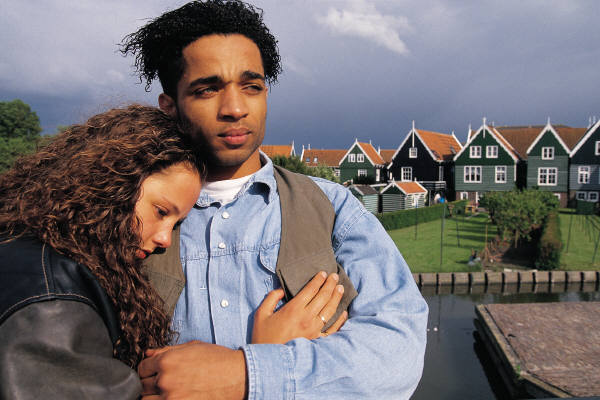 You’re Fine
But not everyone is going to see that, for a few reasons. One, they don’t want to. They don’t want to think that someone they love is sick. They don’t want to believe that anything is wrong. They don’t want to believe they didn’t see it before. They don’t want to believe you need help. Some people are just plain in denial no matter how on fire your hair might be.
But also, we often act “fine” around other people. We forget that we’ve been working really hard to convince everyone else that we’re fine. The reason they don’t believe that we’re not is because we’ve done such a good job!
I’m Really Not OK
But if you’re telling your family you have a mental illness, things definitely aren’t OK. This is a very hard thing to admit. But consider this when talking to a family member who doesn’t believe you:
- You’ve just sprung something big on them. It took time for you to accept it; it’s going to take time for them too. And keep in mind, they may be dealing with their own issues of stigma or self-blame as well.
- Understand that you may have to be really up front about what you’ve been experiencing. It may not be enough to say, “I have depression.” You may have to give real life examples of your experience of depression for them to truly understand what you’re going through. This isn’t easy for you, but it may be required for their understanding.
- Knowledge brings about understanding. Once of the reasons my mother thought she could cure bipolar with vitamins is because she didn’t know any better and her bailiwick is alternative medicine. However, over the years she has read books and become much more educated on the subject of mental illness to the point where she understands that it is a real illness and a real medical problem.
- Bring the knowledge to them. Instead of waiting for them to pick up a book, bring them books, pamphlets, blog articles – anything that has reached you that you think might reach them. People have told me that they have printed off some of my articles and it helped their family’s understand a lot.
A more drastic approach might be to take the family member with you to a doctor’s appointment and have him explain the problem to the family member. Like I said, drastic, but some people’s denial is hard to break through.
They Still Don’t Understand
And after all that, maybe the family member will never believe that you’re not OK. But understand this, if this is the case, it isn’t about you, it’s about them. You’ve done everything in your power to make them understand reality and they refuse. At that point, their own issues are standing in the way of your relationship. But unfortunately a relationship is about two people, and sometimes the other one just doesn’t understand who we are no matter what we do.
You can find Natasha Tracy on Facebook or GooglePlus or @Natasha_Tracy on Twitter.
APA Reference
Tracy, N.
(2012, February 13). Telling Your Family You Have a Mental Illness - You’re Not OK, HealthyPlace. Retrieved
on 2026, April 14 from https://www.healthyplace.com/blogs/breakingbipolar/2012/02/telling-your-family-you-have-a-mental-illness-you-are-not-ok

Author: Natasha Tracy
Hello Natasha,
Uhm how to start...I have been emotionally and physically abused for the last 9 years. Fortunately, I have gotten myself out of the situation. In short, I now live far away from my siblings and parents and with relatives I can hardly remember as I hadn't seen them since I was around 4. (I'm currently 14.) The problem is I still feel that I can never be safe and that I will always live in fear. I always have the exits to a room I am in memorized, I never talk about my feelings, I can't sleep without a light on, I still have many panic attacks that I hide from my guardians, etc. I have began either feeling nothing or having a lot of suppressed emotions bubble up at once. Just today I got into an argument with my guardian over reading a book! To me it was about much more than the book, but I struggled to tell her my emotions in front of the whole family. I am beginning to feel lazy with no will to get out of bed in the morning. I like to consider myself a bright student (unfortunately I am doing online school still because of the pandemic,) but recently I have felt school slowly slip out of my grasp. The whole moving to a new place during a pandemic and not having any friends to talk to isn't help either. Not only this but as I struggle to find a way to tell my guardians that I'm not okay, I have been having suicidal thoughts, now the thought of blood and guts isn't exactly comfortable to me (I'm no serial killer,) but I have began to think that one day these thoughts could become actions which scares me very much. On top of all this I miss my siblings very much and I fear that they are now the one's being abused even though they have always been treated like saints by my mom and stepdad(their biological dad.) Of course there is the whole thing about my mom being secretly mentally ill and my step dad having multiple domestic abuse charges and my real dad being some homeless drug addict I don't know, but I feel I would be writing a novel if I told you everything ;). Every attempt I try to get in contact with my prior family comes up empty handed. My guardians always tell me I can go back if that's what I want but the truth is that it isn't. I am so scared of my parents and I don't know what to do about it. Every time I try to bring up my problems I feel like I am one of those people who only care about there own problems. Today my guardian in our argument called me an "ungrateful b****," which I know is mainly my fault because of my fear of showing my feelings. My guardians always tell me to stop focusing on the past but it is hard not too when that is all you know and all you have had your whole life. I get scared that these bad thoughts are going to lead me to making bad decisions I will come to regret. Whenever everyone around me is happy it is hard for me to express the same emotion. I tried exercising to try to make me have better thoughts but I feel so lazy and like I can't commit to anything. I just feel like there so much going on and all I want is too be a normal teenager worried about boys. Sorry for laying this on you but it is so much easier to discuss your problems with someone you don't know as they don't have much to judge you by. I just needed to let this out in hope for some words of advice as I am too used to bottling up my feelings and putting on a smile. Please respond to me if you see this/read this far.
Thank you,
Camilla :)
I am 15, korean, female. I live with both of my siblings and my 2 narcissistic parents. I think I have severe depression and anxiety not only because I score high risk on every single test I take for them but because my school marks are dropping, I can't focus and I literally have no will to live. I have not told my parents that I am necessarily depressed but that I am going through a rough time and need help, and I mentioned my anxiety attacks to my father. He shrugged it off and told me I was being stupid, naïve and dramatic. I want to die and I want to run away and I don't know why I'm telling this to people I don't know but I need help. My head is foggy and its not just because I'm sick, I feel horrible all the time. I'm afraid to self-harm, and although I may have an eating disorder its not severe. I want to be skinnier, prettier, smarter, etc but instead I'm fat, stupid and anti-social. I either eat as much as I can without throwing up(I can control that bc I can't stand the feeling of it), or I starve myself and only eat vegetables, there's no middle. As a result, I gained 7 kilos in the past year, and while I used to be underweight I am now on the heavier side of average. I guess I look healthy to some bc I'm not fat nor a skinny twig but I also have sleep issues and will either sleep for so long it can be considered comatose, or not sleep for days on end. I have a group of friends who I enjoy being with still, and I try to hang out a lot, but my dropping math mark is making things harder and more stressful(I went from a 98 to a 63 send help!). I can't focus in school and I have a science test tomorrow that I think I'm gonna fail bc idk what its about. I hate being cooped up in my house, even though we have a decent sized home(6 bed, 3 and a half bath, the works). I hate being around my father bc hes abusive. Hes not like those drunken old men who beat up their kids, but he has hit me before(while sober; he hates getting drunk), and he is quite verbally abusive. My mother is sometimes my ally, sometimes my enemy: she can also be like my father but is often more lenient and has been a present parental figure for the duration of my childhood). My father is a rich old man who was never around when my siblings and I were younger, bc he was always at work, and now that we've grown and don't care much for his attention he has switched to a schedule of working only 2x a week, and plans to retire. I want him to stay working at least until I am in university because I don't think I can stand him always being at home. I plan on going as far away as I can. My mother is worried bc I barely wake up in the mornings and I don't eat properly or take care of myself, but I think some separation from my father will help me to do better. Maybe my symptoms are worsening with my cold, but I feel so tired and empty and my head always hurts and I don't want to do anything but sleep forever. If you read this all, bless your soul(even though I don't believe in God; I fell away from my Christianity since depression), but I doubt there is any reason to respond bc ill probably be dead soon. I just want to escape everything, and although I was terrified of death I think that now my hate for life has exceeded its bounds. I will give myself a few months bc I heard that "it will only get better". I doubt it, but if its been said so many times it may be true and I may as well experience it for myself. If things don't brighten up, hell is gonna come collect. anyways, thx for listening. Pce
Hi Anonymous,
I'm sorry to read all that you are going through. It must be very hard. While you may not believe me, I have lived through a very tough time as a teenager and I did come out the other side. Believe me when I tell you, things will change as an adult.
That said, you need help now. You can see your school counselor or talk to your family doctor for help. Please also see our resources and hotlines page: https://www.healthyplace.com/other-info/resources/mental-health-hotline-numbers-and-refer…
You do not have to be suicidal to use a hotline. They are there to help no matter what. (If the above doesn't have the hotline for your area, just Google it. There are hotlines virtually everywhere.)
I know what you are going through is very hard. I would never deny that. And I know it seems like there's no tomorrow or that there's nothing good on the horizon, but this just isn't true. You can start to feel better but you have to reach out for help to make that happen.
- Natasha Tracy
I've been through a similar thing to you I am now struggling to sleep at night going to bed crying scared to tell anyone what's going on and a lot more and thinking about killing myself every day and night
I was recently diagnosed with having depersonalization/derealization disorder and I told my siblings about it. They were confused but understanding enough, but when I talked to my mother about it, she told me that I was just finding excuses to keep myself from being successful. She refuses to understand and refuses to acknowledge that she's seen signs, though she's asked me questions over the years that relate to the disorder. I've been having a hard time dealing with what's going on with me and would really appreciate her support. I know I'm a grown adult, but her support would mean the world to me, even if she often sees me as a failure...
Hey Cat,
I can't say I know exactly how you're feeling but I can definitely relate in some ways. My dad thinks I just want attention and that I'm not rlly depressed, but I can kinda feel it(if ya know what I mean). I'm only 15 so I'm probs the youngest on this website, but I know how hard it is when your parents refuse to accept whatever is going on. I would continue talking to her if possible about how you've been feeling. Ask her to come with you to a guidance appointment, have her sit down and take a mental disorder test with you, etc, just to show her that you are not in a joking matter. As a grown adult, you are able to go and find your own resources for mental well-being, so even if she doesn't support you I would encourage you to reach out to mental health services when possible. I'm also sure she doesn't see you as a failure, but that she thinks you are making excuses. If you can find a way to prove your seriousness(without self-harm, of course), she may come to understand your struggles. It might be a good idea to find other people as well, such as close friends or your partner(if you have a boyfriend/girlfriend, fiancé/fiancée, spouse, etc) about this for additional support. I hope that she might have changed her view since you posted your comment, but even if she has not, I hope you can stay strong.
All the best to you.
you're not the youngest i think i might be the youngest since I'm 12 😕but not the point what you're going through is kind of what I'm going through so i can kind of relate
Hi Someone,
Thank you for leaving a comment. I'm so sorry you're in distress. I hope you'll reach out to an adult so you can get some help and feel better.
- Natasha Tracy
Hi, my name is Grace. I've taken like 100 depression test online and they all came back with the same results. I have sever depression, I've cut over 20 times I've had suicidal thoughts, I get panic attacks, and I'm always sad but I cover it up with a smile. I've known about my depression for a while, but I still don't know how to tell my parents, I'm 13 and I don't want to tell them in person. I think I might just make a power point or something, I know I'm WAY past a therapist , and I also know I need meds but I can't bring myself to tell them about it, what do I do?
Hi Grace,
I'm so sorry you're in this situation. I know how hard it is.
Keep in mind, that no one is past therapy, but you may need therapy plus medications as well.
What I recommend is you call a helpline as soon as possible and they will offer you support in what you need to do -- talk to your parents.
See a list of hotlines here: https://www.healthyplace.com/other-info/resources/mental-health-hotline-numbers-and-refer…
Reach out. You can do this. It can't get better until you tell someone.
- Natasha Tracy
I'm 16 yrs old and I'm sure I have a bipolar disorder. My moods change mostly from happy to anger out of no where. I start crying for no reason. People tell me I have to control my emotions but the truth is the harder I try to control my emotions, I CANT. I don't wonna tell my mom because I know she'll deny it and tell me that I'm just being "crazy" or "dramatic" or she'll think I'm just trying to get attention but I just wonna be able to know. I wonna get better and I don't think ignoring it will make things better.
Hi Emily,
I'm sorry to hear you're in that position. It sounds very hard.
I recommend seeing a doctor, talking to a school counselor or calling a helpline.
You'll also find information on telling your parents in this article (which also contains a link to the helplines) https://www.healthyplace.com/blogs/breakingbipolar/2012/04/how-do-i-tell-my-parents-i-nee…
I hope that helps.
- Natasha Tracy
I have BPd ( borderline personality disorder ) and I've known this for a bit and have only told my closest friend and my dog. I want to tell my parents but usually when I tell them things like "I'm sick" they complain about how much it'll be to take me to the doctor as stuff also because they aren't they first people I would go to with something I trust or that's bothering me. I want to tell them but idk how
Hey i am a 15 year old girl and i think i have a bipolar disorder and i had cutted i never thought of cutting but now i don't regret doing it i have cutted 4 times and now i am scared to tell my parents what i think bescause they don't seem to are about me.
Hi Aqsa,
I can understand your reluctance to tell your parents, but they have to know in order to get you help.
Before you tell them, though, you may want to tell a school counselor so they can help you approach your parents.
You may also want to read this: https://www.healthyplace.com/blogs/breakingbipolar/2012/04/how-do-i-tell-my-parents-i-nee…
Remember, help is out there. You don't have to live like this.
- Natasha Tracy
I have been doing depression tests for a while now and they all say I have moderate to high depression. I have had suicidal thoughts and have tried to cut myself because I just feel worthless and just feel like I bother people by being alive. I've tried telling my parents but they don't believe me and just say that I'm over-reacting. I want to go to see someone professional about it but I don't want to go alone, what should I do?
Hi JM,
Thanks for reaching out here. If you want to see a professional and you don't want to go alone, you may be able to take a close friend. It would be great if this trusted friend were an adult, but if not, even a friend your own age can be helpful. What you need to remember is that getting help is what matters, no matter how you can make it happen.
- Natasha Tracy
I want to tell a doctor about my suspected Bipolar Disorder but my dad would never leave me to myself with them. He would never believe that I have Bipolar, and I have suicidal thoughts all the time. Like when A girl Sydney is mean.
Hey
I'm a 14 girl and I have been doing those online tests for a couple of months now and they all have been saying I have a high possibility of having the disorder. I've been wanting to get a doctors opinion for a long time but I'm just scared that my parents will think I'm looking for attention. I honestly don't know what to do
Hi Lee,
It's good that you are seeking a doctor's opinion. That is the best thing you can do if you're concerned about mental illness.
If you want some additional support when talking to you parents, you may wish to try talking to a school counselor.
You can also take a look at our resources and hotlines page for additional help: http://www.healthyplace.com/other-info/resources/mental-health-hotline-numbers-and-referr…
Please do reach out. You deserve help.
- Natasha Tracy
Anyone please help what is my disease i cannot tell it to anybody because of my family problems.I am 16 year old studying student i cant.. Anymore within any coming day i will suicide.Any one please reply.Allmighty will bless you........... I FEEL I AM NOT COMFORTABLE IHAD TWO MINDS ONE NOT ALLOWS ME TO CONTROL ANOTHER MY LIFE IS RUINING BY MY SELF IAM ALONE I CANT COPE UP WHAT WILL I DO OH MY GOD HELP.DID YOU PLEASE CONTACT ME I HAVE A FB ID AJAY WILSON WITH PROFILE PIC WWE SUPERSTAR ROMAN REIGNS.PLEASE SEND ME REQUIST.iam alone
Hi Albin,
I'm sorry to hear you are feeling this way right now. It certainly sounds difficult. I recommend you call a helpline. We have many helplines and resources listed here: http://www.healthyplace.com/other-info/resources/mental-health-hotline-numbers-and-referr…
If none of those apply to you, just search for your location and helpline and you'll find someone willing to listen.
- Natasha Tracy
Hi,
I am telling my family tomorrow that I have bipolar disorder I know they won't believe me BC I keep most of my feelings bottled up... I'm actually really scared to tell them BC I think they won't believe me and then it will be awkward. Also I'm not really close to my mum and dad and it feels weird even thinking about telling them.
Before I found this site (today!!!) I felt alone (that is part of my illness but...) I felt like no one else knew how I felt I really thought I was the only one that had bipolar disorder.
All I'm gonna say is I still go to school, and the only people I have told about my disorder are my best friends they are amazing they have been here for me, through when I was almost definitley diagnosed, I talked to them, I was scared I was crying they comforted me they made me forget about it for a while, I have probably been a really sucky best friend especially compared to them. I don't know how long I've had bipolar disorder but I got diagnose a week ago....
So I'm DEFINITLEY not experienced as most of you.
My best friends are going on all the websites to learn everything about bipolar so they may be reading this; I LOVE YOU BILLIE AND HOLLY!!!!!!!!!!
I've recently been diagnosed with borderline personality disorder and I'm devestated. I have no parents and no partner. I have tried suicide on many occasions and I actually feel this is the only way to escape myself. I can't bare my moods and problems anymore x
I have read you sad stories
As a mother of a daughter with mental illnesses I feel that I would like to comfort you all
denial comes to all of us almost daily
Stay as strong as you can
read read read about your illness ...you are the only ones who can make a difference
try not to judge your families reactions
Stay away if that helps
Shutting down is a safety mechanism
The longer you avoid anybody who has the " answered" the less pain you feel
I wish you all the calmness you deaerve
Dave,
I am sorry to hear your parents are so oblivious. So are mine. (I am currently waiting to see a psychiatrist (3 months!). My GP thinks I am moderately-to-severely depressed.)
I had a conversation with my Dad today: He thinks that as long as a person keeps a "positive attitude" about life then they will be successful. I told him that for some people it isn't POSSIBILE to keep a positive attitude due to the way the neurotfansmitters in their brains work. He said that blaming your "laziness" on your brain chemicals is bullsh*t.
Basically went in circles until I told him I didn't want to continue the conversation.
My mother is in denial about any sort of mental disorders and/or illness as well: she tells me to stop worrying so much/stop being so dramatic. BUT I have found prescriptions of antidepressants in her medicine cabinet before...Wtf? !
Also just moved out of my boyfriend's house due to his stigma towards mental illness...he told me I need to learn to handle disappointments in a more "positive" way. His GP actually sent him to a psychologist and they told him he probably has ADHD.
Funny how that works hey?
I now have a really great friend who's been in the mental health system for years and is basically my rock right now.
I wish EVERYONE could find someone like her!
Nobody wants to admit to their own family that they have a problem with their mind, so when somebody does so the least loved ones can do is listen! Sadly this is often not the case. I myself have suffered all the signs of depressive illness for years, especially in winter months. When I had a severe bout of this where I felt like I was going out of my mind I had to finish work and ended up unemployed living back with my parents in my 30s. I eventually plucked up the courage to speak out and so fearful of admitting I had problems. When I told my mother she said that Depression is an overused word used when people have to deal with everyday low mood, and that she didn't feel I should make such claims. I told her my life felt like it was over, like I had no future, that I will probably end up at the doctors if it continued. She said "oh and what will they do, just put you on some tablets and make you feel like a zombie. You just have to pick yourself up and move forward like everyone else". My father was equally unsympathetic, he told me that I should have faith in God, that I should want for anything in life because I have God's love and I should pray more. He also told me that it was all in my imagination, that I had convinced myself there was something wrong but it was all in my head, that I was just being nihilistic about life and I should get up and get a job like everyone else. I felt absolutely humiliated and this only added to my already low self-esteem. Sadly stigma is very much alive and it's no wonder suicide rates are so high.
MY MENTAL ILLNESS SEEMS TO BE A FAMILY THING ,but I see my girls holding jobs and in all other activities ,they have besties and supportive friends but I am totally opposite and my concern is the way see me because unless im baabysitting their is know enter action and what should I do about it
Hello,
... I am not sure how to properly express what I am trying to say but nonetheless I've been as objective in my own analysis of my behavior and thought processes as is possible and I've noticed over the last year I've been dissociative for several hours a day most days and I do research on anything that concerns me such as this. I don't know what is wrong with me but I consistently feel wrong. I've never spoken to anyone about this especially not my family. (God knows how they would react.) It's very complicated though because I've been trying to enlist in the Marines. I am not sure if I should give that up to see a professional or continue with it and let then decide if I am sane enough. Advice is quite welcome.
When I told my mum I have bipolar, she just told me ''That's normal, we're all sad and happy sometimes''
I've been struggling with anxiety and depression since middle school and only recently I had the courage to tell my parents about my depression, and they didn't believe me. Even after I was obvious about it and I tried talking to them about it but they quickly shut me down. I'm not sure if I can handle this until I'm 18, and honestly I'm scared. I've also been having frequent panic attacks. I just don't know what to do anymore.
ive been receiving treatment for mdd, anxiety and they are currently questioning bipolar II for over 4 years. My family are totally oblivious. I don't have plans to tell them because half will think I'm lying or being dramatic, the other half will totally smother me and I would never be left alone again. And when im low or anxious the last thing I want is someone fussing and in someways constricting me. I just want to be left alone.
I have a fantastic care coordinator, a really good psychiatrist, my gp is great and a really good psychologist working with me. I have adequate support. So why do the family need to know?
I've been going through the symptoms of bipolar for almost 4 years. I thought I could deal with it without letting anyone know about it. I did not go to any psychologist. But now its affecting my carrier, relationships and my life. I have tried telling my family a couple of times but they said I'm just being dramatic. I have reached a point where I don't want to live like this. I am tired and I need help. But still I can't do anything about it.
I have had an anxiety disorder , possible depression & many many suicidal thoughts. I've told my mom about the suicide thoughts/suicidal dreams & she pretty much blames the devil & says its just a bad dream. When my pediatrician & school nurse said I have an anxiety disorder after many (many) panic attacks, my mom still denied everything. She said, and I quote, "my daughter does not cry all the time." Which literally made no sense but she denies any kind of mental illness I could have. I have been feeling really depressed for months now but she only did something when she thought it was a side effect of one of my medicines (singular). So I can't make my own appointment with someone who will take me seriously, I'm not old enough & I also can't tell my doctor any of this because my mom goes in the office with me & pretty much if I say anything regarding that, she rolls her eyes and blows it off (my mom). Its impossible, I've ran out of options.
I never mentioned this earlier but I have tried to harm my self in the past. It started in 6th grade with razors, then progressed to drugs in 8th grade & then pills in 9th grade. I'm starting 10th this year and I'm still struggling with taking way more then the recommended dosage. I regret it soon after with nausea, vomiting, ect. But I still do it. I want to feel pain & I want to hurt myself. Every dose is never enough. I haven't done it in a week but I still have suicidal thoughs and whatnot.. I've given up all hope in having my only parent actually try to help.
Hi Makaila,
I'm sorry that your mom is not taking your needs seriously. What you might want to do is see a school counselor. They may be able to help you or refer you to someone who can. (Or you could make a doctor's appointment on your own and go without your mother.)
You may also want to see our self-harm information here on HealthyPlace: http://www.healthyplace.com/abuse/self-injury/self-injury-homepage/
I hope that helps.
- Natasha Tracy
i seriously think i have anxiety disorder for the last 4 years and you know what my parents say," It's all in my head and i am just giving excuses to go to doc". What should i do with parents like that..??
Hi Natasha,
This is ought to be a common problem with all those who face these type of problems and have some mental illness. You should instead get your problem diagnosed and get it cured as soon as possible.
Thanks.
Good points. I'm lucky, my Mum has always supported me and for a long time. She's made mistakes and said some hurtful things but they were said with the best of intentions.
A learning curve for all involved and it's not easy for anyone. Even my Dad is coming round now! We all care in our own way.
That said, it was me who worked things out, despite the trauma in my brain.
But my Mum was always there for me and I'll never forget that.
Hi Pushpa,
I'm sorry, but that's not my area and I'm not in a position to offer advice on headaches. I'm sorry but you'll have to talk to a doctor.
- Natasha
Thanks Natasha.I really want to be patient but i never can be...but u know i am giving an honest try.I hope i suceed in that.Also my husband tells me that he has a headache like a tight rubber band in his head as well as the sides of his forehead , its like he feels something is punching so hard in his head.Earlier he took Ampitryline for 2 months, but has stopped taking it.Earlier(5 months ago), he had this headache sometimes in the day and night(suffered from insomnia too), but now he told me that this headache is there throughout the day and he faces a lot of problems while sleeping too, due to this headache.I told him to take a break from his job and relax but he is not doin that even.I am just worried about his headache....We did his Sinus-X-Ray and CT-Scan but everyhting is normal.Doctor said it is completely functional problem and not a structural problem.I just want that his headache is gone completely and am trying my best not to trigger it or increase it.But i am not sure what treatment should i go for him?Should i go for yoga or physiotherapy treatment for him along with counselling?Please suggest me some mode of treatment that might help him get rid of his tension-chronic-headache.
Hi Pushpa,
It sounds like you're in a tough situation but you're doing the best you can. You're headed for counselling and I think that is the most important thing. Both you and your husband need a place where you can safely work out your feelings around the illness and treatment and counselling can help you do that.
While that is happening, you will have to be patient. Nothing happens overnight and counselling takes time to take effect. Try to be patient with your husband and understand that you and he both need time to heal. Hopefully you will be able to work out your differences through the counselling, but try to give it time.
- Natasha
Hi Natasha,
I am suffering from bipolar diorder-1 since November,2009.I got diagonised and am on medicines since July 2011.Now my husband has left me and is staying separate.He is suffering from headache which has become chronic since 5 months.He tells me that he wants to stay alone and might not come back.I feel very bad that my anger outbursts in maniac phase have devastated everything.I feel very alone and cry daily in evening and morning.I don't know what will happen.I never did this knowingly and my husband is fully aware of BPD, still he has left me all alone.I am totally frustrated.Can you suggest me what to do in this situation.I have already taken my husband to a psychatrist and she has given some medicines.She will start his counselling after 2 weeks.
Since I've been diagnosed fairly recently (about a year ago), it is still really fresh. When I told my mother, she denied it entirely at first. Now she just denies that I have bipolar disorder. She says it's temporary depression no matter what I tell her. I hide the hypomania well, and can mostly hide the depression from her. If she really saw who I am with it, she'd be scared to death. I'd rather have her deny that I am sick than for her to have to deal with another stressor.
Hi Natasha,
Mental illness still holds negative stigma in our society. This stigma is a reason why it is difficult for some to express that they are suffering from mental illness. Posts like the above help with bringing an important topic to light. Thanks for sharing.
After struggling with severe depressive episodes for three decades I was finally accurately diagnosed with bipolar. When I told my mother I had bipolar disorder she said, "Oh thank God!! I thought you hated me."
'Nuff said ;-)
Hi Graham,
I'm sorry to hear that's the situation you're in. Hopefully you're getting therapy so you have a safe place in which to express all of yourself. Couples counselling might be something else to consider.
- Natasha
Hi Debbie,
I recommend you look at the Communities section of this website (above). There is information on all those topics there.
- Natasha
At first, my wife didn't believe it. She thought I was just depressed because "you don't like your job." Then she denied Bipolar Disorder even existed. And now? She doesn't want to know when I'm not feeling well: "I have my own problems", she says, referring to HER issues with her job. So, as best I can, I don't talk about my illness at home, not anymore, and I certainly don't say when I'm not feeling well.
I have bi polar, anxiety, ptsd, panic attacks. I appreciate any information on.TY