Asian Ginseng
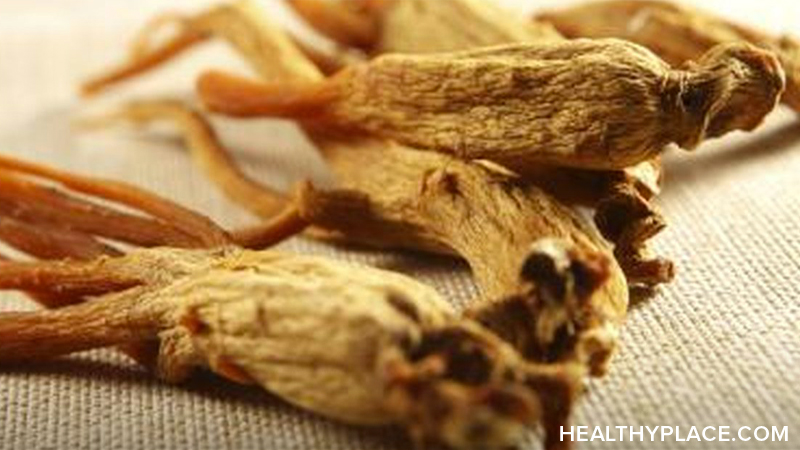
Asian Ginseng is an herbal remedy used to treat ADHD, alcohol intoxication, alzheimer's, depression and stress. Learn about the usage, dosage, side-effects of Asian Ginseng.
Botanical Name:Panax ginseng
Common Names:Asian Ginseng
- Overview
- Plant Description
- What's It Made Of?
- Available Forms
- How to Take It
- Precautions
- Possible Interactions
- References
Overview
Both American and Asian ginsengs belong to the species Panax and are similar in their chemical composition. Siberian ginseng (Eleutherococcus senticosus), on the other hand, although part of the same plant family called Araliaceae, is an entirely different plant and does not contain ginsenosides, the active ingredients found in both Asian and American ginseng.
Like American ginseng, Asian ginseng is a light tan, gnarled root, sometimes resembling a human body, with stringy shoots that look like arms and legs. Hundreds of years ago, herbalists took this appearance to mean that ginseng could cure all human ills, and it has, in fact, been used as a "cure-all" in many different cultures. The Chinese view ginseng as the king of herbs - one that brings longevity, strength, and wisdom to its users.
All three ginsengs (Asian, American, and Siberian) are regarded as adaptogens, substances that strengthen and normalize body functions, helping the body deal with various forms of stress. Ginseng may shorten the time that it takes to bounce back from illness or surgery, especially for elderly people. Research on Asian and American ginsengs has included the following:
Asian Ginseng for ADHD
An early study suggests that American ginseng, in combination with ginkgo, may prove to be of value in helping to treat ADHD. More research in this area is needed.
Asian Ginseng for Alcohol Intoxication
Asian ginseng could be helpful in treating alcohol intoxication. The herb may accomplish this by speeding up the metabolism (break down) of alcohol and, thus, allowing it to clear more quickly from the body. Or, as animal research suggests, ginseng may reduce the absorption of alcohol from the stomach.
Asian Ginseng for Alzheimer's Disease
Individual reports and animal studies indicate that either American ginseng or Asian ginseng may slow the progression of Alzheimer's and improve memory and behavior. Studies of large groups of people are needed to best understand this possible use of ginseng.
Cancer
A study comparing groups of people over time suggests that regular intake of ginseng may reduce one's chances of getting various types of cancer, especially lung, liver, stomach, pancreatic and ovarian. In this particular study, this benefit was not observed for breast, cervical, or bladder cancers. However, a test tube study suggests that American ginseng may enhance the effects of medications used to treat breast cancer. And, preliminary results suggest that ginseng may improve treatment of colon cancer in animals. A greater number of well-designed studies including, ultimately, large numbers of people are needed before conclusions can be drawn about whether ginseng offers some protection from cancer or not.
Cardiovascular Health
Asian ginseng in particular may decrease endothelial cell dysfunction. Endothelial cells line the inside of blood vessels. When these cells are disturbed, referred to as dysfunction, they can cause blockage of blood flow in a variety of ways. This disturbance or disruption may even lead to heart attack or stroke. The potential for ginseng to quiet down the blood vessels may prove to be protective against heart and other forms of cardiovascular disease.
Although not proven, ginseng may also raise HDL (the good cholesterol), while reducing total cholesterol levels.
Finally, there is some controversy about whether, under certain circumstances, ginseng may help improve blood pressure. Ginseng is generally considered to be a substance to avoid if you have hypertension because it can raise blood pressure. In a couple of studies, however, of red Korean (Asian) ginseng, high doses of this herb actually lowered blood pressure. Some feel that the usual doses of ginseng may increase blood pressure while high doses may have the opposite effect of decreasing blood pressure. Much more information is needed in this area before a conclusion can be drawn. And, if you have high blood pressure or heart disease, it is not safe to try ginseng on your own, without specific instructions from a knowledgeable clinician.
Asian Ginseng for Depression
Because of its ability to help resist or reduce stress, some herbal specialists may consider ginseng as part of the herbal treatment for depression.
Diabetes, Type 2
Although American ginseng has been better researched for this purpose, both types of Panax ginsengs have been shown to lower blood sugar levels in those with type 2 (adult onset) diabetes.
Fertility/Sexual Performance
Ginseng is widely believed to be capable of enhancing sexual performance. However, studies in people to investigate this are limited. In animal studies, Panax species of ginseng have increased sperm production, sexual activity, and sexual performance. A study of 46 men has also shown an increase in sperm count as well as motility.
Immune System Enhancement
Ginseng is believed to enhance the immune system, which could, in theory, help the body fight off infection and disease. In one study, in fact, giving people ginseng before getting the flu-vaccine did boost their immune response to the vaccine compared to those who received a placebo.
Menopausal Symptoms
Ginseng may have estrogen-like activity. Two well-designed studies evaluating red Korean (Asian) ginseng suggest that this herb may relieve some of the symptoms of menopause, improving mood (particularly feelings of depression) and sense of well-being.
Mental Performance and Mood Enhancement
Individuals who use ginseng often report that they feel more alert. Preliminary studies do suggest that this feeling has scientific merit. Early research shows that ginseng may improve performance on such things as mental arithmetic, concentration, memory, and other measures. More research in this area, although not easy to do, would be helpful.
On the other hand, for those who report that ginseng elevates their mood, the science thus far does not support that this herb changes your mood if you are otherwise healthy.
Physical Endurance
There have been a number of studies in people looking at the effects of ginseng on athletic performance. Results have not been consistent, with some studies showing increased strength and endurance, others showing improved agility or reaction time, and still others showing no effect at all. Nevertheless, athletes often take ginseng to increase both endurance and strength.
Respiratory Disease
In patients with severe chronic respiratory disease (such as emphysema or chronic bronchitis), daily treatment with ginseng improved respiratory function, as evidenced by increased endurance in walking.
Asian Ginseng for Stress
Ginseng has long been valued for its ability to help the body deal with stress. A study of 501 men and women living in Mexico City found significant improvements in quality of life measures (energy, sleep, sex life, personal satisfaction, well-being) in those taking ginseng.
Plant Description
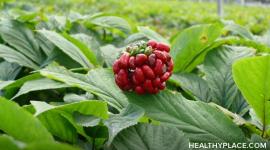
The ginseng plant has leaves that grow in a circle around a straight stem. Yellowish-green umbrella-shaped flowers grow in the center and produce red berries. Wrinkles around the neck of the root tell how old the plant is. This is important because ginseng is not ready for use until it has grown for four to six years.
What's It Made Of?
Ginseng products are made from the ginseng root, and the long, thin offshoots, called root hairs. Both Asian and American ginseng contain ginsenosides, saponins that are ginseng's active ingredients. In addition to ginsenosides, Asian ginseng also contains glycans (panaxans), polysaccharide fraction DPG-3-2, peptides, maltol, B vitamins, flavonoids, and volatile oil.
Available Forms
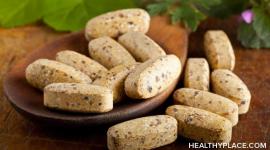
White ginseng (dried, peeled) or red ginseng (unpeeled root, steamed before drying) is available in water, water-and-alcohol, or alcohol liquid extracts, and in powders or capsules.
It is important when buying ginseng to read the label carefully and make sure that you are purchasing the type of ginseng that you want. If you are looking for Asian or American ginseng, look for a Panax species, not Siberian ginseng (Eleutherococcus senticosus) which, although there is some overlap, has different actions and side effects overall.
How to Take It
Pediatric
This herb is not recommended for use in children because of its stimulant properties.
Adult
- Fresh root: 1 to 2 grams daily for up to three months
- Dried root: 1/2 to 2 grams daily
- Tincture (1:5): 1 to 2 teaspoons
- Liquid extract (1:1): ¼ to ½ teaspoons
- Standardized extract (4% total ginsenosides): 100 milligrams twice daily.
In healthy individuals who wish to increase physical or mental performance, to prevent illness, or to improve resistance to stress, ginseng should be taken in one of the above dosages in cycles. For example, take every day for 2 to 3 weeks, then stop for 2 weeks.
For help recovering from an illness, the elderly should take 500 mg twice daily for three months. Alternatively, they may take the same dosage (500 mg twice daily) for a month, followed by a two-month break. This can then be repeated if needed.
Precautions
The use of herbs is a time-honored approach to strengthening the body and treating disease. Herbs, however, contain active substances that can trigger side effects and interact with other herbs, supplements, or medications. For these reasons, herbs should be taken with care, under the supervision of a practitioner knowledgeable in the field of botanical medicine.
Both American and Asian ginsengs are stimulants and may cause nervousness or sleeplessness, particularly if taken at high doses. Other reported side effects include high blood pressure, insomnia, restlessness, anxiety, euphoria, diarrhea, vomiting, headache, nosebleed, breast pain, and vaginal bleeding. To avoid hypoglycemia (low blood sugar), even in non-diabetics, ginseng should be taken with food.
Hypertension and Ginseng
The American Herbal Products Association (AHPA) rates ginseng as a class 2d herb, which indicates that specific restrictions apply. In this case, hypertension (high blood pressure) is the specific restriction. People with hypertension should not take ginseng products without specific guidance and instruction from a qualified practitioner. At the same time, people with low blood pressure as well as those with an acute illness or diabetes (because of the risk of a sudden drop in blood sugar), should use caution when taking ginseng.
Safety of taking ginseng during pregnancy is unknown; therefore, it is not recommended when pregnant or breast feeding.
Ginseng should be discontinued at least 7 days prior to surgery. This is for two reasons. First, ginseng can lower blood glucose levels and, therefore, create problems for patients fasting prior to surgery. Also, ginseng may act as a blood thinner, thereby increasing the risk of bleeding during or after the procedure.
Possible Interactions
If you are currently being treated with any of the following medications, you should not use ginseng without first talking to your healthcare provider:
Blood Thinning Medications
There have been reports that Asian ginseng may possibly decrease the effectiveness of the blood-thinning medication, warfarin. In addition, ginseng may inhibit platelet activity and, therefore, should probably not be used with aspirin either.
Caffeine
While taking ginseng, it is wise to avoid caffeine or other substances that stimulate the central nervous system because the ginseng may increase their effects, possibly causing nervousness, sweating, insomnia, or irregular heartbeat.
Haloperidol and Ginseng
Ginseng may exaggerate the effects of this anti-psychotic medication, so these should not be taken together.
Morphine
Ginseng may block the pain killing effects of morphine.
Phenelzine and other MAO inhibitors for Depression
There have been reports of a possible interaction between ginseng and the antidepressant medication, phenelzine (which belongs to a class known as monoamine oxidase inhibitors [MAOIs]), resulting in symptoms ranging from manic-like episodes to headache and tremulousness.
back to: Herbal Treatments Homepage
Supporting Research
Adams LL, Gatchel RJ. Complementary and alternative medicine: applications and implications for cognitive functioning in elderly populations. Alt Ther. 2000;7(2):52-61.
Ang-Lee MK, Moss J, Yuan C-S. Herbal medicines and perioperative care. JAMA. 2001;286(2):208-216.
Attele AS, Wu JA, Yuan CS. Ginseng pharmacology: multiple constituents and multiple actions. Biochem Pharmacol. 1999;58(11):1685-1693.
Bahrke M, Morgan P. Evaluation of the ergogenic properties of ginseng. Sports Medicine. 1994;18:229-248.
Blumenthal M, Goldberg A, Brinckman J, eds. Herbal Medicine: Expanded Commission E Monographs. Newton, Mass: Integrative Medicine Communications; 2000:170-177.
Briggs CJ, Briggs GL. Herbal products in depression therapy. CPJ/RPC. November 1998;40-44.
Brinker F. Herb Contraindications and Drug Interactions. 2nd ed. Sandy, Ore: Eclectic Medical; 1998:77.
Bucci LR. Selected herbals and human exercise performance. Am J Clin Nutr. 2000;72(2 Suppl):624S-636S.
Carai MAM, Agabio R, Bombardelli E, et al. Potential use of medicinal plants in the treatment of alcoholism. Fitoterapia. 2000;71:S38-S42.
Cardinal BJ, Engels HJ. Ginseng does not enhance psychological well-being in healthy, young adults: Results of a double-blind, placebo-controlled, randomized clinical trial. J Am Diet Assoc. 2001;101:655-660.
Caso Marasco A, Vargas Ruiz R, Salas Villagomez A, Begona Infante C. Double-blind study of a multivitamin complex supplemented with ginseng extract. Drugs Exp Clin Res. 1996;22(6):323-329.
Duda RB, Zhong Y, Navas V, Li MZ, Toy BR, Alavarez JG. American ginseng and breast cancer therapeutic agents synergistically inhibit MCF-7 breast cancer cell growth. J Surg Oncol. 1999;72(4):230-239.
Ernst E. The risk-benefit profile of commonly used herbal therapies: ginkgo, St. John's wort, ginseng, echinacea, saw palmetto, and kava. Ann Intern Med. 2002;136(1):42-53.
Ernst E, Cassileth BR. How useful are unconventional cancer treatments? Eur J Cancer. 1999;35(11):1608-1613.
Foster S. Asian Ginseng. Austin, Tex: The American Botanical Council; 1996.
Fugh-Berman A. Herb-drug interactions. Lancet. 2000;355:134-138.
Gyllenhaal C, Merritt SL, Peterson SD, Block KI, Gochenour T. Efficacy and safety of herbal stimulants and sedatives in sleep disorders. Sleep Med Rev. 2000;4(2):229-251.
Han KH, Choe SC, Kim HS, et al. Effect of red ginseng on blood pressure in patients with essential hypertension and white coat hypertension. Am J Chin Med. 1998;26(2):199-209.
Harkey MR, Henderson GL, Gershwin ME, Stern JS, Hackman RM. Variability in commercial ginseng products: an analysis of 25 preparations. Am J Clin Nutr. 2001;73:1101-1106.
Heck AM, DeWitt BA, Lukes AL. Potential interactions between alternative therapies and warfarin. Am J Health Syst Pharm. 2000;57(13):1221-1227.
Izzo AA, Ernst E. Interactions between herbal medicines and prescribed drugs: a systematic review. Drugs. 2001;61(15):2163-2175.
Kelly GS. Nutritional and botanical interventions to assist with the adaptation to stress. Alt Med Rev. 1999;4(4):249-265.
Lieberman HR. The effects of ginseng, ephedrine, and caffeine on cognitive performance, mood and energy. Nutr Rev. 2001;59(4):91-102.
Liu J, Burdette JE, Xu H, et al. Evaluation of estrogenic activity of plant extracts for the potential treatment of menopausal symptoms. J Agric Food Chem. 2001;49(5):2472-2479.
Lyon MR, Cline JC, Totosy de Zepetnek J, et al. Effect of the herbal extract combination Panax quinquefolium and Ginkgo biloba on attention-deficit hyperactivity disorder: a pilot study. J Psychiatry Neurosci. 2001;26(3):221-228.
Mantle D, Lennard TWJ, Pickering AT. Therapeutic applications of medicinal plants in the treatment of breast cancer: a review of their pharmacology, efficacy and tolerability. Adverse Drug React Toxicol Rev. 2000;19(3):2223-240.
Mantle D, Pickering AT, Perry AK. Medicinal plant extracts for the treatment of dementia: a review of their pharmacology, efficacy, and tolerability. CNS Drugs. 2000;13:201-213.
Miller LG. Herbal medicinals: selected clinical considerations focusing on known or potential drug-herb interactions. Arch Intern Med. 1998;158(20):2200-2211.
Murphy LL, Cadena RS, Chavez D, Ferraro JS. Effect of American ginseng (Panax quinquefolium) on male copulatory behavior in the rat. Physiol Behav. 1998;64:445-450.
O'Hara M, Kiefer D, Farrell K, Kemper K. A review of 12 commonly used medicinal herbs. Arch Fam Med. 1998;7(6):523-536.
Ott BR, Owens NJ. Complementary and alternative medicines for Alzheimer's disease. J Geriatr Psychiatry Neurol. 1998;2:163-173.
Pizzorno JE, Murray MT, eds. Textbook of Natural Medicine. New York, NY: Churchill-Livingstone; 1999:847-855.
Scaglione F, Cattaneo G, Alessandria M, Cogo R. Efficacy and safety of the standardized ginseng extract G 115 for potentiating vaccination against common cold and/or influenza syndrome. Drugs Exp Clin Res. 1996;22(20:65-72.
Sinclaire S. Male infertility: nutritional and environmental considerations. Alt Med Rev. 2000;5(1):28-38.
Sotaniemi EA, Haapakoski E, Rautio A. Ginseng therapy in non-insulin-dependent diabetic patients. Diabetes Care. 1995;18(10):1373-1375.
Sun XB, Matsumoto T, Yamada H. Purification of immune complexes clearance enhancing polysaccharide from the leaves of Panax ginseng, and its biological activities. Phytomedicine. 1994;1:225-231.
Sung J, Han K-H, Zo J-H, Park H-J, Kim C-H, Oh B-H. Effects of red ginseng upon vascular endothelial function in patients with essential hypertension. American Journal of Chinese Medicine. 2000;28(2):205-216.
Takahashi M, Tokuyama S. Pharmacological and physiological effects of ginseng on actions induced by opioids and psychostimulants. Meth Find Exp Clin Pharmacol. 1998;20(1):77-84.
Tode T, Kikuchi Y, Hirata J, et. al. Effect of Korean red ginseng on psychological functions in patients with severe climacteric syndromes. Int J Gynaecol Obstet. 1999;67:169-174.
Vaes LP, Chyka PA. Interactions of warfarin with garlic, ginger, ginkgo, or ginseng: nature of the evidence. Ann Pharmacother. 2000;34(12):1478-1482.
Vogler BK, Pittler MH, Ernst E. The efficacy of ginseng. A systematic review of randomized clinical trials. Eur J Clin Pharmacol. 1999;55:567-575.
Vuksan V, Sievenpiper JL, Koo VYY, et al. American ginseng (Panax quinquefolius L) reduces postprandial glycemia in nondiaetic subjects and subjects with type 2 diabetes mellitus. Arch Intern Med. 2000;160:1009-1013.
Vuksan V, Sievenpiper JL, Xu Z, et al. Konjac-mannan and American ginseng: emerging alternative therapies for type 2 diabetes mellitus. J Am Coll Nutr. 2001;20(5):370S-380S.
Vuksan V, Stavro MP, Sievenpiper JL, et al. Similar postprandial glycemic reductions with escalation of dose and administration time of American ginseng in type 2 diabetes. Diabetes Care. 2000;23:1221-1226.
Wargovich MJ. Colon cancer chemoprevention with ginseng and other botanicals. J Korean Med Sci. 2001;16 Suppl:S81-S86.
Wiklund IK, Mattsson LA, Lindgren R, Limoni C. Effects of a standardized ginseng extract on quality of life and physiological parameters in symptomatic postmenopausal women: a double-blind, placebo-controlled trial. Int J Clin Pharm Res. 1999;19(3):89-99.
Yun TK, Choi SY. Preventive effect of ginseng intake against various human cancers: A case-control study on 1987 pairs. Cancer Epidemiol Biomarkers Prev. 1995;4:401-408.
Ziemba AW, Chmura J, Kaciuba-Uscilko H, Nazar K, Wisnik P, Gawronski W. Ginseng treatment improves psychomotor performance at rest and during graded exercise in young athletes. Int J Sports Nutr. 1999;9(4):371-377.
The publisher does not accept any responsibility for the accuracy of the information or the consequences arising from the application, use, or misuse of any of the information contained herein, including any injury and/or damage to any person or property as a matter of product liability, negligence, or otherwise. No warranty, expressed or implied, is made in regard to the contents of this material. No claims or endorsements are made for any drugs or compounds currently marketed or in investigative use. This material is not intended as a guide to self-medication. The reader is advised to discuss the information provided here with a doctor, pharmacist, nurse, or other authorized healthcare practitioner and to check product information (including package inserts) regarding dosage, precautions, warnings, interactions, and contraindications before administering any drug, herb, or supplement discussed herein.
back to: Herbal Treatments Homepage
APA Reference
Staff, H.
(2008, December 13). Asian Ginseng, HealthyPlace. Retrieved
on 2024, April 26 from https://www.healthyplace.com/alternative-mental-health/herbal-treatments/asian-ginseng