My Genes Made Me Do It
Psychology Today, July/August 1995, pp. 50-53; 62-68. Tables B and C and Sidebar A were not included in the published version of the article.
Morristown, NJ
Richard DeGrandpre
Department of Psychology
Saint Michael's College
Colchester, Vermont
Introduction
Americans are increasingly likely to attribute their own - and others' - behavior to innate biological causes. At best that may relieve guilt about behavior we want to change but can't. The quest for genetic explanations of why we do what we do more accurately reflects the desire for hard certainties about frightening societal problems than the true complexities of human affairs. Meanwhile, the revolution in thinking about genes has huge consequences for how we view ourselves.
Article
 Just about every week now, we read new headlines about the genetic basis for breast cancer, homosexuality, intelligence, or obesity. In previous years, these stories were about the genes for alcoholism, schizophrenia, and manic depression. Such news stories may lead us to believe our lives are being revolutionized by genetic discoveries. We may be on the verge of reversing and eliminating mental illness, for example. In addition, many believe, we can identify the causes of criminality, personality, and other basic human foibles and traits.
But these hopes, it turns out, are based on faulty assumptions about genes and behavior. Although genetic research wears the mantle of science, most of the headlines are more hype than reality. Many discoveries loudly touted to the public have been quietly refuted by further research. Other scientifically valid discoveries - like the gene for breast cancer - have nonetheless fallen short of initial claims.
Popular reactions to genetic claims can be greatly influenced by what is currently politically correct. Consider the hubbub over headlines about a genetic cause for homosexuality and by the book The Bell Curve, which suggested a substantial genetic basis for intelligence. Many thought that the discovery of a "gay gene" proved that homosexuality is not a personal choice and should therefore not lead to social disapproval. The Bell Curve, on the other hand, was attacked for suggesting that differences in IQ measured among the races are inherited.
The public is hard pressed to evaluate which traits are genetically inspired based on the validity of scientific research. In many cases, people are motivated to accept research claims by the hope of finding solutions for frightening problems, like breast cancer, that our society has failed to solve. At a personal level, people wonder about how much actual choice they have in their lives. Accepting genetic causes for their traits can relieve guilt about behavior they want to change, but can't.
These psychological forces influence how we view mental illnesses like schizophrenia and depression, social problems like criminality, and personal maladies like obesity and bulimia. All have grown unabated in recent decades. Efforts made to combat them, at growing expense, have made little or no visible progress. The public wants to hear that science can help, while scientists want to prove that they have remedies for problems that eat away at our individual and social well-being.
Meanwhile, genetic claims are being made for a host of ordinary and abnormal behaviors, from addiction to shyness and even to political views and divorce. If who we are is determined from conception, then our efforts to change or to influence our children may be futile. There may also be no basis for insisting that people behave themselves and conform to laws. Thus, the revolution in thinking about genes has monumental consequences for how we view ourselves as human beings.
The Human Genome Project
Today scientists are mapping the entire genome - the DNA contained in the 23 pairs of human chromosomes. This enterprise is monumental. The chromosomes of each person contain 3 billion permutations of four chemical bases arrayed in two interlocking strands. This DNA may be divided into between 50,000 and 100,000 genes. But the same DNA can function in more than one gene, making the concept of individual genes something of a convenient fiction. The mystery of how these genes, and the chemistry underlying them, cause specific traits and diseases is a convoluted one.
The Human Genome Project has, and will continue to, advance our understanding of genes and suggest preventive and therapeutic strategies for many diseases. Some diseases, like Huntington's, have been linked to a single gene. But the search for single genes for complex human traits, like sexual orientation or antisocial behavior, or mental disorders like schizophrenia or depression, is seriously misguided.
Most claims linking emotional disorders and behaviors to genes are statistical in nature. For example, differences in the correlations in traits between identical twins (who inherit identical genes) and fraternal twins (who have half their genes in common) are examined with the goal of separating the role of environment from that of genes. But this goal is elusive. Research finds that identical twins are treated more alike than fraternal twins. These calculations are therefore insufficient for deciding that alcoholism or manic-depression is inherited, let alone television viewing, conservatism, and other basic, everyday traits for which such claims have been made.
The Myth of a Gene for Mental Illness
In the late 1980s, genes for schizophrenia and manic-depression were identified with great fanfare by teams of geneticists. Both claims have now been definitively disproven. Yet, while the original announcements were heralded on TV news programs and front pages of newspapers around the country, most people are unaware of the refutations.
In 1987, the prestigious British journal Nature published an article linking manic-depression to a specific gene. This conclusion came from family linkage studies, which search for gene variants in suspect sections on the chromosomes of families with a high incidence of a disease. Usually, an active area of DNA (called a genetic marker) is observed to coincide with the disease. If the same marker appears only in diseased family members, evidence of a genetic link has been established. Even so, this does not guarantee that a gene can be identified with the marker.
One genetic marker of manic-depression was identified in a single extended Amish family. But this marker was not apparent in other families who displayed the disorder. Then, further evaluations placed several members of the Amish family without the marker in the manic-depressive category. Another marker detected in several Israeli families was subjected to more detailed genetic analysis, and a number of subjects were switched between the marked and unmarked categories. Ultimately, those with and without the marker had similar rates of the disorder.
Other candidates for a manic-depression gene will be put forward. But most researchers no longer believe a single gene is implicated, even within specific families. In fact, genetic research on manic-depression and schizophrenia has rekindled the recognition of the role of environment in emotional disorders. If distinct genetic patterns can't be tied to the disorders, then personal experiences are most likely crucial in their emergence.
Epidemiologic data on the major mental illnesses make it clear that they can't be reduced to purely genetic causes. For example, according to psychiatric epidemiologist Myrna Weissman, Americans born before 1905 had a 1 percent rate of depression by age 75. Among Americans born a half-century later, 6 percent become depressed by age 24! Similarly, while the average age at which manic-depression first appears was 32 in the mid 1960s, its average onset today is 19. Only social factors can produce such large shifts in the incidence and age of onset of mental disorders in a few decades.
Genes and Behavior
Understanding the role of our genetic inheritance requires that we know how genes express themselves. One popular conception is of genes as templates stamping out each human trait whole cloth. In fact, genes operate by instructing the developing organism to produce sequences of biochemical compounds.
In some cases, a single, dominant gene does largely determine a given trait. Eye color and Huntington's disease are classic examples of such Mendelian traits (named after the Austrian monk, Gregor Mendel, who studied peas). But the problem for behavioral genetics is that complex human attitudes and behavior - and even most diseases - are not determined by single genes.
Moreover, even at the cellular level, environment affects the activity of genes. Most active genetic material does not code for any kind of trait. Instead it regulates the speed and direction of the expression of other genes; i.e., it modulates the unfolding of the genome. Such regulatory DNA reacts to conditions inside and outside the womb, stimulating different rates of biochemical activity and cellular growth. Rather than forming a rigid template for each of us, genes themselves form part of a lifelong give-and-take process with the environment.
The inextricable interplay between genes and environment is evident in disorders like alcoholism, anorexia, or overeating that are characterized by abnormal behaviors. Scientists spiritedly debate whether such syndromes are more or less biologically driven. If they are mainly biological - rather than psychological, social, and cultural - then there may be a genetic basis for them.
| Physical Traits | Illnesses | Behaviors |
|---|---|---|
| Non-pathological physical traits that are purely genetic (eye color) Non-pathological traits with some environmental influence (height) Abnormal physical traits caused by combinations of genetic disposition and behavior (obesity) | Physical illnesses with no known environmental influence (Huntington's) Physical illnesses with environmental/behavioral influences (breast cancer, heart disease) Mental illnesses involving genetic-environmental interaction (schizophrenia, manic depression) | Abnormal behavioral syndromes in which genetic predisposition may affect behavior (bulimia, overeating, alcoholism) Personal traits which involve genetic-environmental interactions (shyness, aggressiveness, intelligence) Personal traits in which biological correlates are remote (television watching, ring wearing) Personal dispositions with no identified biological correlates (conservatism, religiosity) |
Therefore, there was considerable interest in the announcement of the discovery of an "alcoholism gene" in 1990. Kenneth Blum, of the University of Texas, and Ernest Noble, of the University of California, found an allele of the dopamine receptor gene in 70 percent of a group of alcoholics but in only 20 percent of a non-alcoholic group. (An allele is one variation at a gene site.)
The Blum-Noble discovery was broadcast around the country after being published in the Journal of the American Medical Association and touted by the AMA on its satellite news service. But, in a 1993 JAMA article, Joel Gelernter of Yale and his colleagues surveyed all the studies that examined this allele and alcoholism. Discounting Blum and Noble's research, the combined results were that 18 percent of nonalcoholics, 18 percent of problem drinkers, and 18 percent of severe alcoholics all had the allele. There was simply no link between this gene and alcoholism!
Blum and Noble have developed a test for the alcoholism gene. But, since their own data indicate that the majority of people who have the target allele are not alcoholics, it would be foolhardy to tell those who test positive that they have an "alcoholism gene."
The dubious state of Blum and Noble's work does not disprove that a gene - or set of genes - could trigger alcoholism. But scientists already know that people do not inherit loss-of-control drinking whole cloth. Consider that alcoholics do not drink uncontrollably when they are unaware that they are drinking alcohol - if it is disguised in a flavored drink, for example.
A more plausible model is that genes affect how people experience alcohol. Perhaps drinking is more rewarding for alcoholics. Perhaps some people's neurotransmitters are more activated by alcohol. But although genes can influence reactions to alcohol, they cannot explain why some people continue drinking to the point of destroying their lives. Most people find orgasms rewarding, but hardly any engage in sex uncontrollably. Rather, they balance their sexual urges against other forces in their lives.
Jerome Kagan, a Harvard developmental psychologist, was speaking about more than genes when he noted, "we also inherit the human capacity for restraint."
Of (Fat) Mice and Humans
Public interest was aroused by the 1995 announcement by Rockefeller University geneticist Jeffrey Friedman of a genetic mutation in obese mice. The researchers believe this gene influences development of a hormone that tells the organism how fat or full it is. Those with the mutation may not sense when they have achieved satiety or if they have sufficient fatty tissue, and thus can't tell when to stop eating.
The researchers also reported finding a gene nearly identical to the mouse obesity gene in humans. The operation of this gene in humans has not yet been demonstrated, however. Still, professionals like University of Vermont psychologist Esther Rothblum reacted enthusiastically: "This research indicates that people really are born with a tendency to have a certain weight just as they are to have a particular skin color or height."
Actually, behavior geneticists believe that less than half of total weight variation is programmed in the genes, while height is almost entirely genetically determined. [Table B] Whatever role genes play, America is getting fatter. A survey by the Centers for Disease Control found that obesity has increased significantly over the last 10 years. Such rapid change underlines the role of environmental factors, like the abundance of rich foods, in America's overeating. Complimenting this finding, the Centers have found that teens are far less physically active than they were even a decade ago.
Certainly people metabolize food differently and some people gain weight more easily than others. Nonetheless, anyone placed in a food-rich environment that encourages inactivity will gain weight, whatever fat genes the person may have. At the same time, in nearly all environments, highly motivated people can maintain lower weight levels. We thus see that social pressure, self-control, specific situations - even seasonal variations - combine with physical make-up to determine weight.
Accepting that weight is predetermined can relieve guilt for overweight people. But people's belief that they cannot control their weight can itself contribute to obesity. No test will ever be performed that can tell you how much you must weigh. Personal choices will always influence the equation. And anything that inspires positive efforts at weight control can help people lose weight, or avoid gaining more.
The case of obesity - along with schizophrenia, depression, and alcoholism - raises a striking paradox. At the same time that we now view them as diseases that should be treated medically, their prevalence is growing precipitously. The very reliance on drugs and other medical treatments has created a cultural milieu that seeks external solutions for these problems. Relying on external solutions may itself be exacerbating matters; it may be teaching us a helplessness that is at the root of many of our problems. Instead of reducing our problems, this seems to have fueled their growth.
Harnessing Discoveries
In 1993, the gene that determines the occurrence of Huntington's disease - an irreversible degeneration of the nervous system - was discovered. In 1994, a gene was identified that leads to some cases of breast cancer. Utilizing these discoveries, however, is proving more difficult than anticipated.
Finding a gene for breast cancer was cause for elation. But of all the women with breast cancer, only a tenth have family histories of the disease. Furthermore, only half of this group has a mutation in the gene. Scientists also hoped that breast cancer victims without family histories would show irregularities at this same site on the DNA. But only a small minority do.
The section of the DNA involved in inherited breast cancers is enormously large and complex. There are probably several hundred forms of the gene. The task of determining which variations in the DNA cause cancer, let alone developing therapies to combat the disease, is tremendous. Right now, women who learn that they have the gene defect know they have a high (85 percent) likelihood of developing the disease. But the only decisive response available to them is to have their breasts removed before the disease appears. And even this does not eliminate the possibility of chest cancer.
The failure to translate genetic discoveries into treatments has also been true for Huntington's disease. Scientists have been unable to detect how the flawed gene switches on dementia and palsy. These difficulties with a disease created by an individual gene show the monumental complexity involved in unraveling how genes determine complex human traits.
When a distinct gene is not involved, linking genes to traits may well be an absurdity. Any possible link between genes and traits is exponentially more complex with elaborate behavior patterns like overdrinking, personality characteristics like shyness or aggressiveness, or social attitudes such as political conservatism and religiousness. Many genes might be involved in all such traits. More importantly, it is impossible to separate the contributions environment and DNA make to attitudes and behaviors.
Behavior Genetics: Methods and Madness
The research discussed so far searches for genes implicated in specific problems. But research relating behavior and genetics rarely involves actual examination of the genome. Instead, psychologists, psychiatrists and other non-geneticists calculate a heritability statistic by comparing the similarities in behaviors among different sets of relatives. This statistic expresses the old nature-nurture division by presenting the percentage of a trait due to genetic inheritance versus the percentage due to environmental causes.
Such research purports to show a substantial genetic component to alcoholism. For example, some studies have compared the incidence of alcoholism in adopted children with that of their adoptive parents and with their natural parents. When the similarities are greater between the offspring and absent biologic parents, the trait is thought to be highly heritable.
But children are often adopted by relatives or people from the same social background as the parents. The very social factors related to placement of a child - particularly ehtnicity and social class - are also related to drinking problems, for example, thus confusing efforts to separate nature and nurture. A team led by University of California sociologist Kaye Fillmore incorporated social data on adoptive families in the reanalysis of two studies claiming a large genetic inheritance for alcoholism. Fillmore found that the educational and economic level of the receiving families had the greater influence, statistically erasing the genetic contribution from the biological parents.
Another behavioral genetic methodology compares the prevalence of a trait in monozygotic (identical) twins and dizygotic (fraternal) twins. On average, fraternal twins have only half their genes in common. If the identical twins are more alike, it is believed that genetic inheritance is more important, because the two types of twins are supposedly brought up in identical environments. (To eliminate the confounding influence of gender differences, only same sex fraternal twins are compared).
But if people treat identical twins more similarly than they do fraternal twins, the assumptions of the heritability index dissolve. Much research shows that physical appearance affects how parents, peers, and others react to a child. Thus, identical twins - who more closely resemble one another - will experience a more similar environment than fraternal twins. University of Virginia psychologist Sandra Scarr has shown that fraternal twins who resemble one another enough to be mistaken for identical twins have more similar personalities than other such twins.
Heritability figures depend upon a number of factors, such as the specific population studied. For example, there will be less variation in weight in a food-deprived environment. Studying the inheritance of weight in this rather than an abundant-food environment can greatly influence the heritability calculation.
Heritability figures in fact vary widely from study to study. Matthew McGue and his colleagues at the University of Minnesota calculated a 0 heritability of alcoholism in women, while at the same time a team led by Kenneth Kendler at Virginia Medical College calculated a 60 percent heritability with a different group of female twins! One problem is that the number of female alcoholic twins is small, which is true of most abnormal conditions we study. As a result, the high heritability figure Kendler et al. found would be reduced to nothing with a shift in the diagnoses of as few as four twins in their study.
Shifting definitions also contribute to variations in the heritability measured for alcoholism. Alcoholism may be defined as any drinking problems, or only physiological problems such as DTs, or various combinations of criteria. These variations in methodology explain why heritability figures for alcoholism in different studies vary from 0 to almost 100 percent!
The Inheritance of Homosexuality
In the debate over the genetics of homosexuality, the data supporting a genetic basis are similarly weak. One study by Michael Bailey, a Northwestern University psychologist, and Richard Pillard, a psychiatrist at Boston University, found that about half of the identical twins (52 percent) of homosexual brothers were homosexual themselves compared with about a quarter (22 percent) of fraternal twins of homosexuals. But this study recruited subjects through ads in gay publications. This introduces a bias towards the selection of overtly gay respondents, a minority of all homosexuals.
Moreover, other results of the study do not support a genetic basis for homosexuality. Adopted brothers (11 percent) had as high a "concordance rate" for homosexuality as ordinary brothers (9 percent). The data also showed that fraternal twins were more than twice as likely as ordinary brothers to share homosexuality, al-though both sets of siblings have the same genetic relationship. These results suggest the critical role of environmental factors.
One study that focussed on an actual homosexual gene was conducted by Dean Hamer, a molecular biologist at the National Cancer Institute. Hamer found a possible genetic marker on the X chromosome in 33 of 40 brothers who were both gay (the number expected by chance was 20). Earlier Simon LeVay, a neurologist at the Salk Institute, noted an area of the hypothalamus that was smaller among gay than heterosexual men.
Although both these findings were front-page stories, they provide quite a slender basis for the genetics of homosexuality. Hamer did not check for the frequency of the supposed marker in heterosexual brothers, where it could conceivably be as prevalent as in gay siblings. Hamer has noted that he doesn't know how the marker he found could cause homosexuality, and LeVay likewise concedes he hasn't found a brain center for homosexuality.
But for many, the politics of a homosexual gene outweigh the science. A genetic explanation for homosexuality answers bigots who claim homosexuality is a choice which should be rejected. But to accept that nongenetic factors contribute to homosexuality does not indicate prejudice against gays. David Barr, of the Gay Men's Health Crisis, puts the issue this way: "It doesn't really matter why people are gay.... What's really important is how they're treated."
The Inheritance of Everyday Psychological Traits
By assigning a simple percentage to something very complex and poorly understood, behavior geneticists turn heritability into a clear-cut measurement. Behavior geneticists have employed these same statistical techniques with ordinary behaviors and attitudes. The resulting list of traits for which heritability has been calculated extends from such well known areas as intelligence, depression, and shyness to such surprising ones as television viewing, divorce, and attitudes like racial prejudice and political conservatism.
| Trait | Population | Heritability |
|---|---|---|
| Cognitive Performance |
|
|
| Personality |
|
|
| Psychopathology |
|
|
| Lifestyle |
|
|
| Attitudes |
|
|
| Physical Characteristics |
|
|
Such heritability figures may seem quite remarkable, even incredible. Behavior geneticists report that half of the basis of divorce, bulimia and attitudes about punishing criminals is biologically inherited, comparable to or higher than the figures calculated for depression, obesity, and anxiety. Almost any trait seemingly yields a minimum heritability figure around 30 percent. The heritability index acts like a scale that reads 30 pounds when empty and adds 30 pounds to everything placed on it!
Believing that basic traits are largely predetermined at birth could have tremendous implications for our self-conceptions and public policies. Not long ago, an announcement for a government conference, for example, suggested that violence could be prevented by treating with drugs children with certain genetic profiles. Or, parents of children with an alcoholic heritage may tell the children never to drink because they're destined to be alcoholics. But such children, in expecting to become violent or drink excessively, may enact a self-fulfilling prophecy. Indeed, this is known to be the case. People who believe they are alcoholic drink more when told a beverage contains alcohol - even if it doesn't.
Believing the heritability figures developed by behavioral geneticists leads to an important conclusion: Most people must then be overestimating how much daily impact they have on important areas of children's development. Why ask Junior to turn off the TV set if television viewing is inherited, as some claim? What, exactly, can parents accomplish if traits such as prejudice are largely inherited? It would not seem to matter what values we attempt to convey to our children. Likewise, if violence is mostly inbred, then it doesn't make much sense to try to teach our kids to behave properly.
View from the Genome
The vision of humanity generated by statistical research on behavior genetics seems to enhance the passivity and fatalism many people are already saddled with. Yet evidence gathered by psychologist Martin Seligman and others indicates that "learned helplessness" - or believing one cannot influence one's destiny - is a major factor in depression. The opposite state of mind occurs when people believe they control what happens to them. Called self-efficacy, it is a major contributor to psychological well-being and successful functioning.
Is there a connection between the increase in depression and other emotional disorders in 20th-century America and our outlook as a society? If so, then the growing belief that our behavior is not ours to determine could have extremely negative consequences. As well as attacking our own sense of personal self-determination, it may make us less able to disapprove of the misbehavior of others. After all, if people are born to be alcoholic or violent, how can they be punished when they translate these dispositions into action?
Jerome Kagan, whose studies provide a close-up of the interaction of nature and nurture and how it plays out in real life, worries that Americans are too quick to accept that behavior is predetermined. He has studied the temperaments of infants and children and found distinctive differences at birth - and even before. Some babies are outgoing, seemingly at home in the world. And some recoil from the environment; their nervous systems are overly excitable in response to stimulation. Do such findings mean children born with a highly reactive nervous system will grow into withdrawn adults? Will extremely fearless children grow into violent criminals?
In fact, less than half of reactive infants (those who more frequently fret and cry) are fearful children at the age of two. It all depends on the actions parents take in response to their infant.
Kagan fears people will read too much into children's supposedly biological dispositions, and make unwarranted predictions about how they will develop: "It would be unethical to tell parents that their 3-year-old son is at serious risk for delinquent behavior." People who are more fearful or fearless than average have choices about the paths their lives will take like everyone else.
Nature, Nurture: Let's Call the Whole Thing Off
How much freedom each person has to develop returns us to the issue of whether nature and nurture can be separated. Thinking of traits as being either genetically or environmentally caused cripples our understanding of human development. As Kagan's puts it, "To ask what proportion of personality is genetic rather than environmental is like asking what proportion of a blizzard is due to cold temperature rather than humidity."
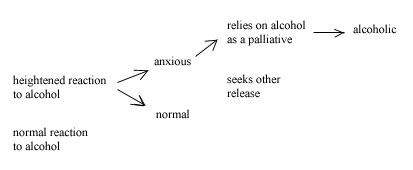
A more accurate model is one in which chains of events split into further layers of possible paths. Let's return to alcoholism. Drinking produces greater mood change for some people. Those who find alcohol to serve a strong palliative function will be more likely to use it to calm themselves. For example, if they are highly anxious, alcohol may tranquilize them. But even this tranquilizing effect, we should recognize, is strongly influenced by social learning.
Among drinkers who are potentially vulnerable to alcohol's addictive effects, most will nonetheless find alternatives to drinking to deal with anxiety. Perhaps their social group disapproves of excessive drinking, or their own values strongly rule out drunkenness. Thus, although people who finds alcohol redresses their anxiety are more likely to drink addictively than others, they are not programmed to do so.
 |
Mirror, Mirror
The goal of determining what proportion of behavior is genetic and environmental will always elude us. Our personalities and destinies don't evolve in this straightforward manner. Behavioral genetics actually shows us how the statistical plumbing of the human spirit has reached its limits. Claims that our genes cause our problems, our misbehavior, even our personalities are more a mirror of our culture's attitudes than a window for human understanding and change.*
SIDEBAR A: Twins "Separated At Birth"
An especially fascinating natural genetic experiment is the comparison of identical twins reared apart, which was the object of a project headed by psychologist Thomas Bouchard at the University of Minnesota. Findings from the project reporting uncanny similarities among the reared-apart twins were often broadcast to the press prior to the publication of any formal results. Yet, Northeastern psychologist Leon Kamin showed that most British twins supposedly separated at birth in another study actually spent considerable periods of time together.
The Bouchard team introduced to the press two twins who claimed to have been brought up separately as, respectively, a Nazi and a Jew. However, both twins claimed they thought it funny to sneeze in crowds and flushed the toilet before urinating! In another case, British sisters showed up in Minnesota wearing seven rings distributed identically on their fingers. Bouchard's colleague David Lykken suggested a genetic predisposition might exist for "beringedness"!
Few, if any, geneticists would agree that genes influence the order in which people urinate and flush the toilet. Kamin waggishly suggested the researchers might use some of their grant money to hire a private investigator to see whether such twins had been playing a "trick" on the researchers. After all, such twins must have realized, amazing similarities between twins sell much better than differences between them. Identical twins who are substantially different are just not as newsworthy.
SIDEBAR B: How to Interpret Genetic Discoveries
We often need help in interpreting newspaper or television accounts about genetic "discoveries." Here are factors readers can use to evaluate the validity of a genetic claim:
- Nature of the study. Does the study involve human beings or laboratory animals? If animal, additional critical factors will almost certainly affect the same aspect of human behavior. If human, is the study a statistical exercise or an actual investigation of the genome? Statistical studies which apportion variation in behavior between genes and environment cannot tell us whether individual genes actually cause a trait.
- Mechanism. How exactly is the gene claimed to affect the proposed trait to which it is linked? That is, does the gene affect people in a way that leads logically to the behavior or trait in question? For example, to say that a gene makes some people welcome alcohol's effects does not explain why they would regularly drink until they become unconscious, destroying their lives along the way.
- Representativeness. Are the populations studied large and diverse, and does the same genetic result appear in different families and groups? Are those studied selected randomly? Early claims about manic depression, schizophrenia, and alcoholism were made with extremely limited groups and did not hold up. Findings about homosexuality will likely suffer a similar fate.
- Consistency. Are the results of the study consistent with other studies? Have other studies found a similar genetic loading for the behavior? Have gene studies identified the same gene or area of the chromosome? If every positive study implicates a different section of DNA as the major determinant of the behavior, the likelihood is that none will hold up.
- Predictive power. How closely linked are gene and trait? One measure of power is the likelihood a syndrome or disease will appear given a genetic disposition. With Huntington's gene, the disease may be inevitable. In other cases, only a small minority with a claimed genetic predisposition may express a trait. For example, accepting the original Blum-Noble figures for the A1 Allele, many more of those with the gene would not be alcoholic than would be.
- Usefulness. What use can be made of the proposed discovery? Simply warning people they will have a problem may be little help to them. Teenagers with an "alcoholism gene" who are told they are genetically predisposed to alcoholism may believe they cannot drink normally. Since most of them nonetheless will drink, they are then set up for a self-fulfilling prophecy in which they act as they had been told they would. If a proposed genetic discovery is not useful, it is merely a curiosity or, worse, a distraction from real solutions.
Ruth Hubbard assisted Stanton and Rich DeGrandpre in the preparation of this article. She is the author, with Elijah Wald, of Exploding the Gene Myth.
next: Promoting Positive Drinking: Alcohol, Necessary Evil or Positive Good?
~ all Stanton Peele articles
~ addictions library articles
~ all addictions articles
APA Reference
Staff, H.
(2008, December 25). My Genes Made Me Do It, HealthyPlace. Retrieved
on 2026, October 20 from https://www.healthyplace.com/addictions/articles/my-genes-made-me-do-it