Food and Your Moods
Learn how some foods can cause depression, whereas other foods, vitamins and supplements can actually enhance your mood and relieve depression symptoms.
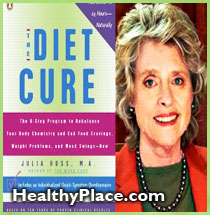
by Julia Ross, author of The Diet Cure
 Are you an emotional basket case who can't get by without comfort food? If you had more strength, could you power through your problems without overeating? Should you feel ashamed of yourself for needing emotional sustenance from foods? No! I hope to help you understand why you are using food as self-medication. It's not because you are weak willed, it's because you're low in certain brain chemicals. You don't have enough of the brain chemicals that should naturally be making you emotionally strong and complete.
These brain chemicals are thousands of times stronger than street drugs like heroin. And your body has to have them. If not, it sends out a command that is stronger than anyone's willpower: "Find a druglike food or a drug, or some alcohol, to substitute for our missing brain chemicals. We cannot function without them!" Your depression, tension, irritability, anxiety, and cravings are all symptoms of a brain that is deficient in its essential calming, stimulating, and mood-enhancing chemicals.
Why Are Your Natural Mood-Enhancing Chemicals Sometimes Deficient?
Something has interfered with your body's ability to produce its own natural brain drugs. What is it? It's obviously not too unusual, or there wouldn't be so many people using food to feel better, or taking Prozac for depression relief. Actually, there are several common problems that can result in your becoming depleted in your feel-good brain chemicals, and none of them is your fault!
You may have inherited deficiencies. We are learning more all the time about the genes that determine our moods and other personality traits. Some genes program our brains to produce certain amounts of mood-enhancing chemicals. But some of us inherited genes that undersupply some of these vital mood chemicals. That is why some of us are not emotionally well balanced and why the same emotional traits seem to run in families. If your mother always seemed to be on edge, and had a secret stash of chocolate for herself, it should come as no surprise that you, too, need foods like candy or cookies to calm yourself. Parents who have low supplies of naturally stimulating and sedating brain chemicals often produce depressed or anxious children who use food, alcohol, or drugs as substitutes for the brain chemicals they desperately need.
Prolonged stress "uses up" your natural sedatives, stimulants, and pain relievers. This is particularly true if you have inherited marginal amounts to begin with. The emergency stores of precious brain chemicals can get used up if you continually need to use them to calm yourself over and over again. Eventually your brain can't keep up with the demand. That's why you start to "help" your brain by eating foods that have druglike effects on it.
Regular use of druglike foods such as refined sugars and flours, and regular use of alcohol or drugs (including some medicines), can inhibit the production of any of your brain's natural pleasure chemicals. All of these substances can plug into your brain and actually fill up the empty places called receptors, where your natural brain drugs - the neurotransmitters - should be plugging in. Your brain senses that the receptors are already full, so it further reduces the amounts of neurotransmitters that it produces. As the amounts of these natural brain chemicals drop (remember, they can be thousands of times stronger than the hardest street drugs), more and more alcohol, drugs, or druglike foods are needed to fill newly emptied brain slots. This vicious circle ends when these substances you ingest are unable to "fill the bill" any longer. Now your brain's natural mood resources, never fully functional, are now more depleted than they ever were, and you still crave your mood-enhancing drugs - whether it's sugar or alcohol and cocaine.
You may be eating too little protein. In fact, you almost certainly are if you've been dieting or avoiding fatty foods, many of which are high in protein, too. Your brain relies on protein - the only food source of amino acids - to make all of its mood-enhancing chemicals. If you are not getting enough protein, you won't be able to manufacture those crucial chemicals. A little later in this chapter and in chapter 18, you'll learn about complete and incomplete proteins, and what is "enough" protein for you. Simply put, eating the equivalent of three eggs, a chicken breast, or a fish or tofu steak at every meal might get you enough protein to keep your brain in repair.
The Physical Cause of Emotional Eating
In the late 1970s, I was the supervisor of a large San Francisco alcoholism treatment program. Our clients were very serious about getting sober, and we gave them the most intensive treatment available anywhere. Yet they could not stop drinking. Eighty to ninety percent relapse rates were standard then, and still are, in the alcohol and drug addiction fields.
As I studied these heartbreaking relapses, I began to see a pattern. Our clients had stopped drinking, but they had quickly developed a heavy addiction to sweets. Sugar is almost identical to alcohol biochemically. Both are highly refined, simple carbohydrates that are instantly absorbed, not needing digestion (complex carbs, like whole grains, need time to be digested). Both sugar and alcohol instantly skyrocket blood sugar levels and temporarily raise levels of at least two potent mood chemicals in the brain. This high would be followed by a low, of course. So, just as when they were using alcohol, our clients who had switched to eating large amounts of sugar were moody, unstable, and full of cravings. Since alcohol usually works even faster than sugar does, at some point, caught in a particularly low mood, they would break down and have a drink to get some relief. One drink would become a full-blown relapse.
In 1980, when I became the director of the program, I began hiring nutritionists to help solve this disturbing relapse problem. They suggested to our clients that they quit eating sweetened foods, foods made from refined (white) flour, and caffeine, and that they eat more whole grains and vegetables. Unfortunately, these nutritional efforts didn't pay off. For reasons that we understood only later, our clients just couldn't stop eating the sweets and starches that eventually led them back to alcohol. For six years we struggled for a solution, then, in 1986, we found one.
The solution came from Dr. Joan Mathews Larson, the director of a nutritionally oriented alcoholism-treatment center in Minneapolis, Minnesota. This brilliant pioneer, the author of Seven Weeks to Sobriety, introduced me to a technique that was quickly eliminating her alcoholic clients' cravings and raising her center's long-term success rate from 20 percent to 80 percent! The technique involved the use of specific amino acids that could rapidly feed the addicted brain exactly the type of protein that it needed to naturally fill up its empty mood-chemical sites. The results were spectacular. No longer did alcoholic clients need sweets or alcohol to feel good! Amino acid therapy revolutionized the work at our clinic, too, dramatically raising our success rates with alcohol and drug-addicted clients. Moreover, we were able to successfully treat clients with other addictions as well. In fact, our most spectacular successes were with food-addicted clients. Ninety percent of the compulsive overeaters we have treated with amino acid therapy have been freed from their food cravings within forty-eight hours.
Using Amino Acids to End Emotional Eating
When psychological help does not clear up emotional eating, we need to look at the four brain chemicals - neurotransmitters - that create our moods. They are:
- dopamine/norepinephrine, our natural energizer and mental focuser
- GABA (gamma amino butyric acid), our natural sedative
- endorphin, our natural painkiller
- serotonin, our natural mood stabilizer and sleep promoter
If we have enough of all four, our emotions are stable. When they are depleted, or out of balance, what we call "pseudo-emotions" can result. These false moods can be every bit as distressing as those triggered by abuse, loss or trauma. They can drive us to relentless overeating.
For some of us, certain foods, particularly ones that are sweet and starchy, can have a druglike effect, altering our brains' mood chemistry and fooling us into a false calm, or a temporary energy surge. We can eventually become dependent on these druglike foods for continued mood lifts. The more we use them, the more depleted our natural mood-enhancing chemistry becomes. Substituting amino acid supplements for these drug foods can have immediate and dramatic effects.
Toni, a 26-year-old Native American, was referred to our clinic because she was exhausted, profoundly depressed, anxious and suffering lifelong trauma from the physical and emotional violence of her family.
Toni drank alcohol and ate sweets to cope. She went regularly to her scheduled counseling sessions but was unable to rouse herself to communicate with her counselor. She had volunteered to come to Recovery Systems, hoping that a new approach would help. Toni had already been through three long-term treatment programs for alcohol addiction. Clearly, she was motivated to solve her problem.
When we saw Toni's condition, the nutritionist and I conferred and decided to give her amino acids on the spot. I asked her to tell me one thing: What was the worst thing she was experiencing at that moment? She said "I'm sooooo tired." Her slumped body and still, dull eyes confirmed this.
Our goal? To treat her lack of energy and depression by raising her levels of the neurotransmitter norepinephrine, the body's natural energizer. We gave her our smallest dose - 500 milligrams of L-tyrosine. While we waited and hoped for an effect, I spoke about how and why amino acids can be helpful.
After about ten minutes, Toni said, "I'm not tired anymore."
"Great!" I said. And then I asked my next question: "What is the worse thing you are experiencing, now that your energy is better?"
She answered by bending over and grasping herself around the stomach. "I'm really uptight."
We then gave Toni the smallest dose of GABA - 100 milligrams - a natural Valium-like chemical along with 300 milligrams of L-taurine. We suspected that together these supplements would help relieve her tension and allow her to relax - and they did. She stretched her legs out in front of her and then stood up, got a glass of water, and went to the bathroom. While she was gone, her counselor came in and happened to tell me that Toni was in a lot of emotional pain because of the chronic alcoholic violence in her family. When her family members drank alcohol, they all became different people, vicious and cruel. And they had never been able to stay away from alcohol.
When Toni returned, I asked her, "Can we give you something to help you endure the emotional pain that you are in?" She said yes, so I gave her a supplement containing 300 milligrams DL-phenylalanine and 150 milligrams L-glutamine. (DL-phenylalanine is the amino acid used to alleviate emotional pain.)
In ten minutes I asked Toni how she was feeling, and she smiled and said, "Just right."
I was incredulous. How could these small amounts really be helping her? Our European American clients usually need two to four times as much of each type of amino acid to get such dramatic effects.
I asked if she would like any more of any of the aminos I had already given her for energy, relaxation, or pain relief. Her answer: "Just right," and a shake of her head.
By this time Toni's eyes were sparkling. Weeks later her counselor reported that by continuing with the amino acids she had first used in our office, Toni was actually talking for the first time in their counseling sessions, and was being praised at work, was being noticed for the first time by men, and was staying sober and sugar-free.
Mood Foods: How Amino Acids Feed Your Brain
The four key mood chemicals (neurotransmitters) are made of amino acids. There are at least twenty-two amino acids contained in protein foods. High-protein foods, such as fish, eggs, chicken, and beef, contain all twenty-two, including the nine amino acids that are considered essential for humans. Other foods, such as grains and beans, have some but not all of the essential nine aminos, so they need to be carefully combined to provide a complete protein (for example, rice and beans, or corn and nuts).
If you are eating three meals a day, each meal including plenty of protein (most people with eating and weight problems are doing neither), your positive moods and freedom from cravings can be maintained. But most people need to kick-start the brain's repair job, using certain key amino acids. This will allow you to actually enjoy eating protein and vegetables instead of cookies and ice cream. After a few months, you will be getting all the aminos you need from your food alone and won't need to take amino acids as supplements any longer.
Restoring depleted brain chemistry sounds like a big job - but it isn't. Three of the four neurotransmitters that color all your moods are made from just a single amino acid each! Because biochemists have isolated the key amino acids, you can easily add the specific ones that may be deficient. These "free form" amino acids are instantly bioavailable (in other words they are predigested), unlike protein powders from soy or milk, which can be hard to absorb. Hundreds of research studies at Harvard, MIT, and elsewhere (some of which date back to the early part of this century) have confirmed the effectiveness of using just a few targeted amino acid "precursors" to increase the key neurotransmitters, thereby eliminating depression, anxiety, and cravings for food, alcohol and drugs.
Stopping Carbohydrate Cravings
It may sound impossible, but you can stop your food cravings almost instantly with just one amino acid supplement. Any absence of fuel for your brain's functions is perceived correctly by your body as a code-red emergency. Powerful biochemical messages then order you to immediately eat refined carbohydrates to quickly fuel your brain. There are only two fuels that the brain can readily use:
- glucose, which is blood sugar made from sweets, starches, or alcohol
- L-glutamine, an amino acid available in protein foods (or as a supplement, carried in all health food stores). L-glutamine reaches the starving brain within minutes and can often immediately put a stop to even the most powerful sweet and starch cravings. The brain is fueled by L-glutamine when glucose levels drop too low. Don't be intimidated by the strong effects of supplementation. L-glutamine is a natural food substance; in fact, it's the most abundant amino acid in our bodies. It serves many critical purposes: stabilizing our mental functioning, keeping us calm yet alert, and promoting good digestion.
Restoring Energy and Focus
When your brain is adequately fueled with its back-up emergency supplies of L-glutamine, you are ready to rebuild your four key neurotransmitters, starting with dopamine/norepinephrine, your natural caffeine. Without this natural brain stimulant, you can be slow and tired and have a hard time concentrating. You don't sparkle and can't stay on track mentally. It's hard to get things done and you can feel dull and sometimes just want to stay in bed. Your physical as well as your mental energy drops without adequate norepinephrine. The amino acid that provides this jet-fuel is the nutritional powerhouse L-tyrosine. L-tyrosine produces thyroid hormones and adrenaline as well as well as norepinephrine. Like L-glutamine, L-tyrosine goes to work in minutes to perk you up.
Enhancing Your Ability to Relax
The next key mood-enhancing chemical is GABA (gamma amino butyric acid), our natural . GABA acts like a sponge, soaking up excess adrenaline and other by-products of stress and leaving us relaxed. It seems to drain the tension and stiffness right out of knotted muscles. GABA can even smooth out seizure activity in the brain. My colleague, Elliot Wagner, a specialist in drug detox, taught me that GABA can even give relief to heroin addicts going through the severe anxiety of early withdrawal. Think what it can do for garden variety stress and uptightness!
When Food is Comfort
For many people, overeating helps compensate for a depletion of the natural pain relievers, the endorphins. Life's pain can be unendurable without adequate amounts of these buffer chemicals. Some of us (for example, those of us from alcoholic families) may be born with too little natural pain tolerance. We are overly sensitive to emotional (and sometimes physical) pain. We cry easily. Like our alcoholic parents, we need something to help us endure our daily lives, which seem so painful. Others of us use up too much endorphin through trauma and stress. We just run out, especially if we were born short on endorphins to begin with. When our comfort chemicals run low, many of use turn to comfort foods.
If you need food as a reward and a treat, or to numb your feelings, your natural pleasure enhancers, the pain-killing endorphins, are probably in short supply. Foods that elevate your endorphin activity can easily become addictive. If you "love" certain foods, those foods are firing a temporary surge of endorphins. Euphoria, joy, the "runner's high" - these are all feelings produced by endorphins. Some people have so much natural endorphins that they smile all the time and get great pleasure from everyday life. Of course, we all endure suffering and loss. But, with enough endorphins, we can bounce back.
For anorectics and bulimics, the trauma of starving and vomiting can trigger an addictive endorphin high, because trauma of any kind can set off an automatic burst of soothing endorphins. You may know of people who felt no pain for hours after a terrible physical injury. Runners don't get their big endorphin high until they have run past "the wall of pain." At that point, they have run too far!
Raising Serotonin, Our Natural Prozac
Low serotonin can be the easiest deficiency of all to develop. Very few foods are high in the amino acid tryptophan, which is the only nutrient that the body can use to make serotonin. According to a 1997 Lancet study, tryptophan is one of the first nutrients to be depleted by weight-loss dieting. If, in addition to dieting, you inherited low serotonin levels and experience a lot of stress, your levels can fall low enough to set off a major eating disorder or serious emotional disturbances.
Restoring your serotonin levels can be a life-or-death matter. Suicides and violent crimes are closely associated with deficiencies of serotonin. The sometimes fatal obsessions and self-hate of bulimics and anorectics are clearly linked to low serotonin levels as well.
Do you have any obsessions that might be caused by low serotonin levels? The women I have worked with who report obsessive behavior tend to be "neat-niks" and suffer from negative obsessing about their physical appearance, while the men are often "neat-freaks," although they also complain about troubling sexual fantasies they can't stop. As we all know, anorectics (who are low in serotonin) are driven to obsessive control of their food intake. Obsessive fears and phobias are common among people with low serotonin levels.
It may be a difficult adjustment for you to begin to see symptoms like control, fear, and low self-esteem as biochemical problems, not just psychological ones. But the success of drugs like Prozac has already alerted us to the biochemical nature of many symptoms that don't respond to psychological help alone.
Drugs like Prozac are called serotonin reuptake inhibitors (SSRIs) because they keep whatever serotonin we have active. But they do not actually provide additional serotonin. For this reason, most people using SSRIs often continue to have some low-serotonin symptoms. Before there were SSRIs, the pharmaceutical compound L-tryptophan was commonly used to increase serotonin levels. For more than twenty years, psychiatrists and health food stores enthusiastically recommended it for relieving depression and food cravings and normalizing sleep without side effects. Many people found that their symptoms were eliminated permanently after only a few months of L-tryptophan use.
In 1989, a series of bad batches of L-tryptophan, which filled forty people and made many more very sick, prompted the Food and Drug Administration (FDA) to stop all U.S. sales. One Japanese company, Showa Denko, had produced all of these batches, which, it was found, were contaminated because they had eliminated three filter systems that they'd been using for years - just why they chose to take away these safety filters is a question that remains unanswered. Showa Denko has never made tryptophan again. Despite evidence that no other manufacturer has ever made a problem batch, the FDA recommended for years that L-tryptophan not be used as a supplement. (Interestingly, they have made no effort to stop the sale of infant formulas, most of which contain added L-tryptophan.)
With L-tryptophan unavailable, drugs like Prozac, , and Redux have become our primary tools for combating the crippling symptoms of low serotonin. Unfortunately, these drugs provide only temporary and incomplete benefits, and often have uncomfortable or dangerous side effects. Fortunately, in 1996, many compounding pharmacies began providing L-tryptophan again, by physician prescription, and a new version of tryptophan called 5HTP (5-hydroxytryptophan) became available over the counter in 1998 without FDA opposition. In 2000, Lidtke Technologies Corporation of Phoenix, Arizona, made L-tryptophan available through health professionals without prescription. Look for other supplement suppliers to follow suit, as the FDA has never formally banned the sale of this essential amino acid.
Whatever mood-enhancing brain chemicals you have in short supply, they can be replenished quickly, easily, and safely.
Tryptophan Depletion: The Path to Depression, Low Self-esteem, Obsession and Eating Disorders
Serotonin, perhaps the most well known of the brain's four key mood regulators, is made from the amino acid L-tryptophan. Because few foods contain high amounts of tryptophan, it is one of the first nutrients that you can lose when you start dieting. A new study shows that serotonin levels can drop too low within seven hours of tryptophan depletion. Let's follow this single essential protein (there are nine altogether) as it becomes more and more deeply depleted by dieting. To see how decreased levels of even one brain nutrient might turn you toward depression, compulsive eating, bulimia, or anorexia.
In his best seller, Listening to Prozac, Peter Kramer, M.D., explains that when our serotonin levels drop, so do our feelings of self-esteem, regardless of our actual circumstances or accomplishments. These feelings can easily be the result of not eating the protein foods that keep serotonin levels high. As their serotonin-dependent self-esteem drops, girls tend to diet even more vigorously. "If I get thin enough, I'll feel good about myself again!" Tragically, they don't know that they will never be thin enough to satisfy their starving minds. Extreme dieting is actually the worst way to try to raise self-esteem because the brain can only deteriorate further and become more self-critical as it starves. More and more dieters worldwide are experiencing this miserable side effect of weight reduction on the brain.
When tryptophan deficiency causes serotonin levels to drop, you may become obsessed by thoughts you can't turn off or behaviors you can't stop. Once this rigid behavior pattern emerges in the course of dieting, the predisposition to eating disorders is complete. Just as some low-serotonin obsessive-compulsives wash their hands fifty times a day, some young dieters may begin to practice a constant, involuntary vigilance regarding food and the perfect body. They become obsessed with calorie counting, with how ugly they are, and on how to eat less and less. As they eat less, their serotonin levels fall farther, increasing dieters' obsession with undereating. As their zinc and B vitamin levels drop low as well, their appetite is lost. This can be the perfect biochemical setup for anorexia.
What so many therapists and others have observed as the central issue of "control" in anorexia often comes down to this: just as vitamin C deficiency (scurvy) results in an outbreak of red spots, do does tryptophan (and serotonin) deficiency result in an outbreak of the obsessive-compulsive behavior that we call "control." There may be psychological elements in the picture, too, but a low-serotonin brain is ill equipped to resolve them.
Source: excerpted with permission from The Diet Cure: The 8-Step Program to Rebalance Your Body Chemistry and End Food Cravings, Weight Problems, and Mood Swings-Now, by Julia Ross.
next: Psychotherapy, Light Therapy, Dietary Supplements for Depression
~ depression library articles
~ all articles on depression
APA Reference
Staff, H.
(2008, December 19). Food and Your Moods, HealthyPlace. Retrieved
on 2024, April 16 from https://www.healthyplace.com/depression/articles/food-and-your-moods