Don't Say Child Abuse Causes Dissociative Identity Disorder
All of the misconceptions about Dissociative Identity Disorder bother me because they create barriers to diagnosis, treatment, and support. But there’s one myth that bothers me for more personal and, up until today, private reasons. And that’s the assumption that child abuse causes Dissociative Identity Disorder.
Trauma Causes Dissociative Identity Disorder
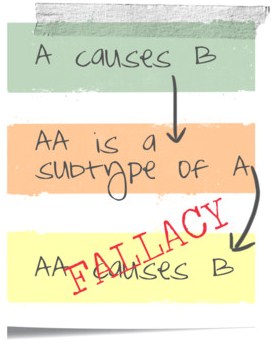 Like all of the mythology surrounding this diagnosis, the widespread belief that child abuse causes Dissociative Identity Disorder is born from grains of truth. An overwhelming majority of adults with DID report chronic, severe childhood abuse; and a healthy portion of that majority report abuse at the hands of their parents. It’s also true that trauma is the single most consistent factor in the development of Dissociative Identity Disorder. Indeed, child abuse is a form of trauma. But it’s illogical to conclude that because:
- trauma causes DID, and
- child abuse is the form of trauma most people with DID report,
- child abuse causes Dissociative Identity Disorder.
Or worse, all adults with DID have cruel, abusive parents who visited unspeakable horrors on their child. Yes, child abuse equals trauma. But that doesn’t mean trauma equals child abuse. And it’s unfair to talk about DID as if it does.
Assumptions Silence People
Not only is it unfair, it’s silencing. It’s not difficult for me to tell people I have Dissociative Identity Disorder; but it’s difficult knowing the assumptions people make about me and my family because of my diagnosis. I don’t care if people think I’m some bizarre aberration because I have DID. I don’t care if they think I’m an attention-seeking malingerer. But I care very much if they draw ugly conclusions about my family and pass judgment on my parents. And I know I’m not the only one who is troubled every time they hear someone matter-of-factly report that child abuse causes Dissociative Identity Disorder. I know that more people might feel comfortable sharing their diagnosis if they felt assured that by doing so they weren’t involuntarily implicating members of their family of terrible crimes.
Assumptions Isolate People
Living with DID is isolating enough without the toxic rivalry among some of those who have it that stems in part, I firmly believe, from the assumption that child abuse causes Dissociative Identity Disorder. From a reader:
I was born with a serious illness, in and out of the hospital since birth. My parents were always scared I'd die. They weren’t perfect, but they never abused me. I've learned not to expect compassion from so called support sites. They act like my DID is less real than theirs because they were abused and I wasn’t. It’s a twisted kind of arrogance and it makes me feel even more lonely.
Don’t Make Assumptions about What Causes Dissociative Identity Disorder
“I have Dissociative Identity Disorder,” means simply and only, “I have Dissociative Identity Disorder.” It isn’t code for, “I was horribly abused." Please don't assume that a diagnosis gives you any insight into someone’s history or family of origin. It doesn’t.
APA Reference
Gray, H.
(2011, August 29). Don't Say Child Abuse Causes Dissociative Identity Disorder, HealthyPlace. Retrieved
on 2024, April 19 from https://www.healthyplace.com/blogs/dissociativeliving/2011/08/dont-say-child-abuse-causes-dissociative-identity-disorder
Author: Holly Gray
Inclined to believe the Bible now on demons terrorizing people. They will use any means necessary, and anyone they can access. Although I am not an accomplished person, I feel very grounded growing up my entire life with this viewpoint—that God is in control, but that demons use others around us to steal, kill, destroy, and apparently dissociate anyone who hasn’t learned their tricks and how to have the faith to deal with them from the Bible. I see some Catholics I know dissociating, and I would rather believe they lack direct Biblically-sound coping skills than were wrapped up in the scandal.
I would like anyone's opinion or input on this very hard to talk about topic that no one in my life seems to take seriously but me: Okay! My biological father was abused as a child, and he had MPS [now known as DID], it was always hard for me to hate him for the abuse he afflicted on me as a child [physical, sexual, psycological] because it was like he was two different dads. I always referred to the bad dad as 'mot devil' even as a 3-5yr old child because I *knew* it wasn't my normal, loving, would give everything father. Fast forward to my mom getting us away from him, moving away, him losing rights to us etc. I developed DID as a young child, and it affected me until my teenage years. I was able to kind of get out of it on my own, and it kind of morphed into a weird dysmorphia where I was convinced most my teenage years I was really a super natural creature. I had other issues and was diagnosed with schizophrenia at age 14, which now I don't believe was accurate as, after getting through my ptsd I am mostly semi normal aside from severe social anxiety, paranoid personality disorder, and depression [I'm almost 30]. Okay so I figured mine and my dad's mental issues were from trauma. My question is, my 4 year old son has autism, high functioning, but recently he has started getting OVER the top about issue with being called "fat peach" and only certain times we are allowed to call him by his real name. He also exhibits different behaviors, and insists that "peach" is a girl, and that his normal self is this big strong boy. When he's being his normal self he is mean, horrible, aggressive, puffs himself up like an ape and is violent and disobedient, when he's peach he's sweet, loving, likes to wear girl clothes, asks me to put makeup on him, or let him wear my wigs. He becomes so hysterical that if he hears me calling him his real name when he's 'peach' he will have autistic meltdowns and freak out and cry, it's getting so bad he's not wanting to go to preschool because they wont call him peach, they only call him his real name and it's upsetting him, and he's getting in trouble because he's acting out when he's 'his real name' and bullying other kids. Like I'm at a loss, he has never experienced any abuse or trauma, he has both parents who love him, grandparents who love him and see him for at least an hour 5 times a week, he's spoiled, he's got the best life, we've got early intervention and therapy for him since he was 2, and he went from non verbal to speaking in just this last 6 months and now this is happening. I'm very confused, everything I read INSISTS he has to have been abused, and it upsets me thinking that if he has been, a teacher must have done it to him. But I check him like a hawk, every day he comes home, for marks, cuts, bruises, I ask him extensively how his day went. He's always happy he just says he's mad the teachers wont call him peach. I want to get him help for this but now am worried they will implicate he was abused even if he wasn't. Is there any chance that he can have this THIS YOUNG with no abuse? Can the autism cause this? I know that often schizophrenia is seen side by side with autism and he has an uncle that is schizo and autistic, so am wondering if it works the same with DID? I don't know what to do right now, I can't even call him by his name anymore because he thinks he's "fat peach". Please don't laugh :/
Not discounting your idea of what may be going on as I can imagine that the autism has caused him some, in his life. I also wonder though if perhaps he is exhibiting a gender confusion. Perhaps he wants to be peach, but our world has told him that he is a boy and should like boy things. So it almost feels like he wants to experience what it's like to be peach but doesn't want to feel like he has to lose part of his identity that has been built for him by his surroundings.
Hi. I want to know if it was possible to have this disorder from an accident. I don’t have DID but I am writing a story about a character with DID. The character has experience a cave-in at an archeological site where he was trapped in the place alone when he was child. I was wondering if it was a valid enough of a trauma to cause DID.
Yes all kinds of trauma can cause DID but it must be below the ages of 6 or 8 depending on who you read. (Within the time that a child can create imaginary playmates is what is called the cut off point. It that they are imaginary but because of how the brain works with dissociation etc. The trauma is usually severe and repetitive. One hour in a cave wouldn't do it. Several days or a week alone under the age of 8 I guess could depending on how traumatic it was. And of course symptoms do. It show right away. It's not entirely usual for kids to know they have alters until something triggers the walls to fall down.
I think this is a really poorly written outdated article.
The three types of trauma that get specified during the ages specified, is what cause this specific disorder.
I'm pretty sure losing family members at an early age, pet, house burning down, moving away from your friends, changing schools or seeing someone die, are all tramatic. However that is not the kind that will cause DID. Maybe a dissociation of sorts, but not did.
My daughter claims she has DID. She is 18 now and has been a remorseless liar her entire life. Also doing things like attempting to frame others for her infractions and trying to make people believe her home life is terrible not saying outright but implying abuse where there was none.
Keeping it brief trust me when I say that there is absolutely no way by any stretch of the imagination that I ever abused her. Like most dads I raised my voice occasionally, I am forthright but I never said anything demeaning or hurtful. I expressed disappointment or lack of understanding but I loved my daughter more than life. I would never ever ever want to hurt her. She knows this for a fact.
With the help of Child Protective Services (who never asked me a single question!!), she destroyed mine and her brothers lives. Within 10 minutes they decided to take my kids based solely on her lies. My son is a normal healthy boy and CPS never asked him anything and when he protested they told him he was in denial. Her lies have caused him to live in a foster home for the last 3 years.
Anyway now she is claiming she has DID and its somehow my fault. She experienced NO ABUSE and NO TRAUMA as a child. Psychopathy runs in her mothers family and she has exhibited classic signs since she was about 10. Is she just up to her same old tricks? Could she possibly really have DID? Her mother was not around much, sometimes absent for months yet she has she chosen me to paint as some horrible person. WHY? How do I combat her lies? Should I just write her off and disown her? Im afraid what she will accuse me of next....
It sounds like she’s taking out her anger on you. Perhaps she blames you for her mother not being around that much as a child, and so thinks you deserve to be punished. Unfortunately it doesn’t seem like she has the whole story, and is acting mostly on her own emotions rather than thinking it through logically.
I don’t really know what could be done about it though, other than trying to find out why she’s done this. But then you have your other child to look out for, who by her actions has suffered for no reason. If she’s been diagnosed with did, then hopefully she’s being treated for it and will be able to see what’s happened. I hope you can still have a good relationship with your other child, and I wish you the best.
Thank you for the information. I also feel that the information available on the Internet about DID and the involvement of parents in abuse is very hurting. The DID, I suffer from, was deliberately created by people, who wanted me to be their slave. In therapy, I heal subsystem after subsystem, and slowly have a better awarness of what had happened to me. And it had not happened in my family settings, and it had not happened early in my childhood. The dissociation started at age of 10, 11. I also later in time, had gone through a torture and long term slavery and post leaving harassment and threats, losing custody of my children. This is so much trauma and I don't have organic dissociative disorder, only polyfraymented DID, deliberately created on purpose of slavery, alters responding to the clues or triggers programmed by the abusers.
some people are just born plural. that is what i am told. like how we have conjoined and absorbed twins
The way I have always looked at it is that trauma during early childhood causes DID. It could literally be any kind of trauma. I think one thing I see play out is that often times survivors of extreme child abuse don’t remember their child abuse that really did occur. I think of one of my best friends who definitely has DID. Her system is very good at hiding abuse from her. On most days she is aware of the abuse she suffered in childhood, and then on other days she can’t remember it at all and is genuinely shocked when it is mentioned to her.
DID is tricky, and I think most people I know know it comes from an kind of overwhelming trauma during early childhood.
A lack of attachment to care givers can be a factor in DID as well as the fact some people can have a brain that can use dissociation more easily. a child who was constantly hospitalized especially at a very young age could have missed a crucial stage of attachement, not to mention medical procedures being performed on someone so young and esp. pre-verbal could very well be traumatized. There doesn't appear to be any brain chemical cause but definitely there are people with brains that use dissociation more readily. I am one of the 90% that experienced sexual, physical, and emotional abuse and neglect. it's good to be reminded that trauma at a young age doesn't necessarily have to be from parental or abuse by others.
What other causes are there for DID? I'm very curious to learn more.
This is not my original post, but 90% of DID cases are linked to child abuse and neglect. The other 10% fall under causes including medical trauma, natural disasters, war, etc.
This is absolutely an opinion, not a fact about the other 10%. I was so heartened to see your post because I was not abused by my parents and that stigma is painful. The trauma could be death of a parent that was witnessed at a young age or any other variety of circumstances that I suppose could be put under "medical trauma". Sometimes the events are witnessed. Multiple losses and Grief play a very underestimated role in trauma. Again...assumptions about the other "10%" makes me SAD!
Hello,
I have, what we know is, dissociative order not otherwise specified (ddnos) since birth. They said they can't diagnose it any further until I'm older. I have lived with it for 17 years so far, but it's getting worse and happening more often. I don't remember a lot of what I do anymore. My parents say I talk different when I'm dissociating (like a toddler), have worse motter skills, etc. They say im like a different person, that I'm not myself. I've recently been in and dissociated at a residential treatment place and they said it's not behavioral, but metabolic or genetic. Any suggestions for me and next steps? Hope you can help.
Thanks,
Beck (pen name)
I'm glad I came across this & read the entire thing. I was abused as a child but was never diagnosed with anything. I came across the term DID from a show I was watching & decided to read up on it. Because I was curious & wanted to educate myself on it. Trauma such as abuse can put people at a higher risk of developing a mental illness, but it's not like it can stop you from living your life, especially with the right type of support I think. & by law jobs have to give everyone equal opportunities.
Also, why does there always have to be a blame factor here? I am not in agreement with that point of view.
Astie,
I feel your intense communication. I disagree with you though, I am sorry if that angers you. I believe that some people are inherently born with traits, genes, what have that give rise to dissociation as a defense than others are. So, with that in mind, a child who sees a traumatic accident, say was at Ground Zero, and eventhough the parents didn't abuse th echild but was a loving parent and took care of that child, perhaps got therapy for him or her (but you know the reality is that not everyone can afford therapy and not all therapy is well done) or moved the child to a safer local, etc. but the child was a type of person who is predisposed to dissociation, dissociates to the extent of alterters. So I guess what I am saying is that not every case of DID is caused by parents who cannot mee their needs for legit reasons, and even some parents got their kid help but the kid was just wired that way. There is such a thing as the diathesis stress model.
I'm not sure where i/we stand on that. It is the sole responsibility of ALL parents and caregivers to PREVENT trauma occurring to their child and to give them the necessary help to prevent any accidental trauma that was out of their control from becoming something detrimental to the child's development. i.e Counselling for chronically ill; accident victims; assault victims; natural disaster victims etc etc etc. If your parents didn't get you the help you needed as a child post trauma THEY ARE ABUSING YOU! They ARE adding to the stressors in your life, they are failing in their most important parental duty (to provide adequate care- and that goes beyond basic things like a freaking bandaid or medical treatment) and they are therefore also responsible for the formation of DID. You say DID only forms when other coping mechanisms are exhausted, a good parent does not allow that to happen more than once or twice in the 5-6 yrs it takes for DID to develop in a child... Everyone fails at something once or twice with their kids, its a learning curve, but repeated failures and unresolved trauma is exactly what causes DID. And any parent who allows issues to go unresolved is therefore contributing to dissociation being the primary coping skill.
So if you really stop and think about it. No your parents may never have laid a hand on you, yes you may have been chronically ill and got medical treatments etc, but if your parents didn't take the time, effort and care to tend to your traumatic symptoms while they were freshly occurring OR after, coz let's face it, no kids ever show absolutely no symptoms of trauma, there's always at least one sign and if your parents really are loving and safe and devoted, they'll see them. If they're not tending to those needs or situations they're not as loving and as innocent as you think. Granted not all DID is the result of Sexual abuse, 90% is, but not all. But absolutely all abuse is the result of failures of caregivers somewhere along the way. Its that simple. If it's not the child's fault they are forced to resort to dissociating, and kids cannot be responsible for their upbringing, who is? Where does the blame lie? the answer is always the parents/caregivers. always.
Astrie,
The author did post a follow-up to this post that explained why she said those things originally http://www.healthyplace.com/blogs/dissociativeliving/2014/10/rethinking-dissociative-livi…
I agree with what you said, however. Even in cases where the parents are not the abusers, they can be neglectful, which is considered child abuse if it is severe enough.
I also just want to clarify that 90% of DID cases involve a history of child abuse and neglect, not just sexual abuse.
My husband has this disorder. His father was a loving kind man that others remember that even though he was a marine he never swore or cursed. He loved children it was one of his defining features. He died suddenly of a heart attack in front of his children. It was not just a dropping to the floor but a traumatic event. My husbands mother who deeply loved and adored her husband went into a grief state she was never able to fully come out of, this included her eventual abuse of alcohol. The single parent child that my husband was set him up for molestation, the neighborhood husband/father of three that loved to "help" kids in need took him under his wing. The man was a (latter in his life) diagnosed sociopath who lived to torture young male teens starting at puberty and do so for as long as possible. He used every sadistic trick or scheme, killing multiple animals, strangling my husband to the degree he would loose consciousness. He threatened that if my husband did not return to his house of horror that he would "follow him home" meaning get his two years younger sister or grief stricken mother instead. He threatened exposure, he assured my husband that bc his body responded to sexual stimuli that he liked what was being done to him and was therefore "queer". He threatened telling his friends, took pictures of him nude and wore them around his neck while in front of this young boy, then when in public he would only wear the leather chain that the picture would be held on in private. He was a foot or better taller and had a hundred pounds of weight on him and fifteen years of age. He watched my husbands every move, he lived within one block of the Catholic parochial school my husband attended , he was a upstanding member of the church having had his and his wife's silhouette photo appear on the national catholic magazine entitled of all things Agape. He brutally raped my husband at 14 years old. He continued that rape for nine years. He forced oral sex on him and forced him to preform oral sex, if not done with gusto he kept a scissors ever present so he could feel a direct threat to his life. The put downs were beyond outrageous and reprehensible, he used information After my husband is forced to preform oral sex (after multiple times strangled, degraded, physically slapped, knocked down, had his life threatened with full details of how he would murder him and dispose of his body) he begins to call my husband the "little Marine" knowing the deep love he held for his father and that the very idea of him preforming oral sex against his will would have been intolerable to both my husband and his father, my husband was forced to imagine that his father was watching him from heaven, the abuser would laugh and say "spit shine that c*ck" . This is but a very small tip of the ice burg. Some literature suggests that my husbands mother was negligent in her mothering skills which being in her deep grief she no doubt was, however my husband was in deep shame over something he should have never felt shame for but was told repeatedly that was his fault and that he wanted the sexual rapes. Being male there were no hotlines, no help that was worth the risk of exposure and the possible informing of his abuser and the subsequent punishment and killing of animals that would follow. His mind began to disconnect, but in fact my husband believes the original disconnect happened as a result of watching his father die lying in his own vomit (heart attack victims often do vomit during a heart attack. Vomit in and of itself scares small kids). The disconnect or dissociative disorder more then likely aided the sociopathic monster to do what he did as often we know that one dissociates to a age younger then when the event causing trauma happened which means he would have been under seven years of age, making the predators job easier then it normally would have. The DID made it so that my husband could live and not end his life as three other young boys did. Thank God for dissociation! Dissociation was also what was able to aid him in hiding this most horrible of secrets from his mother. She is not to blame. Nor is anyone in his family, they were a good family. To dishonor them would only add to the psychological trauma he has already experienced. That said, to those reading although parents may not be the cause of the trauma, and the disorder itself may have most likely did make it so that the child was able to hide the abuse, please, please know that few if any people dissociate without there being some serious trauma to be found somewhere. That is so very important to know bc there are some people who could still be actively involved in ongoing trauma, they may even define it as a relationship because their mind will not tolerate a demeaning, humiliating, dominating abuse that is against their will so they wrongfully claim willing participation, especially males when it comes to male on male sexual relations. To be a partner is acceptable, to be a unwilling heterosexual victim is horrifying. The abuser may not be actively in their lives by still in communication, triggering dissociative episodes, pay close attention to finances as your loved one could be being blackmailed but the alter you see does not recall that and money withdrawn from accounts appears as cash withdrawals. I realize that our situation is very unique but abusers are NOT always parents, that belief wastes valuable time when the search for the abuser who may still be abusing others or even your loved one goes on unchecked. End of the post here is, it is not always the parents indeed, parents can be fooled due to the disorder, abuse does not always stop at childhood triggered alter switching in a otherwise normal life appearing individual could be a sign of some continued interaction with the real abuser. May you all be blessed and safe.
This is certainly one thing I wish I'd understood sooner--although the resources I found when I actually went looking weren't all totally ignorant, it just seems like a full picture of the scope of real-world experiences isn't available to or from very many people. I hope that changes.
Yeah, I spent most of my life not knowing there were dissociated pieces until I purposely attempted to "summon" a new or existing piece as a last resort when I hit absolute rock bottom and wanted to die--and I was shocked that it actually worked. Then I was rather worried that when other pieces surfaced, they would bring with me the kind of horrific memories that other dissociated people often report. At the same time, I was perplexed as to why my own childhood memories weren't all rosy and whitewashed as is expected of so-called "core" identities. It took even more stress for me to realize that *I* was the trauma sponge for a third piece, whereas if I had recognized the situations that apparently split me as having been traumatic, I would have had a significantly greater/earlier capacity to help the system heal, in addition to avoiding the profound shock of the realization. Since then, the hosting identity and the newly discovered one have integrated, and while I miss both of us, the rediscovered strength in numerous areas of life is profound enough that I wish I had known what was going on many years ago. Of course people who have been violently tortured deserve every bit of the acknowledgement and care they need to reclaim their lives, but lesser wounds still require informed intervention.
Teddy, did you not read what was said? Trauma can be one cause yes, but not all trauma is child abuse.
My trauma was years of intense bullying, being attacked by a neighborhood dog, and the stress of withholding my homosexuality.
Read "I'm Eve," "A Mind of My Own," or "Three Faces of Eve." Chris Sizemore, one of the most renowned cases of MPD/DID, had trauma-based DID but it was NOT child abuse related.
She's not the only one.
Intro to DID 101
Everyone dissociates on some level. It is a natural process to the human mind. Nobody has had the perfect childhood. Our parents have all made mistakes. Things happen. It's not perfect. So, dissociation happens and doesn't have to be trauma based.
Now, also dissociation also lies on a spectrum. Dissociative Identity Disorder actually is a trauma based disorder. It likely is based on the trauma impact of the individual and how it impacted them but trauma and abuse is trauma and abuse point period the end.
ongoing repeated trauma in childhood. go to the isstd and sidran. also look into the fact that the trauma was never validated or supported. how many of us have had to stand up and tell what has happened and got supported and saved from what happened which in essence created the very world necessary for us to survive in.... you know your worlds that collide for you... but i guess you have to believe what your therapists and other organizations who spend a great deal of time and energy working on this stuff to trust that they might know a little about what they are talking about. i mean at one time wouldn't you have believed that holly? i'm not advocating that all therapists and professionals are the ones who know all right and wrong. but some actually do know a little about some of this stuff.
and to copy what i posted in another blog..... because maybe
To spell this out.
Dissociate (the root word or dissociative) :1. to break or cause to break the association between (people, organizations, etc) 2. ( tr ) to regard or treat as separate or unconnected 3. to undergo or subject to dissociation.
Identity: 1.the state or fact of remaining the same one or ones, as under varying aspects or conditions: The identity of the fingerprints on the gun with those on file provided evidence that he was the killer. 2.the condition of being oneself or itself, and not another: He doubted his own identity. 3.condition or character as to who a person or what a thing is: a case of mistaken identity. 4.the state or fact of being the same one as described.
Disorder: 1.lack of order or regular arrangement; confusion: Your room is in utter disorder. 2.an irregularity: a disorder in legal proceedings. 3.breach of order; disorderly conduct; public disturbance. 4.a disturbance in physical or mental health or functions; malady or dysfunction: a mild stomach disorder.
Looking at these definitions alone one can conclude that the definition on DID is that there is a disturbance in the mental health or functions that is described as a break or disconnectedness in identity. It makes no sense that this would occur self misalignment would happen under normal circumstances. Why would a child break its identity, causing a disturbance in mental functions, over non traumatic experiences? I suppose this would require looking into the definition on mental functions.
Mental Functions: or cognitive processes are defined as : perception, introspection, memory, creativity, imagination, conception, belief, reasoning, volition, and emotion — in other words, all the different things that we can do with our minds.
Now this leads us to note that these are all things in which anyone with a mental disorder can have disturbed.
I think anyone can draw their own conclusions but if you look closely at the above information I believe it is pretty safe to say that any child that was raised in a loving and safe environment would not have DID.
Trauma: 1. Pathology. a. a body wound or shock produced by sudden physical injury, as from violence or accident. b. the condition produced by this; traumatism. 2.Psychiatry. a. an experience that produces psychological injury or pain. b. the psychological injury so caused.
So defining DID as a trauma disorder is simply saying that the origin of this separation of self that has caused a disturbance in cognitive processes is an experience that produces psychological pain or injury.
Now with all this said attempt to define DID as a disorder that does not have a basis of trauma.
How does this make a change to the public view!?!?!?!?!?!?!!?
Thank you for this.
*Trigger Warning.*
In my case, I was abused, but my main abusers were not family members and I am fairly certain I was not the victim of incest. When I still used survivor forums, I often was met with disbelief when I said that my parents were not my primary abusers. They abused me emotionally (and sometimes physically) but there was no incest. I was told that I "couldn't be sure of that" and that many of my experiences "proved" that I had incest in my history. One example is that I had a difficult time with toilet training. I was in daycare much of the time, and I consciously remember there being some very questionable practices involved with bathroom use (both for toilet-trained children and those still in diapers). I have always figured that *that* was the reason for my difficulties.
One of my survivor friends read an article that suggested "trouble with toilet training" as a *possible* sign of incest and decided that that "proved" I was in denial about things. It's immensely frustrating to me, because as much harm as my parents have done, they are not guilty of incest. Until one of my system members suggests otherwise and I receive evidence to suggest that they sexually abused me, I am not going to change my personal narrative to fit what the survivor community tells me "ought" to have happened.
I wholeheartedly agree with you, Holly, and many others who have commented. I too am part of a DID family/system; I am not the original, but I and others were the result of needed hospital visits when we were very, very young. I was also one of those who was so terrified of finding out if my parents had done something unspeakable. Thankfully, I have since found out that, while my parents were sometimes unpredictable, they never intentionally hurt me in any way.
I very much appreciate your reply to Akid, because it helps me have a different perspective on what I already know. My counselor has tried to help me see it that way, but I guess hearing it from another source really helped. Thank you.
Thank you so much for this. I don't have DID, but am on the spectrum. I have a clear split in my psyche arising from birth trauma [premature, forceps, separation from my Mum for too long, depressed mother] and a stressful home and school environment through my growing up years. I was repeatedly publicly ridiculed and attacked at school by my peers for my vulnerabilities - the teachers did nothing, and at home domestic violence, emotional abuse, and depressed, untreated parents left me no safe space to go to. So I went away inside myself, I went away into hiding, my traumatised self rampaging through years later in my breakdowns.
My parents weren't intentionally abusive and neglectful, they were both unwell and immature and frightened of the world and didn't know how to manage an insecure, withdrawn, traumatised child.
My peers at school who bullied me for over a decade did intentionally abuse me.
And of course birth trauma isn't an intentional abuse as such. Especially as everything was done to keep me alive, it just damaged me and my ability to form secure attachments.
I have spent a lot of my online forum space feeling I have to try and validate my own experiences. Too many people judge or invalidate me for not having a 'bad enough' [sexually abusive] past to have DID-like symptoms, and I've also been accused of 'faking' DID.
Another myth is that you have to have DID to have alters/parts, and have been diagnosed by a psychiatrist no less. [Try that with the NHS!] And really, you don't have to have DID to have separate self states. You just have to have been traumatised, usually repeatedly, and starting from a young age, in some way. Shock! Horror! True, in DID they're more defined, but. Borderline, C-PTSD, any diagnosis on the trauma spectrum can cause splits. And, remember people, a formal official diagnosis isn't a badge of courage, it's what YOU live with every day, what you know in your heart is true that counts.
Thank you for posting this. :)
Holly, I just read this blog post and was thankful to find someone else who feels the same way. I was recently diagnosed with DID and I have feared getting into what I don't remember from my childhood, which is most of my life until age 12, because I don't believe I was abused. I know for a fact my parents were not abusive but everything I read points to child abuse as the only cause of DID. Hopefully they will do more studies in this and not stereo-type this so much. Again your insights are very helpful, thank you:)
Child abuse is a common cause of DID but definitely not the only cause. Any severe trauma can cause it, such as witnessing something terrible, being in some unusually stressful situation you didn’t understand, separation from parents (were you ever hospitalized as a very young baby/child?).
It’s been a few yrs since your post. I hope you’re okay.
I was taught to create separate identities the first time by a great grandmother. Not my parents. Other people also taught me to split off what was being done. Some family, some not family. But all very intentionally done by people to make me a slave to their abuse.
Intentionally causing you to dissociate and create alters sounds a lot like programming. I can see that this is a really old post now, so I hope you've been able to work through your trauma.
Hi Holly,
My DID was caused when I was a victim of abuse and trauma, but I was never abused as a child by my parents or family members. In fact, I grew up in a loving family. Thank you for exposing the myth that DID is not caused by child abuse. I appreciate your article.
Dear Holly,
I am overwhelmed with gratitude by such a thoughful and comprehensive repsonse to my questions. I have been searching, searching, searching for someone or something which might validate my experience and misgivings in coming to terms with this diagnosis.
"...and ultimately a really good way to drive yourself nuts."
I've driven myself nuts over this for so long that the odometer in my mind has flipped twice.
The material in your blog, Holly, has been among the most useful and practical I have found beyond the simple listing of symptoms (few of which I could readily endorse) that most mental-health websites publish. I appreciate reading your work and the messages of those who follow your post. I will pursue the resources you have included above. Thank you.
Hi everyone,
@Janice, thank you so much for reading. Indeed, trauma is the effect something has on a person's psyche, not the something itself.
@LeeDeb yes, I so agree with this: "I also think that being an introspective, imaginative, and creative person make for a way to get through what ever is traumatic to that child." I firmly believe I have Dissociative Identity Disorder (as opposed to some other coping mechanism) because I am, by nature, highly imaginative and prone to dissociation.
@castorgirl wow, this hadn't occurred to me: "I say complicated, because as a child, you hope that your parents will protect you from trauma, and when they can’t or won’t, there is confusion." That's really insightful, thank you. The more I think about it, the more I see that even if a parent is genuinely doing all they can for a child, and is by all rights an amazing parent, there is an inherent betrayal in their inability to protect, to keep bad things from happening, regardless of their degree of power. It isn't fair, but there you have it.
@Stephanie I'm really glad you made the stress connection. That's really what DID is, a way of coping with overwhelming stress that surpasses the child's resources. What causes the stress matters insofar as it matters to the person who experiences it, but it doesn't matter in terms of quantifying the stress in the first place. Trauma is the effect something has on us, not the something itself.
So, it is possible that one could become a 'dissociated individual' without having suffered repeated abuse or trauma...?
I would support the evidence that describes my parents' behavior as dismissive and minimizing and often neglectful; my father was bipolar and my family-life was unstable, at best. Given this information, I can even understand how an exam at the age of five revealing the possibility of sexual abuse might be ignored by my parents. (I do not remember making the complaints that necessitated such an exam, but my mother reluctantly shared this information with me when I, led by a previous psychiatrist's suspicion of such some years ago, made direct inquiry of her.)
Is "healing" possible without recovering memories? What if there are no traumatic incidents to recall?
neglect and being dismissed .. and the other things you mentioned ARE ABUSE. ITS BEEN 8 YEARS SO I HOPE YOU HAVE FIGURED THIS OUT BY NOW.
I do not have the stereotypically expected childhood history of trauma that goes along with DID. For years, I found myself being terrorized over the thought that I was suddenly going to remember horrible abuse from my childhood (more than I already remembered, because I didn't feel like what I remembered could have possibly been "bad enough" to split my psyche). Every time I had a nightmare, I drove myself mad trying to figure out if it was a clue of something I couldn't remember.
I don't know what changed, but one day I realized that it was my coping skill for stress. Regardless of abuse or no abuse, I endured incredibly amounts of stress throughout my childhood that I wasn't able to cope with nor was given much help for. Admittedly, my parents were emotionally abusive and manipulative, and often sexually inappropriate, but nothing fit what I thought had to have happened for a diagnosis like DID. And, eventually, I realized that was okay. Nothing is ever that clear cut and I'm sad that I wasted so much time terrorizing myself over misconceptions and misgivings about a disorder that so few people really understand anyway.
I do think that many of us with DID have a complicated relationship with our parents (who doesn't), but that doesn't mean that they are the perpetrators of the trauma. I say complicated, because as a child, you hope that your parents will protect you from trauma, and when they can't or won't, there is confusion.
Hello, Holly:
I have only recently been diagnosed DID; rather, I should say that I have only recently *accepted* a diagnosis of DID -- and that, reluctantly. My primary reservation stems from my inability to remember any trauma whatsoever in my childhood. It is further inconcievable to me that my parents could have perpetrated such trauma upon my person nor that they could have been unaware of my having suffered so at the hands of anyone else.
I am in a double-bind: the only way that I can permit such a diagnosis is if I assure myself that my parents are beyond recrimination, but I cannot believe such pathology possible without a contributing souce of significant trauma. I feel as though I am pirouetting on a knife edge in my therapy to "begin to remember what happened that created the need to dissociate."
Hi Akid,
I'm glad you commented.
I have been in your double-bind before. It's a decidedly uncomfortable place to be. Let me tell you what I've discovered in the 6 years since I was diagnosed:
A - I have met only one person diagnosed with DID who never wondered why they have DID, who never thought or said something on the order of, 'but what happened to me wasn't bad enough to cause DID!' I'm sure there are others, but it's telling that I have spoken to and heard from hundreds of people with DID over the years and only one has claimed never to wonder if their trauma was "bad enough."
B - Without fail, every time I've ever heard someone wonder why they have DID because what happened to them wasn't "that bad" and they go on to reference something from their childhood, it is always "that bad." We don't recognize it as such because we associate this diagnosis exclusively with nightmares beyond imagination. That's a myth. DID is the result of repetitive dissociative coping due to overwhelming stress that exceeds the psyche's resources. There are plenty of people who suffered genuine nightmare childhoods and do not have DID or any other dissociative disorder. We cannot rely on measuring "how bad" an experience was to validate this diagnosis. That's a subjective measure and ultimately a really good way to drive yourself nuts.
C - I read your second comment, which validates answer B above. You say, " ... my father was bipolar and my family-life was unstable, at best." That one sentence tells us why you have Dissociative Identity Disorder. But then you go on to say, "Given this information, I can even understand how an exam at the age of five revealing the possibility of sexual abuse might be ignored by my parents." So now we have even more information - something (perhaps not sexual abuse, but something) led to that examination. An examination that, even as an adult would be invasive and upsetting. You were five. The exam itself may have been traumatic. I don't point this out to try and get you to attach new meaning to old memories. I point it out because you're saying, essentially, I don't remember trauma but, in fact, you do. You are looking for something larger, something huge and heinous, yes? I ask because that was once my mistake and I see countless others make it too, it's understandable. Your memories don't seem to match up to what you believe causes DID. The reason for that is two-fold:
1) The causes of DID have been so sensationalized and dramatized at this point that you are left to compare your own history with a myth. 2) Dissociation itself affects how we store memories ... what you reported doesn't feel traumatic to you because, I'm guessing, the emotions and the facts are stored separately.
This is terribly long-winded, I'm sorry. It's late and my brain is tired and when that happens I lose the ability to be succinct. I hope you'll read this post and watch the accompanying video. I think it might help: http://www.healthyplace.com/blogs/dissociativeliving/2011/01/dissociative-identity-disord…
One last thing: You mention you have only recently been diagnosed. Please know that the ISSTD's treatement guidelines for adults with Dissociative Identity Disorder, along with every clinician I respect in the field of trauma and dissociation recommend a phase oriented treatment approach with phase one concentrating on stabilization, symptoms reduction, and skills training ... NOT processing traumatic material. Obviously, if things come up, they come up and must be dealt with. But overall, the first stage of DID treatment should focus on, as I said, stabilization, symptom reduction, and skills training. You may be interested in a book called Coping with Trauma-Related Dissociation, Skills Training for Patients and Therapists. It's an excellent manual for phase one treatment and is easy to use in therapy.
Thank you Holly
" It’s also true that trauma is the single most consistent factor in the development of Dissociative Identity Disorder. Indeed, child abuse is a form of trauma."
I also think that being an introspective, imaginative, and creative person make for a way to get through what ever is traumatic to that child. being left alone can be traumatic. an adult screaming at you can be also.
again thank you so much for your blogs have learned much and enjoyed all that I have read.
I'm glad I read the whole article. This is true for me. We are the ones that don't always make sense to other DID people. My parent's or family members did not abuse me. Other trauma's caused more damage. And trauma can be perceived in many ways. Thanks for your writings.