Therapeutic Touch for Psychological Disorders
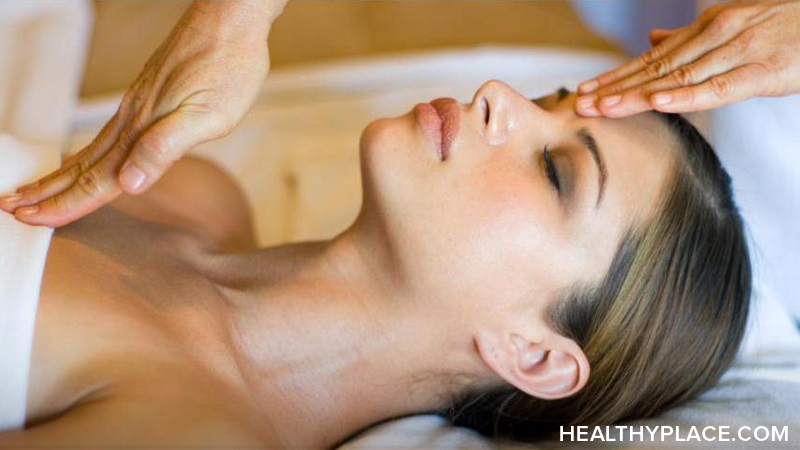
Learn about therapeutic touch as a treatment option for anxiety, stress, Alzheimer's dementia and other psychiatric disorders and fibromyalgia pain.
Before engaging in any complementary medical technique, you should be aware that many of these techniques have not been evaluated in scientific studies. Often, only limited information is available about their safety and effectiveness. Each state and each discipline has its own rules about whether practitioners are required to be professionally licensed. If you plan to visit a practitioner, it is recommended that you choose one who is licensed by a recognized national organization and who abides by the organization's standards. It is always best to speak with your primary health care provider before starting any new therapeutic technique.
Background
Therapeutic touch (TT) was developed by Delores Krieger, R.N., Ph.D., and Dora Kunz, a natural healer, in the early 1970s. Therapeutic touch is a modern adaptation of several religious and secular healing traditions and is most commonly used in nursing practice for a wide range of health conditions.
When administering treatment, therapeutic touch practitioners hold their hands a short distance from a patient, without making physical contact. This technique is believed to help detect a patient's energy field and allows the practitioner to correct any imbalances. A standardized technique is taught by Nurse Healers - Professional Associates, Inc., the primary training organization for therapeutic touch. The treatment protocol consists of a sequence of four steps:
- Centering — to focus attention on the patient and calm the patient's mind
- Assessing — to evaluate the patient's energy field for irregularities
- Intervention — to facilitate symmetrical flow of energy through the patient's energy field
- Evaluation/closure — to verify the effects and conclude the treatment
Treatment sessions typically last five to 20 minutes, but they may take up to 30 minutes. To date, there is no formal certification or competency-based credentialing in therapeutic touch.
Therapeutic touch is taught as a secular approach with no religious connotations, although its core concept of "life energy" or "life force" has sometimes been compared with spiritual rather than scientific principles. Critics have argued that because of its religious roots, therapeutic touch should be treated as a religion rather than as a therapeutic intervention. Skeptics have sought to eliminate therapeutic touch as a nursing practice, based largely on perceived questions surrounding the mechanism of action. Nonetheless, positive results suggested by a few studies in humans, clinical anecdotes and case reports have led to increasing use of therapeutic touch and related practices based on an energetic paradigm.
Since therapeutic touch was first described in the 1970s, several variations have emerged from the original treatment. Healing touch was founded in the 1980s by Janet Mentgen and is based on the principles of therapeutic touch. (The terms therapeutic touch and healing touch are sometimes used interchangeably.) Healing touch focuses on several concepts in addition to those of therapeutic touch, including patient empowerment, practitioner self-care and the effect of the practitioner-patient relationship on healing.
Theory
The mechanism by which therapeutic touch may affect the body is not known. It has been theorized that healing touch affects patients through the connection of energy fields within and outside of the physical body. The treatment of symptoms is thought to occur when the movement of energy stimulates internal mechanisms. Therapeutic touch is asserted to have varying effects on different body systems, with the autonomic nervous system being particularly sensitive. The lymphatic, circulatory and musculoskeletal systems are also thought to be affected. Female endocrine disorders are believed to be more sensitive than male endocrine disorders. Anecdotally, manic and catatonic patients have been reported to respond to therapeutic touch. Most studies of therapeutic touch have examined effects on pain and anxiety.
A controversial study published in the Journal of the American Medical Association in 1998 reported that blindfolded therapeutic touch practitioners were unable to detect which of their hands was closer to the hand of an investigator. The authors concluded that this demonstrated an inability of therapeutic touch practitioners to sense energy fields. The study was later criticized by some therapeutic touch providers who thought that the study did not truly test the clinical applications of touch therapy or assess outcomes such as improved symptoms.
Evidence
Scientists have studied therapeutic touch for the following health problems:
Pain
Several studies suggest that therapeutic touch may reduce pain and improve mobility in patients with osteoarthritis, may decrease pain and anxiety in burn patients and may improve chronic musculoskeletal pain in elderly patients. One study reported a reduced need for pain-relieving drugs after surgery, although overall pain was not reduced. This early research is suggestive. However, most studies have been poor quality, and clear comparisons have not been made with standard pain treatments such as pain-relieving drugs. Most studies have compared therapeutic touch with no therapy or with false (placebo) therapeutic touch. Further study is needed before a firm conclusion can be drawn.
Anxiety
Because of conflicting results of different studies, it is currently unclear if therapeutic touch is useful in the treatment of anxiety. A number of trials have reported benefits, whereas others have found no effects. Most studies have been poorly designed. Scientific analyses taking into account these different studies have not provided clear answers. Better research is necessary before a recommendation can be made.
Psychiatric disorders
There is preliminary evidence that therapeutic touch may help to relax premature infants, reduce anxiety in children with life-threatening illnesses, reduce anxiety in chemically dependent pregnant women, reduce stress and anxiety in the work place, and reduce stress in teen-agers with psychiatric disease. Further study is needed before a recommendation can be made.
Alzheimer's dementia
There is early evidence that therapeutic touch may reduce behavioral symptoms of dementia, such as searching and wandering, tapping and banging, vocalization, anxiety, pacing and agitation. However, larger well-designed studies are needed before a firm conclusion can be drawn.
Headache
A single study reports that therapeutic touch may reduce pain associated with tension headache. However, further research is needed before a recommendation can be made.
Well-being in cancer patients
A single study suggests that therapeutic touch may improve well-being in patients with advanced cancer. Pain, anxiety, depression, and fatigue have been reported as improved in patients receiving therapeutic massage and healing touch. Further research is needed before a recommendation can be made.
Wound healing
Results of the few studies of therapeutic touch for wound healing are mixed, with some reporting improvements, and others showing no effects. Most research has been conducted by the same author. It remains unclear if therapeutic touch has any benefits in wound healing.
Diabetes
One study reports that therapeutic touch does not have significant effects on blood sugar levels in patients with type 1 (insulin-dependent) diabetes mellitus.
Fibromyalgia
Preliminary research suggests therapeutic touch may be an effective treatment option in relieving pain in patients with fibromyalgia. Further research is needed before a recommendation can be made.
Unproven Uses
Therapeutic touch has been suggested for many other uses, based on tradition or on scientific theories. However, these uses have not been thoroughly studied in humans, and there is limited scientific evidence about safety or effectiveness. Some of these suggested uses are for conditions that are potentially life-threatening. Consult with a health care provider before using therapeutic touch for any use.
| Arthritis Bone fractures Bone healing Cardiovascular disease Carpal tunnel syndrome Childbirth preparation Chronic fatigue syndrome Depression and acute grief reaction Dystonia (muscle spasm) Epilepsy | High blood pressure Improved flow of breast milk Multiple sclerosis Parkinson's disease Phantom limb pain Rehabilitation Sarcoidosis Sinusitis Sleep enhancement Well-being during pregnancy |
Potential Dangers
Therapeutic touch is believed to be safe in most individuals and does not involve direct physical contact between practitioner and patient. Therapeutic touch should not be used for severe conditions in place of therapies with proven efficacy. There are anecdotal reports of restlessness, anxiety, dizziness, nausea and irritability with therapeutic touch. There is a published case of tension headache and a case of crying associated with therapeutic touch.
Some practitioners believe that therapeutic touch should not be practiced on people during the initial period of a fever or inflammation, and should not be administered to areas of the body with cancer. It is sometimes recommended that treatment sessions for children be shorter than for adults. Also, if the practitioner is emotionally upset, there may be a risk that this emotional upset will transfer from the practitioner to the patient.
Summary
There are few well-designed clinical trials of therapeutic touch. Therapeutic touch remains controversial, and research has not identified a mechanism of action that fits into standard Western models of medicine. There are some treatment areas, such as anxiety and pain, for which there is promising early research. However, there is also some negative evidence, including one study in which blindfolded therapeutic touch practitioners could not sense when they were close to another person's energy field. Better-quality research is needed, because therapeutic touch remains widely used.
The information in this monograph was prepared by the professional staff at Natural Standard, based on thorough systematic review of scientific evidence. The material was reviewed by the Faculty of the Harvard Medical School with final editing approved by Natural Standard.
Resources
- Natural Standard: An organization that produces scientifically based reviews of complementary and alternative medicine (CAM) topics
- National Center for Complementary and Alternative Medicine (NCCAM): A division of the U.S. Department of Health & Human Services dedicated to research
Selected Scientific Studies: Therapeutic Touch
Natural Standard reviewed more than 370 articles to prepare the professional monograph from which this version was created.
Some of the more recent studies are listed below:
- Astin JA, Harkness E, Ernst E. The efficacy of "distant healing": a systematic review of randomized trials. Ann Intern Med 2000;132(11):903-910.
- Blankfield RP, Sulzmann C, Fradley LG, et al. Therapeutic touch in the treatment of carpal tunnel syndrome. J Am Board Fam Pract 2001;14(5):335-342.
- Denison B. Touch the pain away: new research on therapeutic touch and persons with fibromyalgia syndrome. Holist Nurs Pract 2004;18(3):142-151.
- Eckes Peck SD. The effectiveness of therapeutic touch for decreasing pain in elders with degenerative arthritis. J Holist Nurs 1997;15(2):176-198.
- Giasson M, Bouchard L. Effect of therapeutic touch on the well-being of persons with terminal cancer. J Holist Nurs 1998;16(3):383-398.
- Gordon A, Merenstein JH, D'Amico F, et al. The effects of therapeutic touch on patients with osteoarthritis of the knee. J Fam Pract 1998;47(4):271-277.
- Ireland M. Therapeutic touch with HIV-infected children: a pilot study. J Assoc Nurses AIDS Care 1998;9(4):68-77.
- Lafreniere KD, Mutus B, Cameron S, et al. Effects of therapeutic touch on biochemical and mood indicators in women. J Alt Comp Med 1999;5(4):367-370.
- Larden CN, Palmer ML, Janssen P. Efficacy of therapeutic touch in treating pregnant inpatients who have a chemical dependency. J Holist Nurs 2004;22(4):320-332.
- Lin Y-S, Taylor AG. Effects of therapeutic touch in reducing pain and anxiety in an elderly population. Integ Med 1998;1(4):155-162.
- McElligott D, Holz MB, Carollo L, et al. A pilot feasibility study of the effects of touch therapy on nurses. J N Y State Nurses Assoc 2003;34(1):16-24.
- Olson M, Sneed N, LaVia M, et al. Stress-induced immunosuppression and therapeutic touch. Altern Ther Health Med 1997;3(2):68-74. P
- eters RM. The effectiveness of therapeutic touch: a meta-analytic review. Nurs Sci Quart 1999;12(1):52-61.
- Post-White J, Kinney ME, Savik K, et al. Therapeutic massage and healing touch improve symptoms in cancer. Integr Cancer Ther 2003;2(4):332-344.
- Richards K, Nagel C, Markie M, et al. Use of complementary and alternative therapies to promote sleep in critically ill patients. Crit Care Nurs Clin North Am 2003;15(3):329-340.
- Rosa L, Rosa E, Sarner L, et al. A close look at therapeutic touch. JAMA 1998;279(13):1005-1010.
- Samarel N, Fawcett J, Davis MM, et al. Effects of dialogue and therapeutic touch on preoperative and postoperative experiences of breast cancer surgery: an exploratory study. Oncol Nurs Forum 1998;25(8):1369-1376.
- Smith DW, Arnstein P, Rosa KC, Wells-Federman C. Effects of integrating therapeutic touch into a cognitive behavioral pain treatment program: report of a pilot clinical trial. J Holist Nurs 2002;Dec, 20(4):367-387.
- Smith MC, Reeder F, Daniel L, et al. Outcomes of touch therapies during bone marrow transplant. Altern Ther Health Med 2003;Jan-Feb, 9(1):40-49.
- Turner JG, Clark AJ, Gauthier DK, et al. The effect of therapeutic touch on pain and anxiety in burn patients. J Adv Nurs 1998;28(1):10-20.
- Weze C, Leathard HL, Grange J, et al. Evaluation of healing by gentle touch in 35 clients with cancer. Eur J Oncol Nurs 2004;8(1):40-49.
- Winstead-Fry P, Kijek J. An integrative review and meta-analysis of therapeutic touch research. Alt Ther Health Med 1999;5(6):58-67.
- Wirth DP, Cram JR, Chang RJ. Multisite electromyographic analysis of therapeutic touch and qigong therapy. J Alt Comp Med 1997;3(2):109-118.
- Woods DL, Craven RF, Whitney J. The effect of therapeutic touch on behavioral symptoms of persons with dementia. Altern Ther Health Med 2005;11(1):66-74.
- Woods DL, Whitney J. The effect of therapeutic touch on disruptive behaviours of individuals with dementia of the Alzheimer type. Alt Ther Health Med 1996;2(4):95-96.
- Woods DL, Dimond M. The effect of therapeutic touch on agitated behavior and cortisol in persons with Alzheimer's disease. Biol Res Nurs 2002;Oct, 4(2):104-114.
back to: Alternative Medicine Home ~ Alternative Medicine Treatments
APA Reference
Staff, H.
(2008, December 3). Therapeutic Touch for Psychological Disorders, HealthyPlace. Retrieved
on 2024, April 17 from https://www.healthyplace.com/alternative-mental-health/treatments/therapeutic-touch-for-psychological-disorders