Craniosacral Therapy for Psychiatric Disorders
Craniosacral therapy is an alternative treatment for depression, ADHD, autism, Alzheimer's and other psychological disorders. But does craniosacral therapy really work?
Before engaging in any complementary medical technique, you should be aware that many of these techniques have not been evaluated in scientific studies. Often, only limited information is available about their safety and effectiveness. Each state and each discipline has its own rules about whether practitioners are required to be professionally licensed. If you plan to visit a practitioner, it is recommended that you choose one who is licensed by a recognized national organization and who abides by the organization's standards. It is always best to speak with your primary health care provider before starting any new therapeutic technique.
Background
In the early 1900s, the osteopathic doctor William Sutherand developed a theory that the relationships and motions of the bones of the skull (cranium), of the fluid that flows through the brain and spinal column (cerebrospinal fluid), of the membranes around the brain and spinal cord (meninges), and of the bones of the lower back (sacrum) lie at the core of the body's functioning and vital energy. A series of techniques grew out of these concepts, which were further developed in the 1970s by John Upledger, also an osteopathic doctor. Dr. Upledger coined the term craniosacral therapy, which refers to a form of therapeutic manipulation that is oriented to tissue, fluid, membranes and energy.
Theory
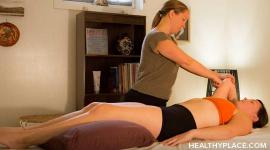
Craniosacral therapy practitioners touch areas of the patient lightly to sense the cranial rhythm impulse of the cerebrospinal fluid (CSF), said to be similar to feeling the pulse of blood vessels. Practitioners then use subtle manipulations over the skull and other areas with the aim of restoring balance by removing restrictions to CSF movement, a process that is proposed to help the body heal itself and improve a wide range of conditions. Treatment sessions usually last between 30 and 60 minutes.
There are numerous anecdotes about treatment benefits, although effectiveness and safety have not been thoroughly studied scientifically. Craniosacral therapy may be practiced by osteopathic doctors, chiropractors, naturopathic doctors or massage therapists. This technique is sometimes referred to as cranio-occipital technique or cranial osteopathy (when practiced by osteopathic doctors), although it is controversial whether there are subtle differences between these approaches.
Evidence
Scientists have studied craniosacral therapy for the following health problems:
Effects on heart and breathing rates
Early evidence shows that craniosacral therapy does not appear to have an effect on heart or breathing rates. More information is needed before a conclusion can be drawn.
Pregnancy (labor and delivery)
Preliminary research shows that there is no added benefit for using craniosacral therapy during labor and delivery. Check with a qualified obstetrician before using craniosacral therapy.
Unproven Uses
Craniosacral therapy has been suggested for many uses, based on tradition or on scientific theories. However, these uses have not been thoroughly studied in humans, and there is limited scientific evidence about safety or effectiveness. Some of these suggested uses are for conditions that are potentially life-threatening. Consult with a health care provider before using craniosacral therapy for any use.
| Allergies Alzheimer's disease Amyotrophic lateral sclerosis Aphasia (impaired speech) Asthma Attention-deficit hyperactivity disorder Autism Back pain Bell's palsy Birth trauma Brain disorders Brain injury Cerebral palsy Chronic bronchitis Chronic pain Colic Coma Congestive heart failure Coordination problems Crohn's disease Dental pain management Depression Dermatitis Dizziness Dyslexia Ear congestion Ear infection Ear pain Emotional difficulties Enhancement of antiseizure drugs Enhancement of diabetes drugs Enhancement of psychiatric drugs Epilepsy Facial pain Frozen shoulder Headache | Hearing problems Hormonal imbalances Hyperkinesis (a movement disorder) Infertility Insomnia Joint diseases Joint pain Kyphosis (a spinal disorder) Learning disability Lower back pain Lupus Ménière's disease (an inner ear disorder) Menstrual pain Migraine Multiple sclerosis Muscle aches and pain Musculoskeletal problems Neck pain Nerve damage Persistent crying Postoperative care Sciatica Scoliosis Sinusitis Spinal injury Spinal pain Sports injuries Strabismus (crossed eyes) Stress-related conditions Stroke Temporomandibular joint disorder Tennis elbow Tinnitus (ringing in the ears) Trauma Trigeminal neuralgia (a nerve disorder) Visual disturbances |
Potential Dangers
The safety of craniosacral therapy has not been thoroughly studied scientifically. Although the movements of this technique are usually gentle, there may be a small risk of stroke, nervous system damage, bleeding in the head, intracranial aneurysm or increased pressure in the brain. The following people should approach craniosacral therapy with caution: those with recent head trauma or skull fracture, those with diseases that affect the brain or spinal cord, those with conditions in which a change in pressure in the brain would be dangerous, and those with disorders of blood clotting. In theory, craniosacral therapy may make some existing symptoms worse. Adverse results have been reported in patients with traumatic brain syndrome.
There are anecdotal reports of diarrhea, headache and increased anger after treatment. It has been proposed that craniosacral therapy may enhance the effects of drugs used for diabetes, epilepsy or psychiatric disorders, although this has not been tested in scientific studies. Craniosacral therapy should not be relied on as the sole treatment (instead of more proven approaches) for potentially severe conditions, and it should not delay consultation with an appropriate health care provider about a symptom or condition.
Summary
Craniosacral therapy has been suggested for many conditions. There are numerous anecdotes about successful treatment with craniosacral therapy, although effectiveness and safety have not been thoroughly tested scientifically. Speak with your health care provider if you are considering treatment with craniosacral therapy.
The information in this monograph was prepared by the professional staff at Natural Standard, based on thorough systematic review of scientific evidence. The material was reviewed by the Faculty of the Harvard Medical School with final editing approved by Natural Standard.
back to: Alternative Medicine Home ~ Alternative Medicine Treatments
Resources
- Natural Standard: An organization that produces scientifically based reviews of complementary and alternative medicine (CAM) topics
- National Center for Complementary and Alternative Medicine (NCCAM): A division of the U.S. Department of Health & Human Services dedicated to research
Selected Scientific Studies: Craniosacral Therapy
Natural Standard reviewed more than 30 articles to prepare the professional monograph from which this version was created.
Some of the more recent studies are listed below:
- Blood SD. The craniosacral mechanism and the temporomandibular joint. J Am Osteopath Assoc 1986;86(8):512-519.
- Ehrett SL. Craniosacral therapy and myofascial release in entry-level physical therapy curricula. Phys Ther 1988;Apr, 68(4):534-540.
- Elsdale B. Craniosacral therapy. Nurs Times 1996;Jul 10-16, 92(28):173.
- Geldschlager S. [Osteopathic versus orthopedic treatments for chronic epicondylopathia humeri radialis: a randomized controlled trial. Forsch Komplementarmed Klass Naturheilkd 2004;11(2):93-97.
- Gillespie BR. Dental considerations of the craniosacral mechanism. Cranio 1985; Sep-Dec, 3(4):380-384.
- Green C, Martin CW, Bassett K, et al. A systematic review of craniosacral therapy: biological plausibility, assessment reliability and clinical effectiveness. Complement Ther Med 1999;7(4):201-207.
- Greenman PE, McPartland JM. Cranial findings and iatrogenesis from craniosacral manipulation in patients with traumatic brain syndrome. J Am Osteopath Assoc 1995;95(3):182-188.
- Hanten WP, Dawson DD, Iwata M, et al. Craniosacral rhythm: reliability and relationships with cardiac and respiratory rates. J Orthop Sports Phys Ther 1998;Mar, 27(3):213-218.
- Hartman SE, Norton JM. Craniosacral therapy is not medicine. Phys Ther 2002;Nov, 82(11):1146-1147.
- Hehir B. Head cases: an examination of craniosacral therapy. Midwives (Lond) 2003;Jan, 6(1):38-40.
- Heinrich S. The role of physical therapy in craniofacial pain disorders: an adjunct to dental pain management. Cranio 1991;Jan, 9(1):71-75.
- Kostopoulos DC, Keramidas G. Changes in elongation of falx cerebri during craniosacral therapy techniques applied on the skull of an embalmed cadaver. Cranio 1992;Jan, 10(1):9-12.
- Maher CG. Effective physical treatment for chronic low back pain. Orthop Clin North Am 2004;35(1):57-64.
- McPartland JM, Mein EA. Entrainment and the cranial rhythmic impulse. Altern Ther Health Med 1997;Jan, 3(1):40-45.
- Moran RW, Gibbons P. Intraexaminer and interexaminer reliability for palpation of the cranial rhythmic impulse at the head and sacrum. J Manipulative Physiol Ther 2001;Mar-Apr, 24(3):183-190.
- Phillips CJ, Meyer JJ. Chiropractic care, including craniosacral therapy, during pregnancy: a static-group comparison of obstetric interventions during labor and delivery. J Manipulative Physiol Ther 1995;Oct, 18(8):525-529.
- Quaid A. Craniosacral controversy. Phys Ther 1995;Mar, 75(3):240. Comment in: Phys Ther 1994;Oct, 74(10):908-916. Discussion, 917-920.
- Rogers JS, Witt PL, Gross MT, et al. Simultaneous palpation of the craniosacral rate at the head and feet: intrarater and interrater reliability and rate comparisons. Phys Ther 1998;Nov, 78(11):1175-1185.
- Rogers JS, Witt PL. The controversy of cranial bone motion. J Orthop Sports Phys Ther 1997;Aug, 26(2):95-103.
- Sucher BM, Heath DM. Thoracic outlet syndrome: a myofascial variant. Part 3: Structural and postural considerations. J Am Osteopath Assoc 1993;Mar, 93(3):334, 340-345. Erratum in: J Am Osteopath Assoc 1993;Jun, 93(6):649.
- Upledger JE. Craniosacral therapy. Phys Ther 1995;Apr, 75(4):328-330. Comment in: Phys Ther 1994;Oct, 74(10):908-916. Discussion, 917-920.
- Weiner LB, Grant LA, Grant AH. Monitoring ocular changes that may accompany use of dental appliances and/or osteopathic craniosacral manipulations in the treatment of TMJ and related problems. Cranio 1987;Jul, 5(3):278-285.
- Wirth-Pattullo V, Hayes KW. Interrater reliability of craniosacral rate measurements and their relationship with subjects' and examiners' heart and respiratory rate measurements. Phys Ther 1994;Oct, 74(10):908-916. Discussion, 917-920. Comment in: Phys Ther 1995;Apr, 75(4):328-330. Phys Ther 1995;Mar, 75(3):240.
back to: Alternative Medicine Home ~ Alternative Medicine Treatments
APA Reference
Staff, H.
(2008, November 25). Craniosacral Therapy for Psychiatric Disorders, HealthyPlace. Retrieved
on 2024, April 20 from https://www.healthyplace.com/alternative-mental-health/treatments/craniosacral-therapy-for-psychiatric-disorders