Aromatherapy for Mental Health Conditions
What is Aromatherapy and how does it work? And is aromotherapy effective for treatment of anxiety, depression and other mental health conditions?
Before engaging in any complementary medical technique, you should be aware that many of these techniques have not been evaluated in scientific studies. Often, only limited information is available about their safety and effectiveness. Each state and each discipline has its own rules about whether practitioners are required to be professionally licensed. If you plan to visit a practitioner, it is recommended that you choose one who is licensed by a recognized national organization and who abides by the organization's standards. It is always best to speak with your primary health care provider before starting any new therapeutic technique.
Background
For thousands of years, oils from plants have been used to lubricate the skin, purify air and repel insects. Essential oils were used in ancient Egypt for bathing and massage and in ancient Greece and Rome for treating infections. The origin of modern aromatherapy is often traced to the French chemist Rene-Maurice Gattefosse, who is said to have poured lavender oil onto his hand after accidentally burning himself. He believed that the pain, redness and skin damage healed more quickly than expected, and he began to study the effects of oils on the body.
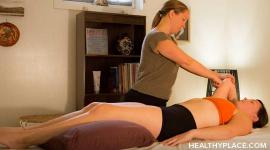
Essential oils are extracted from a plant's flowers, leaves, needles, branches, bark, berries, seeds, fruits, rind or roots. These oils are often mixed with a milder "carrier" oil (usually a vegetable oil) or are weakened (diluted) in alcohol. Essential oils are used in many different ways, including directly on the skin, as a part of massage, in bathwater, via steam inhalation or in mouthwashes.
Aromatherapy sessions often begin with an interview, after which the therapist selects a blend of oils that he or she feels is appropriate for the client. Appointments may last up to 90 minutes. Clients may be asked not to shower for several hours afterwards, to allow more time for oils to sink into the skin. Manmade compounds are usually not used. Commonly sold products such as scented candles, pomanders or potpourri are usually not as strong as the oils typically used by aromatherapists.
There is no required training or licensing for aromatherapists in the United States. Many types of practitioners, including massage therapists, chiropractors and nurses, offer aromatherapy.
Theory
Different theories have been proposed to explain the reported effects of aromatherapy, although none has been proven scientifically. Some explanations include:
- Stimulation of pleasure centers of the brain by nerves in the nose that sense smell
- Direct effects on hormones or enzymes in the blood
- Stimulation of the adrenal glands
Evidence
Scientists have studied aromatherapy for the following health problems:
Anxiety
Lavender aromatherapy is traditionally believed to be relaxing. Several small studies report that it helps relieve anxiety. Overall, the scientific evidence suggests a small benefit. It is possible that aromatherapy may have effects on mood, cognitive performance and relaxation in adults. Larger, well-designed studies are needed to confirm the available data.
Agitation in patients with dementia
There is preliminary evidence that aromatherapy using essential oil of lemon balm (Melissa officinalis) can effectively reduce agitation in people with severe dementia when applied to the face and arms twice daily. Other research reports that steam inhalation of lavender aromatherapy may have similar effects. However, other research reports no benefits of aromatherapy using lemon balm, Lavender officinalis, sweet orange (Citrus aurantium), or tea tree oil (Malaleuca alternifolia). Overall, the evidence does suggest potential benefits. There is also preliminary research suggesting that aromatherapy used with massage may help to calm people with dementia who are agitated. However, it is not clear if this approach is any better than massage used alone. Additional research is necessary before strong recommendations can be made.
Poor sleep, sedation
Lavender and chamomile are popularly regarded as effective sleep aids. Research is too early to form a clear conclusion.
Quality of life in patients with cancer or life-threatening illnesses
Aromatherapy and aromatherapy massage are often used in people with severe illnesses to improve quality of life. In one randomized controlled trial, sleep scores improved, but pain control and anxiety scores did not. There is not enough scientific evidence at this time to form a firm conclusion about effectiveness.
Alopecia areata
Alopecia areata is a condition in which the body's immune system attacks hair follicles, causing hair loss. A well-designed study using a mixture of oils (cedarwood, lavender, rosemary and thyme in carrier oils of grapeseed and jojoba) reported improvements in patients compared with patients using carrier oils alone. More research is needed before a clear conclusion can be reached.
Congestion, respiratory tract infection
Eucalyptus oil and a component of eucalyptus called eucalyptol are included in many over-the-counter vapors and other treatments. One small study showed a positive effect of aromatics on mucous clearance in patients with chronic airway obstruction. However, there is not enough scientific information to form a clear conclusion.
Itching in dialysis patients
It is not clear if aromatherapy reduces itchiness in patients with kidney disease on dialysis.
Anxiety or stress in intensive care unit patients
It is not clear if aromatherapy reduces stress levels in patients in intensive care units. Early research suggests that it may not be helpful.
Labor pain
A small trial of aromatherapy for pain management in women during labor gave unclear results. More research is needed to make a conclusion.
Nausea
Aromatherapy may play a role in reducing postoperative nausea. However, the evidence is not clear, and more research is needed before a clear recommendation can be made.
Obesity
It has been suggested that aromatherapy massage may reduce abdominal obesity or appetite. Additional evidence is necessary before a clear conclusion can be reached.
Constipation
Preliminary research in this area is inconclusive.
Unproven Uses
Aromatherapy has been suggested for many other uses, based on tradition or on scientific theories. However, these uses have not been thoroughly studied in humans, and there is limited scientific evidence about safety or effectiveness. Some of these suggested uses are for conditions that are potentially life-threatening. Consult with a health care provider before using aromatherapy for any use.
| Acne Addiction Advanced cancer Allergies Alzheimer's disease Antibacterial Anticonvulsant Antifungal Antimicrobial Antiviral Anxiety in patients with malignant brain tumors Arthritis Asthma Autonomic dysfunction Back pain Bereavement and grief Bladder infection Boils Breast cancer Bronchitis Burns Cancer Chronic bronchitis (prevention and treatment) Chronic pain Circulation Common cold Confidence Coping skills Depression Digestive disorders Enhanced recovery from surgery or illness Exercise recovery Exhaustion Fever Gas Guillain-Barré syndrome (symptom relief) Headache High blood pressure Hormonal and endocrine disorders Immune system stimulant Impatience Impotence Improved circulation Indigestion Inflammation Inflammatory bowel disease Insect bites Intravenous line infection | Irregular heartbeat Irritability Joint pain Laryngitis Learning disabilities Liver disorders Loss of appetite Malignancy Maternal comfort during labor Memory enhancement Menstrual cramps Motion sickness Mucositis Muscle pain Nerve pain Pain Panic attacks Parkinson's disease Pimples Postpartum discomfort Promoting sleep in critically ill patients Psoriasis Psychosomatic illness Reduced swelling after injuries Respiratory tract infections (prevention) Restlessness Rheumatic disorders Seizure disorder Sexually transmitted diseases Sickle cell disease Skin infections Skin rash in bone marrow transplant patients (engraftment syndrome rash) Smoking withdrawal symptoms Spasms Sprains and strains Stimulation of digestion Stomach complaints Study performance (math tasks) Sunburn Swelling Tendonitis Test performance Thrush Trauma Vaginitis Well-being Wound healing Yeast infections |
Potential Dangers
Essential oils may be toxic if taken by mouth and should not be swallowed.
Many types of essential oils can cause skin rash or irritation on direct contact, and they should be diluted with a base oil before use. Some oils, such as peppermint and eucalyptus oils, may burn the skin if applied at full strength. Skin sensitivity to light may occur, particularly with oil of bergamot (extracted from the rind of the bergamot orange) or a chemical in oil of bergamot called 5-methoxypsoralen. Vapors released during aromatherapy can irritate the eyes. Use near children's faces is discouraged.
Allergy may occur with use of essential oils; it may be caused by contamination or by constituents of the herbs from which the oil is derived. Individuals who have difficulty breathing with the use of aromatherapy should seek medical attention before attempting aromatherapy again.
There are published reports of agitation, drowsiness, nausea and headache with the use of aromatherapy. Some oils are thought to have toxic effects on the brain, liver and kidney or to increase the risk of cancer with long-term use. Aromatherapies that may increase sedation or drowsiness, such as lavender or chamomile, may enhance the effects of drugs, herbs or supplements that also cause fatigue or sedation. Use caution if you are driving or operating heavy machinery.
Sage, rosemary and juniper oils may cause the uterus to contract when taken in large amounts, and their use is discouraged during pregnancy.
Infants and young children may be especially sensitive to the effects and side effects of essential oils. Peppermint oil is not recommended in children younger than 30 months. Consult a health care provider before using aromatherapy in children.
Summary
Aromatherapy has been suggested for many health conditions. Several small studies suggest that lavender aromatherapy may help relieve anxiety. There is no conclusive scientific evidence for the effectiveness of any other use or type of aromatherapy. Essential oils may be toxic if taken by mouth and should not be swallowed. Several other adverse effects have been reported, most commonly skin allergy or irritation after direct contact. Some types of aromatherapy may be dangerous in children and in pregnant women. Do not rely on aromatherapy alone to treat potentially dangerous medical conditions. Speak with your health care provider if you are considering the use of aromatherapy.
The information in this monograph was prepared by the professional staff at Natural Standard, based on thorough systematic review of scientific evidence. The material was reviewed by the Faculty of the Harvard Medical School with final editing approved by Natural Standard.
Resources
- Natural Standard: An organization that produces scientifically based reviews of complementary and alternative medicine (CAM) topics
- National Center for Complementary and Alternative Medicine (NCCAM): A division of the U.S. Department of Health & Human Services dedicated to research
Selected Scientific Studies: Aromatherapy
Natural Standard reviewed more than 640 articles to prepare the professional monograph from which this version was created.
Some of the more recent studies are listed below:
- Anderson LA, Gross JB. Aromatherapy with peppermint, isopropyl alcohol, or placebo is equally effective in relieving postoperative nausea. J Perianesth Nurs 2004;19(1):29-35.
- Anderson C, Lis-Balchin M, Kirk-Smith M. Evaluation of massage with essential oils on childhood atopic eczema. Phytother Res 2000;14(6):452-456.
- Ballard CG, O'Brien JT, Reichelt K, et al. Aromatherapy as a safe and effective treatment for the management of agitation in severe dementia: the results of a double-blind, placebo-controlled trial with Melissa. J Clin Psych 2002;63(7):553-558.
- Buckle J. Aromatherapy for health professionals. Beginnings 2003;Jan-Feb, 23(1):40-41.
- Bureau JP, Ginouves P, Guilbaud J, et al. Essential oils and low-intensity electromagnetic pulses in the treatment of androgen-dependent alopecia. Adv Ther 2003;20(4):220-229.
- Burnett KM, Solterbeck LA, Strapp CM. Scent and mood state following an anxiety-provoking task. Psychol Rep 2004;95(2):707-722.
- Burns A, Byrne J, Ballard C. Sensory stimulation in dementia (editorial). Br Med J 2002;325:1312-1313.
- Calvert I. Ginger: an essential oil for shortening labour? Pract Midwife 2005;8(1):30-34.
- Christen L, Christen S, Waldmeier V, et al. [Nursing without and with essential oils: a controlled study of patients in an acute rheumatologic department]. Pflege 2003;16(4):193-201.
- Connell FEA, Tan G, Gupta I, et al. Can aromatherapy promote sleep in elderly hospitalized patients? J Canadian Ger Soc 2001;4(4):191-195.
- Cooke B, Ernst E. Aromatherapy: a systematic review. Br J Gen Pract 2000;50(455):493-496.
- Edge J. A pilot study addressing the effect of aromatherapy massage on mood, anxiety and relaxation in adult mental health. Complement Ther Nurs Midwifery 2003;May, 9(2):90-97.
- Fellowes D, Barnes K, Wilkinson S. Aromatherapy and massage for symptom relief in patients with cancer. Cochrane Database Syst Rev 2004;CD002287.
- Gedney JJ, Glover TL, Fillingim RB. Sensory and affective pain discrimination after inhalation of essential oils. Psychosom Med 2004;66(4):599-606.
- Graham PH, Browne L, Cox H, Graham J. Inhalation aromatherapy during radiotherapy: results of a placebo-controlled double-blind randomized trial. J Clin Oncol 2003;Jun 12, 21(12):2372-2376.
- Gray SG, Clair AA. Influence of aromatherapy on medication administration to residential-care residents with dementia and behavioral challenges. Amer J Alzheimer's Disease Dementias 2002;17(3):169-174.
- Han SH, Yang BS, Kim HJ. [Effectiveness of aromatherapy massage on abdominal obesity among middle aged women]. Taehan Kanho Hakhoe Chi 2003;33(6):839-846.
- Hasani A, Pavia D, Toms N, et al. Effect of aromatics on lung mucociliary clearance in patients with chronic airways obstruction. J Altern Complement Med 2003;Apr, 9(2):243-249.
- Holmes C, Hopkins V, Hensford C, et al. Lavender oil as a treatment for agitated behaviour in severe dementia: a placebo controlled study. Int J Geriatr Psychiatry 2002;17(4):305-308.
- Itai T, Amayasu H, Kuribayashi M, et al. Psychological effects of aromatherapy on chronic hemodialysis patients. Psychiatry Clin Neurosci 2000;54(4):393-397.
- Kaddu S, Kerl H, Wolf P. Accidental bullous phototoxic reactions to bergamot aromatherapy oil. J Am Acad Dermatol 2001;45(3):458-461.
- Kim MA, Sakong JK, Kim EJ, et al. [Effect of aromatherapy massage for the relief of constipation in the elderly]. Taehan Kanho Hakhoe Chi 2005;35(1):56-64.
- Lengacher CA, Bennett MP, Kipp KE, et al. Design and testing of the use of a complementary and alternative therapies survey in women with breast cancer. Oncol Nurs Forum 2003;Sep-Oct, 30(5):811-821.
- Moss M, Cook J, Wesnes K, Duckett P. Aromas of rosemary and lavender essential oils differentially affect cognition and mood in healthy adults. Int J Neurosci 2003;Jan, 113(1):15-38.
- Orton-Jay L, Formation of the International Federation of Professional Aromatherapists (IFPA). An interview with Linda Orton-Jay. Complement Ther Nurs Midwifery 2003;Feb, 9(1):35-37.
- Resnick B. Putting research into practice: behaviorial and pharmacologic management of dementia. Geriatr Nurs 2003;Jan-Feb, 24(1):58-59.
- Richards K, Nagel C, Markie M, et al. Use of complementary and alternative therapies to promote sleep in critically ill patients. Crit Care Nurs Clin North Am 2003;Sep, 15(3):329-340.
- Ro YJ, Ha HC, Kim CG, et al. The effects of aromatherapy on pruritis in patients undergoing hemodialysis. Derm Nursing 2002;14(4):231-234, 237-239.
- Sgoutas-Emch S, Fox T, Preston M, et al. Stress management: aromatherapy as an alternative. Sci Rev Alternative Med 2001;5(2):90-95.
- Smallwood J, Brown R, Coulter F, et al. Aromatherapy and behaviour disturbances in dementia: a randomized controlled trial. Int J Geriatr Psychiatry 2001;16(10):1010-1013.
- Smith CA, Collins CT, Cyna AM, Crowther CA. Complimentary and alternative therapies for pain management in labor. Cochran Database Syst Rev 2003;(2):CD003521.
- Soden K, Vincent K, Craske S, et al. A randomized controlled trial of aromatherapy massage in a hospice setting. Palliat Med 2004;18(2):87-92.
- Taylor J. Sweet smell of success. Nurs Times 2003;Jan 7-13, 99(1):40-41.
- Thorgrimsen L, Spector A, Wiles A, et al. Aroma therapy for dementia. Cochrane Database Syst Rev 2003;(3):CD003150.
- Westcombe AM, Gambles MA, Wilkinson SM, et al. Learning the hard way! Setting up an RCT of aromatherapy massage for patients with advanced cancer. Palliat Med 2003;Jun, 17(4):300-307.
- Wilkinson JM, Hipwell M, Ryan T, Cavanagh HM. Bioactivity of Backhousia citriodora: antibacterial and antifungal activity. J Agric Food Chem 2003;Jan 1, 51(1):76-81.
- Wiebe E. A randomized trial of aromatherapy to reduce anxiety before abortion. Effective Clin Pract 2000;3(4):166-169.
back to: Alternative Medicine Home ~ Alternative Medicine Treatments
APA Reference
Staff, H.
(2008, November 23). Aromatherapy for Mental Health Conditions, HealthyPlace. Retrieved
on 2024, April 23 from https://www.healthyplace.com/alternative-mental-health/treatments/aromatherapy-for-mental-health-conditions