Tyrosine
Tyrosine is essential to regulating mood, helping prevent depression and helping the body cope with the effects of physical or psychological stress. Learn about the usage, dosage, side-effects of Tyrosine.
Also Known As:L-Tyrosine
- Overview
- Uses
- Dietary Sources
- Available Forms
- How to Take It
- Precautions
- Possible Interactions
- Supporting Research
Overview
Tyrosine is a nonessential amino acid that is synthesized in the body from phenylalanine. As a building block for several important brain chemicals, tyrosine is needed to make epinephrine, norepinephrine, serotonin, and dopamine, all of which work to regulate mood. Deficiencies in tyrosine, therefore, have been associated with depression. Tyrosine also aids in the production of melanin (pigment responsible for hair and skin color) and in the function of organs in the body responsible for making and regulating hormones, including the adrenal, thryroid, and pituitary glands. Tyrosine is also involved in the synthesis of enkephalins, substances that have pain-relieving effects in the body.
Low levels of tyrosine have been associated with low blood pressure, low body temperature, and an under active thyroid. This does not mean, however, that taking tyrosine supplements will avoid these particular circumstances.
Because tyrosine binds unstable molecules (called free radicals) that can potentially cause damage to the cells and tissues, it is considered a mild antioxidant. Thus, tyrosine may be useful for people who have been exposed to harmful chemicals (such as from smoking) and radiation.
Tyrosine Uses
Phenylketonuria
This serious condition occurs in people who cannot metabolize the amino acid phenylalanine, which leads to brain damage including mental retardation. The treatment is dietary restriction of phenylalanine. Given that tyrosine is made from phenylalanine, restriction of this latter amino acid leads to deficiency of tyrosine. Many experts, therefore, advocate supplementing the diet with tyrosine-enriched protein. Results of studies, however, regarding whether this is necessary or effective have been mixed. In the case of phenylketonuria, your health care provider will determine if you need a tyrosine-enriched diet and how much tyrosine is required.
Tyrosine for Stress
Human and animal research suggests that tyrosine acts as an adaptogen, helping the body adapt to and cope with the effects of physical or psychological stress by minimizing the symptoms brought on by stress. This is primarily due to the fact that tyrosine is a building block for norepinephine and epinephrine, the body's two main stress-related hormones. Taken ahead of time, tyrosine allows some people to avoid typical bodily reactions and feelings from stressful situations like surgery, emotional upset, and sleep deprivation.
Drug Detoxification
Tyrosine appears to be a successful addition to conventional treatment for cocaine abuse and withdrawal. It may be used in conjunction with tryptophan and imipramine (an antidepressant). Some individuals using tyrosine have also reported successful withdrawal from caffeine and nicotine.
Tyrosine for depression
Tyrosine levels are occasionally low in depressed patients. A number of studies conducted in the 1970s showed encouraging results regarding the use of tyrosine to ease symptoms of depression, especially when used together with another supplement known as 5-hydroxytryptophan (5-HTP). In one study from 1990, however, tyrosine failed to demonstrate any anti-depressant activity. More studies are needed in order to draw firm conclusions about the use of tyrosine to help treat mild to moderate depression.
Vitiligo
Vitiligo is a condition characterized by irregular depigmentation (white patches) of skin. Given that tyrosine is involved in making melanin, it has been proposed that tyrosine may be a valuable aid in treating vitiligo. This theory has not been tested, however. Phenylalanine, which in turn makes tyrosine, has been used successfully in combination with ultraviolet radiation therapy for darkening the whitened areas in those with vitiligo.
Other
Some athletes claim that tyrosine helps their performance. However, there is no proof that this claim is true or safe.
Similarly, serotonin levels may be altered in women who have premenstrual syndrome (PMS). Because tyrosine stimulates the production of serotonin, some experts speculate that L-tyrosine supplements may improve serotonin levels and decrease PMS symptoms. This theory has yet to be proven.
Finally, in the mid 1980s some researchers speculated that tyrosine may be useful for treating Parkinson's because this amino acid can increase dopamine levels. (Diminished dopamine levels cause the symptoms of Parkinson's disease.) However, this has never been proven and there is a question about how well oral tyrosine can get into the brain. There are, however, some medications for Parkinson's currently under investigation that incorporate tyrosine along with other chemicals.
Tyrosine Dietary Sources
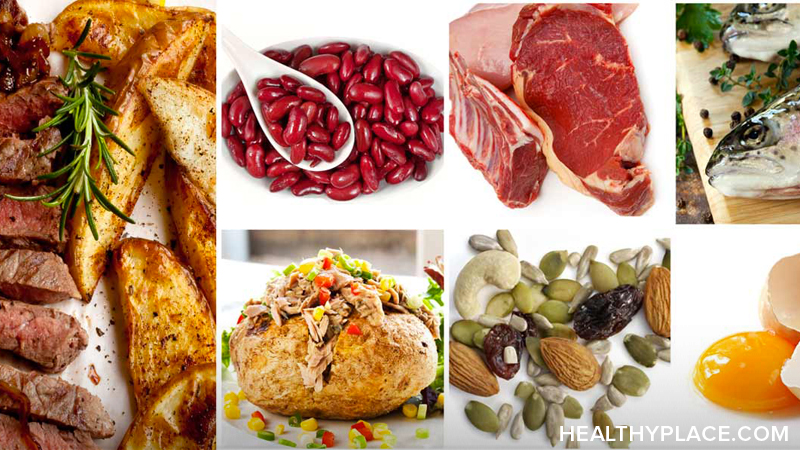
Tyrosine, which is produced in the body from phenylalanine, is found in soy products, chicken, turkey, fish, peanuts, almonds, avocados, bananas, milk, cheese, yogurt, cottage cheese, lima beans, pumpkin seeds, and sesame seeds.
Tyrosine Available Forms
Tyrosine is also available as a dietary supplement, in capsule or tablet form.
How to Take Tyrosine
Tyrosine supplements should be taken at least 30 minutes before meals, divided into three daily doses. They should also be taken with a multivitamin-mineral complex because vitamins B6, B9 (folate), and copper help convert L-tyrosine into important brain chemicals.
Pediatric
There is no specific dietary recommendation for tyrosine. If laboratory tests reveal that a child has an amino acid imbalance that requires treatment, the appropriate healthcare provider will direct care accordingly.
Adult
A nutritionist or healthcare provider knowledgeable about dietary supplements can prescribe the appropriate dose of this supplement. The dose most commonly recommended is 500 to 1,000 mg three times per day (before each of the three meals).
Precautions
Because of the potential for side effects and interactions with medications, dietary supplements should be taken only under the supervision of a knowledgeable healthcare provider.
Those who suffer from migraine headaches should avoid tyrosine, as it can trigger migraine headaches and gastrointestinal upset.
Total amount of tyrosine taken in one day should never exceed 12,000 mg.
Possible Interactions
If you are currently being treated with any of the following medications, you should not use tyrosine supplements without first talking to your healthcare provider.
Antidepressant medications, Monoamine Oxidase Inhibitors (MAOIs)
Tyrosine may cause a severe increase in blood pressure in people taking MAOIs (such as phenelzine, tranylcypromine, pargyline, and selegiline). This severe increase in blood pressure (also called "hypertensive crisis") can lead to a heart attack or stroke. For this reason, individuals taking MAOIs should foods and supplements containing tyrosine.
Appetite suppressant Medications
In a rat study, L-tyrosine increased the appetite-suppressant effects of phenylpropanolamine, ephedrine, and amphetamine. More research is needed to determine whether L-tyrosine produces similar results in humans.
Morphine
Although the application for humans is unclear, animal studies suggest that tyrosine increases the pain-relieving effects of morphine.
Levodopa
Tyrosine should not be taken at the same time as levodopa, a medication used to treat Parkinson's disease because levodopa may interfere with the absorption of tyrosine.
back to: Supplement-Vitamins Homepage
Supporting Research
Awad AG. Diet and drug interactions in the treatment of mental illness - a review. Can J Psychiatry. 1984;29:609-613.
Camacho F, Mazuecos J. Treatment of vitiligo with oral and topical phenylalanine: 6 years of experience. Arch Dermatol. 1999;135:216-217
Chakraborty DP, Roy S, Chakroborty AK. Vitiligo, psoralen, and meanogenesis: some observations and understanding. Pigment Cell Res. 1996;9(3):107-116.
Chiaroni P, Azorin JM, Bovier P, et al. A multivariate analysis of red blood cell membrane transports and plasma levels of L-tyrosine and L-tryptophan in depressed patients before treatment and after clinical improvement. Neuropsychobiology. 1990;23(1):1-7.
Deijen JB, Orlebeke JF. Effect of tyrosine on cognitive function and blood pressure under stress. Brain Res Bull. 1994;33(3):319-323.
Fernstrom JD. Can nutrient supplements modify brain function? Am J Clin Nutr. 2000;71(6 Suppl):1669S-1675S.
Fugh-Berman A, Cott JM. Dietary supplements and natural products as psychotherapeutic agents. Psychosom Med. 1999;61:712-728.
Gelenberg AJ, Wojcik JD, Falk WE, et al. Tyrosine for depression: a double-blind trial. J Affect Disord. 1990;19:125-132.
Growdon JH, Melamed E, Logue M, et al. Effects of oral L-tyrosine administration on CSF tyrosine and homovanillic acid levels in patients with Parkinson's disease. Life Sci. 1982;30:827-832,
Hull KM, Maher TJ. L-Tyrosine potentiates the anorexia induced by mixed-acting sympathomimetic drugs in hyperphagic rats. J Pharmacol Exp Ther. 1990;255(2):403-409.
Hull KM, Tolland DE, Maher TJ. L-tyrosine potentiation of opioid-induced analgesia utilizing the hot-plate test. J Pharmacol Exp Ther. 1994;269(3):1190-1195.
Kelly GS. Nutritional and botanical interventions to assist with the adaptation to stress. Altern Med Rev. 1999;4940;249-265.
Kirschmann GJ and Kirschmann JD. Nutrition Almanac, 4th ed. New York, NY: McGraw-Hill;1966:304.
Koch R. Tyrosine supplementation for phenylketonuria treatment. Am J Clin Nutr. 1996;64(6):974-975.
Menkes DB, Coates DC, Fawcett JP. Acute tryptophan depletion aggravates premenstrual syndrome. J Affect Disord. 1994;3291):37-44.
Meyers S. Use of neurotransmitter precursors for treatment of depression. Altern Med Rev. 2000;5(1):64-71.
Neri DF, Wiegmann D, Stanny RR, Shappell SA, McCardie A, McKay DL. The effects of tyrosine on cognitive performance during extended wakefulness. Aviat Space Environ Med. 1995;66(4):313-319.
Parry BL. The role of central serotonergic dysfunction in the aetiology of premenstrual dysphoric disorder: therapeutic implications. CNS Drugs. 2001;15(4):277-285.
Pizzorno JE and Murray MT. Textbook of Natural Medicine, Vol 2. New York, NY: Churchill Livingstone; 1999:1049-1059.
Poustie VJ, Rutherford P. Tyrosine supplementation for phenylketonuria. Cochrane Database Syst Rev. 2000;(2):CD001507.
Riederer P. L-Dopa competes with tyrosine and tryptophan for human brain uptake. Nutr Metab. 1980;24(6):417-423.
Smith ML, Hanley WB, Clarke JT, et al. Randomised controlled trial of tyrosine supplementation on neuropsychological performance in phenylketonuria. Arch Dis Child. 1998;78(2):116-121.
van Spronsen FJ, van Rijn M, Bekhof J, Koch R, Smit PG. Phenylketonuria: tyrosine supplementation in phenylalanine-restricted diets. Am J Clin Nutr. 2001;73(2):153-157.
Wagenmakers AJ. Amino acid supplements to improve athletic performance. Curr Opin Clin Nutr Metab Care. 1999;2(6):539-544.
Yehuda S. Possible anti-Parkinson properties of N-(alpha-linolenoyl) tyrosine. A new molecule. Pharmacol Biochem Behav. 2002;72(1-2):7-11.
The publisher does not accept any responsibility for the accuracy of the information or the consequences arising from the application, use, or misuse of any of the information contained herein, including any injury and/or damage to any person or property as a matter of product liability, negligence, or otherwise. No warranty, expressed or implied, is made in regard to the contents of this material. No claims or endorsements are made for any drugs or compounds currently marketed or in investigative use. This material is not intended as a guide to self-medication. The reader is advised to discuss the information provided here with a doctor, pharmacist, nurse, or other authorized healthcare practitioner and to check product information (including package inserts) regarding dosage, precautions, warnings, interactions, and contraindications before administering any drug, herb, or supplement discussed herein.
back to: Supplement-Vitamins Homepage
APA Reference
Staff, H.
(2008, December 20). Tyrosine, HealthyPlace. Retrieved
on 2024, April 23 from https://www.healthyplace.com/alternative-mental-health/supplements-vitamins/tyrosine