Dehydroepiandrosterone (DHEA)
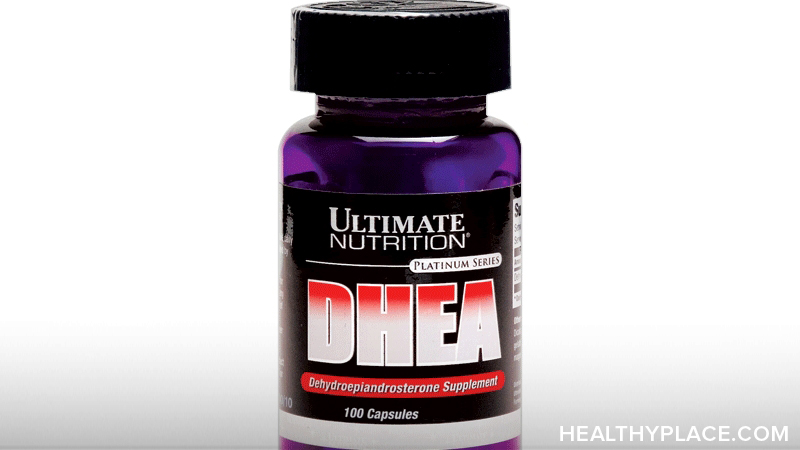
Comprehensive information on DHEA supplements for impotence in men, reducing risk of osteoporosis in women with anorexia and treating depression. Learn about the usage, dosage, side-effects of DHEA.
- Overview
- Uses
- Dietary Sources
- Available Forms
- How to Take It
- Precautions
- Possible Interactions
- Supporting Research
Overview
Dehydroepiandrosterone (DHEA) is the most abundant androgen (male steroid hormone) secreted by the adrenal glands (small hormone producing glands which sit on top of the kidneys), and to a lesser extent, by the ovaries and testes. DHEA can also be converted into other steroid hormones, including testosterone and estrogen. Considerable interest in DHEA has developed in recent years with reports that it may play a role in the aging process. Circulating levels of DHEA peak at age 25 and then steadily decline with age. DHEA levels in 70-year-old individuals tend to be roughly 80 percent lower than those in young adults.
Some researchers consider DHEA a possible anti-aging hormone because DHEA deficiencies in older individuals have been associated with a number of medical conditions including breast cancer, cardiovascular disease, impaired memory and mental function, and osteoporosis. In addition, population-based studies have suggested that people with higher DHEA levels tend to live longer, healthier lives than those with lower levels of DHEA. However, low levels of DHEA being linked to certain diseases does not necessarily mean that DHEA supplements will reduce the risk or improve the outcome of these conditions.
The United States Food and Drug Administration (FDA) removed DHEA supplements from the market in 1985 due to false claims about health benefits. However, since the passing of the US Dietary Supplement Health and Education Act of 1994, DHEA has made its way back on the market and its popularity continues to grow. Despite this growth and attention, support for the health claims, particularly as tested on people, is lacking. Plus, given that DHEA products are sold as dietary supplements, there is no control over their contents or the manufacturing practices of the companies that make the supplements. One independent evaluation found that the amount of DHEA in over the counter products ranged from 0% to 150% of what the content stated on the label.
DHEA Uses
DHEA for Aging
Given that DHEA levels decline with advancing age, some researchers have investigated whether DHEA supplementation may slow or prevent age-related declines in mental and physical function. Preliminary results from the DHEAge study in France suggest that the hormone may slow bone loss, improve skin health, and enhance sexual drive in aging adults, particularly women older than 70 years of age. Animal studies that have shown a boost in memory for older rats taking DHEA supplements. Results from human studies, however, have been conflicting. Some studies have shown that DHEA improves learning and memory in those with low DHEA levels, but other studies have failed to detect any significant cognitive effects from DHEA supplementation. Further studies are needed to determine whether DHEA supplementation helps prevent or slow medical conditions associated with the aging process.
DHEA for Adrenal Insufficiency
As mentioned earlier, DHEA is one of the hormones made in the adrenal glands. When the adrenal glands do not make enough hormones, this is called adrenal insufficiency. Women with this condition who were given DHEA supplements reported improved sexuality and sense of well-being (including decreased feelings of depression and anxiety). Only a doctor can determine if you have adrenal insufficiency and if DHEA, along with other hormones, is needed. Adrenal insufficiency can be a medical emergency, particularly when first diagnosed. This is especially the case if your blood pressure is low, which can cause you to experience dizziness or lightheadedness. Another reason to seek medical attention right away in the case of adrenal insufficiency is swelling of the ankles or legs.
DHEA for Impotence
Studies suggest that DHEA supplementation may help impotent men have and sustain an erection.
DHEA for Osteoporosis
Studies have shown that DHEA cream applied to the inner thigh may boost bone density in older women.
DHEA for Anorexia Nervosa
Women with anorexia nervosa are at increased risk for bone fractures and can develop osteoporosis at a younger age than women without eating disorders. It has been observed that adolescents and young adults with anorexia nervosa tend to have low levels of DHEA. Some studies suggest that DHEA may help protect against bone loss in people who are anorexic.
DHEA for Athletic Performance
Although DHEA supplements are widely used by athletes and body builders to boost muscle mass and burn fat, there is little evidence to support these claims. There are no published studies of the long-term effects of taking DHEA, particularly in the large doses used by athletes. Plus, the building blocks of testosterone, including DHEA, may adversely affect cholesterol in male athletes by lowering HDL ("good") cholesterol.
DHEA for Lupus
Lupus is an autoimmune disorder. Autoimmune diseases are a group of conditions in which a person's antibodies attack a part of their own body because the immune system believes the body part is foreign. Studies have shown that DHEA helps regulate the immune system and may play a role in the prevention and/or treatment of certain autoimmune diseases.
A recent review of scientific literature found that DHEA supplementation may reduce the need for medications and the frequency of flare-ups, enhance mental function, and boost bone mass in women with lupus. Further studies are needed to determine whether DHEA is safe and effective for both men and women with this condition, however.
DHEA for HIV
DHEA levels tend to be low in individuals infected with the human immunodeficiency virus (HIV), and these levels decline even further as the disease progresses. In one small study, DHEA supplementation improved mental function in men and women infected with HIV. However, studies have yet to demonstrate whether DHEA supplementation can improve immune function in people with this condition.
DHEA for Depression
In a preliminary study of individuals with major depression, DHEA significantly improved symptoms of depression compared to placebo. However, results of this study and others conducted to date on DHEA and depression are not conclusive. The potential value of using DHEA for depression, therefore, remains unclear, and the long-term effects of taking this supplement are unknown.
DHEA for Obesity
The results of studies using DHEA to treat overweight people have been conflicting. While animal studies have found DHEA to be effective in reducing body weight, studies of men and women showed that DHEA produced no change in total body weight, although total body fat and LDL ("bad") cholesterol did improve. These differences may be due to the fact that higher dosages were used in the animal studies than in the human studies (such high doses would cause intolerable side effects in people). Further studies are needed to determine whether DHEA is an effective way to reduce body weight in obese people. Until the safety and effectiveness of DHEA is fully tested, it is best not to use this supplement for weight loss.
DHEA for Menopause
DHEA has gained some popularity among peri-menopausal women. They often used the supplement to alleviate symptoms of menopause including decreased sex drive, diminished skin tone, and vaginal dryness. In one recent study, DHEA supplements did raise levels of certain hormones in post-menopausal women. However, clinical studies regarding the value of DHEA for improving menopause symptoms have had conflicting results.
Those who believe in the use of DHEA claim that it relieves the menopausal symptoms described above without increasing the risk of breast cancer or cancer of the endometrium (lining to the uterus). The risk of each of these cancers may be increased with regular, prescription hormone replacement therapy. There is no proof, however, that DHEA does not stimulate these cancers as well. Women with breast cancer tend to have low levels of this hormone in their bodies. But replacement may lead to either inhibition or stimulation of growth of breast cancer cells.
DHEA for Inflammatory Bowel Disease (IBD)
DHEA levels appear to be low in people with ulcerative colitis and Crohn's disease. It is premature to say whether DHEA supplements have any impact, positive or negative, on these two bowel diseases.
Dietary Sources of DHEA
DHEA is a hormone produced in the body and is not obtained through the diet.
Available Forms
Most DHEA supplements are produced in laboratories from diosgenin, a plant sterol extracted from Mexican wild yams. Some extracts from wild yams are marketed as "natural DHEA." Advertisers claim that these "natural" extracts of diosgenin are converted into DHEA by the body. However, it takes several chemical reactions to convert diosgenin into DHEA, and there is no evidence that the body can make this conversion. For this reason, it is best to look for labels that list DHEA rather than diosgenin or wild yam extract. Also, it is important to select products that state it is pharmaceutical grade.
One way to avoid purchasing a product with contaminated DHEA is to purchase it through a professional healthcare provider.
DHEA is available in capsules, chewing gum, drops that are placed under the tongue, and topical creams.
How to Take DHEA
DHEA is not recommended for people under the age of 40, unless DHEA levels are known to be low (<130 mg/dL in women and <180 mg/dL in men).
Pediatric
DHEA supplements should not be used in children.
Adult
Dosages for men and women differ. Men can safely take up to 50 mg/day, but women should generally not take more than 25 mg/day, although up to 50 mg has been used for women with anorexia, adrenal insufficiency, and other medical conditions under medical supervision. DHEA is produced by the body primarily in the morning hours. Taking DHEA in the morning will mimic the natural rhythm of DHEA production. Positive effects have been noted at dosages as low as 5 mg/day and the lower the dose the better.
Precautions
Because of the potential for side effects and interactions with medications, dietary supplements should be taken only under the supervision of a knowledgeable healthcare provider.
DHEA is not recommended for people under 40 years of age, unless DHEA levels are known to be low (less than 130 mg/dL in women and less than 180 mg/dL in men). People taking DHEA should have their blood levels monitored every 6 months.
No studies have been conducted on the long-term safety of DHEA.
Because DHEA is a precursor of estrogen and testosterone, patients with cancers affected by hormones (such as breast, prostate, ovarian, and testicular cancer) should avoid this hormone supplement.
High doses of DHEA may inhibit the body's natural ability to make the hormone and also may be toxic to liver cells. At least one case of hepatitis has been reported.
DHEA increases the production of the male hormone testosterone, so women should be aware of the risk of developing signs of masculinization (such as loss of hair on the head, deepening of the voice, hair growth on the face, weight gain around the waist, or acne), and men should be aware of the risks of excess testosterone (such as shrinkage of the testicles, aggressive tendencies including sexual aggression, male pattern baldness, and high blood pressure). Notify your health care provider if any of these symptoms occur.
Other adverse effects that have been reported include high blood pressure and reduced HDL ("good") cholesterol.
The International Olympic Committee and National Football League recently banned the use of DHEA by athletes because its effects are very similar to those of anabolic steroids.
Possible Interactions
If you are currently being treated with any of the following medications, you should not use DHEA without first talking to your healthcare provider.
AZT (Zidovudine)
In a laboratory study, DHEA enhanced the effectiveness of an HIV medication known as AZT. However, scientific studies in humans are needed before DHEA can be used for this purpose in people.
Barbiturates
Animal studies suggest that DHEA may increase the effects of barbiturates, a class of medications often used to treat sleep disorders including butabarbital, mephobarbital, pentobarbital, and phenobarbital. However, scientific studies in humans are needed before it is known whether this same effect occurs in people and whether it is safe for DHEA and barbiturates to be used together.
Cisplatin
An animal study indicates that DHEA may increase the effectiveness of an anti-cancer medication known as cisplatin; further studies are needed to know if this effect applies to people.
Steroids
Laboratory studies suggest that DHEA may increase the effects of prednisolone, a steroid medication used to treat inflammation and other disorders. Additional research is needed to determine if this effect applies to people.
Estrogen
It is possible that DHEA may influence the level of estrogen in the body. For this reason, some women on estrogen replacement therapy may need to adjust their dosage. This should be discussed with your healthcare provider.
back to: Supplement-Vitamins Homepage
Supporting Research
Arlt W, Callies F, van Vlijmen JC, Koehler I, Reincke M, Bidlingmaier M, et al. Dehydroepiandrosterone replacement in women with adrenal insufficiency. N Engl J Med. 1999;341(14)-1013-1020.
Barnhart KT, Freeman E, Grisso JA. The effect of dehydroepiandrosterone supplementation to symptomatic perimenopausal women on serum endocrine profiles, lipid parameters, and health-related quality of life. J Clin Endocrinol Metab. 1999;84:3896-3902.
Barry NN, McGuire JL, van Vollenhoven RF. Dehydroepiandrosterone in systemic lupus erythematosus: relationship between dosage, serum levels, and clinical response. J Rheumatol. 1998;25(12):2352-2356.
Baulieu EE. Thomas G, Legrain S, et al. Dehydroepiandrosterone (DHEA), DHEA sulfate, and aging: contribution of the DHEAge study to a sociobiomedical issue. Proc Natl Acad Sci USA. 2000;97(8):4279-4284.
Broeder CE, Quindry MS, Brittingham K, et al. The Andro Project: Physiological and hormonal influences of androstenedione supplementation in men 35 to 65 years old participating in a high-intensity resistance training program. Arch Intern Med. 160:3093-3104.
Corrigan AB. Dehydroepiandrosterone and sport. [Review]. Med J Aust. 1999;171(4):206-8.
de la Torre B, Hedman M, Befrits R. Blood and tissue dehydroepiandrosterone sulphate levels and their relationship to chronic inflammatory bowel disease. Clin Exp Rheumatol. 1998;16:579-582.
Dyner TS, Lang W, Geaga J, et al. An open-label dose-escalation trial of oral dehydroepiandrosterone tolerance and pharmacokinetics in patients with HIV disease. J Acquir Immune Defic Syndr. 1993;6:459-465.
Flynn MA, Weaver-Osterholtz D, Sharpe-Timms KL, Allen S, Krause G. Dehydroepiandrosterone replacement in aging humans. J Clin Endocrinol Metabol. 199;84(5):1527-1533.
Gaby AR. Dehydroepiandrosterone. In: Pizzorno JE, Murray MT, eds. Textbook of Natural Medicine. Vol 1. 2nd ed. Edinburgh: Churchill Livingstone; 1999:695-701.
Genezzani AD, Stomati M, Strucchi C, Puccetti S, Luisi S, Genazzani AR. Oral dehydroepiandrosterone supplementation modulates spontaneous and growth hormone-releasing hormone-induced growth hormone and insulin-like growth factor-1 secretion in early and late postmenopausal women. Fertil Steril. 2001;76(2):241-248.
Gordon C, Grace E, Emans SJ, Goodman E, Crawford MH, Leboff MS. Changes in bone turnover markers and menstrual function after short-term oral DHEA in young women with anorexia nervosa. J Bone Miner Res. 1999;14:136-145.
Hansen PA, Han DH, Nolte LA. DHEA protects against visceral obesity and muscle insulin resistance in rats fed a high-fat diet. Am J Physiol. 1997;273:R1704-R1708.
Hinson JP, Raven PW. DHEA deficiency syndrome: a new term for old age? [Commentary]. J Endocrinol. 1999;163:1-5.
Klann RC, Holbrook CT, Nyce JW. Chemotherapy of murine colorectal carcinoma with cisplatin and cisplatin plus 3'- deoxy-3'- azidothymidine. Anticancer Res. 1992;12:781-788.
Kurzman ID, Panciera DL, Miller JB, MacEwen EG. The effect of dehydroepiandrosterone combined with a low-fat diet in spontaneously obese dogs: a clinical trial. Obes Res. 1998;6(1):20-28.
Labrie F. DHEA as physiological replacement therapy at menopause. J Endocrinol Invest. 1998;21:399-401.
Labrie F, Diamond P, Cusan L, Gomez J-L, Belanger A, Candas B. Effect of 12-month dehydroepiandrosterone replacement therapy on bone, vagina, and endometrium in postmenopausal women. J Clin Endocrinol Metab. 1997;82:3498-3505.
Melchior CL, Ritzmann RF. Dehydroepiandrosterone enhances the hypnotic and hypothermic effects of ethanol and pentobarbital. Pharmacol Biochem Behav. 1992;43:223-227.
Meno-Tetang GML, Hon YY, Jusko WJ. Synergistic interaction between dehydroepiandrosterone and prednisolone in the inhibition of rat lymphocyte proliferation. Immunopharmacol Immunotoxicol. 1996;18(3):443-456.
Miller RA,Chrisp C. Lifelong treatment with oral DHEA sulfate does not preserve immune function, prevent disease, or improve survival in genetically heterogeneous mice. J Am Geriatr Soc. 1999;47(8):960-966.
Moffat SD, Zonderman AB, Harman SM, et al. The relationship between longitudinal declines in dehydroepiandrosterone sulfate concentrations and cognitive performance in older men. Arch Intern Med. 2000;160:2193-2198.
Mortola JF, Yen SS. The effects of oral dehydroepiandrosterone on endocrine-metabolic parameters in postmenopausal women. J Clin Endocrinol Metab. 1990;71(3)696-704.
Nestler JE, Barlascini CO, Clore JN, Blackard WG. Dehydroepiandrosterone reduces serum low density lipoprotein levels and body fat bud does not alter insulin sensitivity in normal men. J Clin Endocrinol Metab. 1988;66(1):57-61.
Parasrampuria J. Quality control of dehydroepiandrosterone dietary supplement products [Letter to the editor]. JAMA. 1998;280(18):1565.
Piketty C, Jayle D, Leplege A, et al. Double-blind placebo-controlled trial of oral dehydroepiandrosterone in patients with advanced HIV disease. Clin Endocrinol (Oxf). 2001;55(3):325-30.
Reiter WJ, Pycha A, Schatzl G, et al. Dehydroepiandrosterone in the treatment of erectile dysfunction: a prospective, double-blind, randomized, placebo-controlled study. Urology. 1999;53(3):590-595
Reynolds JE. Martindale: The Extra Pharmacopoeia. 31st ed. London, England: Royal Pharmaceutical Society; 1996:1504.
Schifitto G. Autonomic performance and dehydroepiandrosterone sulfate levels in HIV-1 infected individuals; relationship to TH1 and TH2 cytokine profile. Arch Neurol. 2000;57(7):1027-1032.
Stoll BA. Review:Dietary supplements of deydroepiandrosterone in relation to breast cancer risk. Eur J Clin Nut. 1999;53:771-775.
Tan RS, Pu SJ. The andropause and memory loss: is there a link between androgen decline and dementia in the aging male? Asian J Androl. 2001;3(3):169-174.
Vallee M, Mayo W, Le Moal M. Role of pregnenolone, dehydroepiandrosterone and their sulfate esters on learning and memory in cognitive aging. Brain Res Rev. 2001;37(1-3):301-312.
van Vollenhoven RF. Dehydroepiandrosterone for the treatment of systemic lupus erythematosus. Expert Opin Pharmacother. 2002;3(1):23-31.
van Vollenhoven RF, Morabito LM, Engleman EG, McGuire JL. Treatment of systemic lupus erythematosus with dehydroepiandrosterone: 50 patients treated up to 12 months. J Rheumatol. 1998;25(2):285-289.
Welle S, Jozefowicz R, Statt M. Failure of dehydroepiandrosterone to influence energy and protein metabolism in humans. J Clin Endocrinol Metab. 1990;71(5):1259-1264.
Williams JR. The effects of dehydroepiandrosterone on carcinogenesis, obesity, the immune system, and aging. Lipids. 2000;35(3):325-331.
Wolkowitz OM, Reus VI, Keebler A, Nelson N, Friedland M, Brizendine L, Roberts E. Double-blind treatment of major depression with dehydroepiandrosterone. Am J Psychiatry. 1999;156:646-649.
Yang J, Schwartz A, Henderson EE. Inhibition of 3' axido-3' deoxythymidine-resistant HIV-1 infection by dehydroepiandrosterone in vitro. Biochem Biophys Res Commun. 1994;201(3):1424-1432.
Yen SSC, Morales AJ, Khorram O. Replacement of DHEA in aging men and women. Potential remedial effects. Ann NY Acad Sci. 1995;774:128-142.
back to: Supplement-Vitamins Homepage
APA Reference
Staff, H.
(2008, December 23). Dehydroepiandrosterone (DHEA), HealthyPlace. Retrieved
on 2024, April 18 from https://www.healthyplace.com/alternative-mental-health/supplements-vitamins/dehydroepiandrosterone-dhea