Valerian
Valerian root is an alternative mental health treatment for the symptoms of insomnia, anxiety, and restlessness. Learn about the usage, dosage, side-effects of Valerian.
Botanical Name:Valeriana officinalis
Common Names:Valerian
- Overview
- Plant Description
- What's It Made Of?
- Available Forms
- How to Take It
- Precautions
- Possible Interactions
- References
Overview
Valerian, native to the Americas, Asia, and Europe has been used to ease insomnia, stress-related anxiety, and nervous restlessness for thousands of years, with particular popularity in Europe starting in the 17th century. Now, modern day research, mainly over the last decade, has begun to confirm the scientific validity of these historic uses. It may also ease menstrual and stomach cramps, irritable bowel syndrome, some of the restlessness that accompanies attention deficit/hyperactivity disorder (ADHD) and migraine symptoms. There have also been rare reports for use to treat convulsions from a seizure disorder. Its most well-researched use, however, is as a calmant to help people sleep.
Insomnia
Valerian is a popular alternative treatment to benzodiazepines (such as diazepam and alprazolam) and other commonly prescribed medications for sleep problems because it is considered to be both safe and gentle. In studies of animals and people, valerian has demonstrated mild sedative and tranquilizing activity, as well as the ability to relieve anxiety. Generally, studies have shown that valerian reduces the time it takes to fall asleep and improves the quality of sleep itself. Plus, unlike many prescription sleep aids, valerian may have fewer after effects the next day, such as morning drowsiness. In addition, although not studied scientifically, some experts use valerian for sleep disturbances related to feelings of depression.
Plant Description
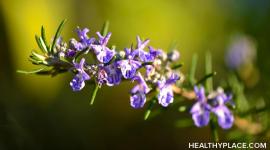
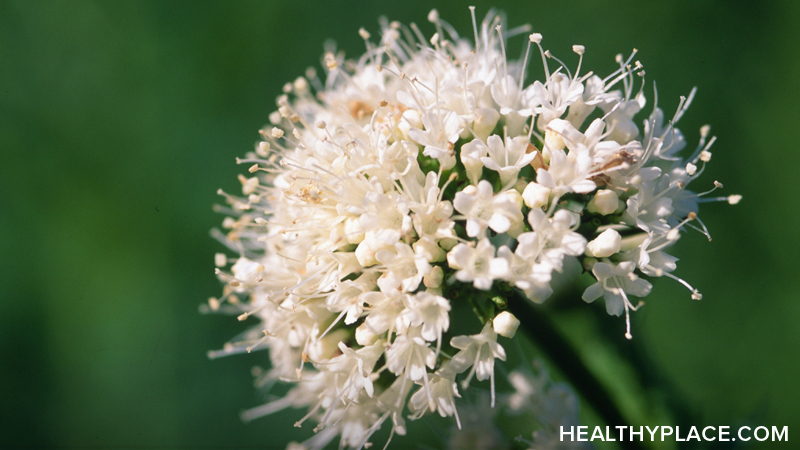
Valerian products are made from the root of a tall, wispy plant, which is grown to decorate gardens but also grows wild in damp grasslands. Its umbrella-like heads top grooved, erect, and hollow stems. Its dark green leaves are pointed at the tip and hairy underneath. Small, sweet-smelling white, light purple, or pink flowers bloom in June. The root is light grayish brown and has a pungent odor.
What's It Made Of?
The manufacture of medicinal valerian products begins with pressed fresh root or powdered freeze-dried root (frozen below 400°C). Valerian pressed-root juice added to alcohol or glycerite (sweet, nonalcohol liquid) bases become fluid extracts or tinctures; powdered root goes into capsules and tablets.
Available Forms
Valerian fluid extracts and tinctures are sold in alcohol or alcohol-free (glycerite) bases. Powdered valerian is available in capsule or tablet form, and also as a tea.
Valerian products are commonly added to formulas that contain other calming herbs, such as passionflower (Passiflora incarnata), hops (Humulus lupulus), lemon balm (Melissa officinalis), skullcap (Scutellaria lateriflora), and kava (Piper methysticum). (Note: reports linking kava with severe liver damage has prompted regulatory agencies in Europe and Canada to warn consumers of the potential risks associated with this herb and even remove kava-containing products from the market. Based on these and other reports in the United States, the Food and Drug Administration (FDA) also issued a consumer advisory in March of 2002 regarding the "rare," but potential risk of liver failure associated with kava-containing products.)
How to Take It
Valerian products should be standardized to contain 0.8% valerenic or valeric acid; standardization helps to assure quality control in herbal products.
Pediatric
Adjust the recommended adult dose to account for the child's weight. Most herbal dosages for adults are calculated on the basis of a 150 lb (70 kg) adult. Therefore, if the child weighs 50 lb (20 to 25 kg), the appropriate dose of valerian for this child would be 1/3 of the adult dosage.
Adult
To help bring on sleep, reduce nervousness and anxiety, valerian may be taken in the following doses an hour or so before retiring, or up to three times in the course of the day, with the last dose near bedtime. It may take a few weeks before the effects are felt.
- Tea: Pour 1 C boiling water over 1 teaspoonful (2 to 3 g) of dried root, steep 5 to 10 minutes.
- Tincture (1:5): 1 to 1 1/2 tsp (4 to 6 mL)
- Fluid extract (1:1): 1/2 to 1 tsp (1 to 2 mL)
- Dry powdered extract (4:1): 250 to 500 mg
- Valerian extract, standardized to contain 0.8% valerenic acid: 150 to 300 mg.
Once sleep improves, valerian should be continued for two to four weeks. A total of four to six weeks is usually the length of treatment advised by herbalists. After six weeks, a two-week break is recommended to see if sleep has improved. (Note, however, that abruptly stopping valerian has, on very rare occasions, caused withdrawal symptoms; see Precautions. Therefore, it is important to follow the directions of a qualified practitioner when weaning off of valerian.) If there has been no improvement, another four-to-six week course of treatment may be started.
Precautions
The use of herbs is a time-honored approach to strengthening the body and treating disease. Herbs, however, contain active substances that can trigger side effects and interact with other herbs, supplements, or medications. For these reasons, herbs should be taken with care, under the supervision of a practitioner knowledgeable in the field of botanical medicine.
The American Herbal Products Association (AHPA) gives valerian a class 1 safety rating, which indicates that it is a safe herb with a wide dosage range.
Nevertheless, some people have a "paradoxical reaction" to valerian. This means that instead of feeling calm or sleepy, they suddenly feel nervous, anxious, and restless after they take valerian and may experience palpitations (a feeling of a racing heart).
There is also some evidence that in cases where valerian has been used over a long period of time, serious withdrawal symptoms may occur when it is stopped abruptly.
Women who are pregnant or breastfeeding are advised against using valerian and, because of its tranquilizing effects, valerian should not be used while driving, operating heavy machinery, or engaging in other activities that require alertness. Also, some warn against use if you have liver disease because of a few reports of liver damage when valerian was used in combination with skullcap, another herb used for anxiety.
Possible Interactions
If you are currently being treated with any of the following medications, you should not use valerian without first talking to your healthcare provider.
Anesthesia
For those facing surgery, it is important to note that valerian may increase the effects of anesthesia and, thus, it is important to discuss the use of valerian with your healthcare providers (particularly the surgeon and anesthesiologist) well in advance of your planned operation. The doctors may advise you on how to taper use of valerian prior to the surgery. Or, they may allow you to continue use up to the time of surgery, making any necessary adjustments to the anesthesia and giving you medication to avoid possible withdrawal symptoms from the valerian while in the hospital.
Sedatives and Anti-anxiety Medications
There are no reports in the scientific literature to suggest that valerian interacts with any conventional medications. However, valerian is a sedative herb that may increase the effects of alcohol and medications for anxiety and insomnia. Valerian should not be combined with barbiturates (medications, such as pentobarbital, prescribed for sleep disorders or seizures), and should be used with caution, if at all, by people taking benzodiazepines (anti-anxiety and sleep inducing medications including alprazolam, diazepam, and lorazepam) or other sedative medications (such as antihistamines).
back to: Herbal Treatments Homepage
Supporting Research
Ang-Lee MK, Moss J, Yuan CS. Herbal medicines and perioperative care. JAMA. 2001;286(2):208-216.
Attele AS, Xie JT, Yuan CS. Treatment of insomnia: an alternative approach.Altern Med Rev. 2000;5(3):249-259.
Balderer G, Borbely AA. Effect of valerian on human sleep. Psychopharmacology (Berl). 1985;87(4):406-409.
Barrett B, Kiefer D, Rabago D. Assessing the risks and benefits of herbal medicine: an overview of scientific evidence. Altern Ther Health Med. 1999;5(4):40-49.
Baumgaertel A. Alternative and controversial treatments for attention-deficit/hyperactivity disorder. Pediatr Clin of North Am. 1999;46(5):977-992.
Blumenthal M, Goldberg A, Brinckmann J. Herbal Medicine: Expanded Commission E Monographs. Newton, MA: Integrative Medicine Communications; 2000:394-400.
Briggs CJ, Briggs GL. Herbal products in depression therapy. CPJ/RPC. November 1998;40-44.
Brinker F. Herb Contraindications and Drug Interactions. 2nd ed. Sandy, Ore: Eclectic Medical; 1998:133-134.
Cauffield JS, Forbes HJ. Dietary supplements used in the treatment of depression, anxiety, and sleep disorders. Lippincotts Prim Care Pract. 1999;3(3):290-304.
Donath F, Quispe S, Diefenbach K, Maurer A, Fietze I, Roots FI. Critical evaluation of the effect of valerian extract on sleep structure and sleep quality. Pharmacopsychiatry. 2000;33:47-53.
Ernst E, ed. The Desktop Guide to Complementary and Alternative Medicine: An Evidence-Based Approach. New York, NY: Mosby;2001:160-162.
Ernst E. Herbal medications for common ailments in the elderly. Drugs Aging. 1999;15(6):423-428.
Foster S, Tyler VE. Tyler's Honest Herbal. New York, NY: The Haworth Herbal Press; 1999:377-379.
Fugh-Berman A, Cott JM. Dietary supplements and natural products as psychotherapeutic agents. Psychosom Med. 1999;61(5):712-728.
Gyllenhaal C, Merritt SL, Peterson SD, Block KI, Gochenour T. Efficacy and safety of herbal stimulants and sedatives in sleep disorders. Sleep Med Rev. 2000;4(2):229-251.
Heiligenstein E, Guenther G. Over-the-counter psychotropics: a review of melatonin, St John's wort, valerian, and kava-kava. J Am Coll Health. 1998;46(6):271-276.
Leatherwood PD, Chauffard F, Heck E, Munoz-Box R. Aqueous extract of valerian root (Valeriana officinalis L.) improves leep quality in man. Pharm Biochem Behavior. 1982;17(1):65-71.
McGuffin M, Hobbs C, Upton R, Goldberg A. American Herbal Products Association's Botanical Safety Handbook. Boca Raton, Fla: CRC Press; 1997:120.
Miller LG. Herbal medicinals: selected clinical considerations focusing on known or potential drug-herb interactions. Arch Intern Med. 1998;158(20):2200-2211.
Newall CA, Phillipson JD. Interactions of Herbs with Other Medicines. Kings Centre for Pharmacognosy, the School of Pharmacy, University of London. The European Phytojournal. 1998; 1. Available at: http://www.ex.ac.uk/phytonet/phytojournal/ .
O'Hara M, Kiefer D, Farrell K, Kemper K. A review of 12 commonly used medicinal herbs. Arch Fam Med. 1998;7(6):523-536.
Ottariano, SG. Medicinal Herbal Therapy: A Pharmacist's Viewpoint. Portsmouth, NH: Nicolin Fields Publishing; 1999.
Pizzorno JE, Murray MT. Textbook of Natural Medicine. New York: Churchill Livingstone; 1999:997-, 1355-1356.
Robbers JE, Tyler V. Herbs of Choice: The Therapeutic Use of Phytomedicinals. New York, NY: The Haworth Herbal Press; 1999: 154-157.
Rotblatt M, Ziment I. Evidence-Based Herbal Medicine. Philadelphia, Penn:Hanley & Belfus, Inc. 2002:355-359.
Shannon S. Attention deficit/hyperactivity disorder. Integrative Medicine Consult. 2000; 2(9):103-105.
Upton R. Valeriana officianlis photoessay. J Alt Comp Med. 2001;7(1):15-17.
Wagner J, Wagner ML, Hening WA. Beyond benzodiazepines: alternative pharmacologic agents for the treatment of insomnia. Ann Pharmacother. 1998;32(6):680-691.
White L, Mavor S. Kids, Herbs, Health. Loveland, Colo: Interweave Press; 1998:22, 42.
Wong AH, Smith M, Boon HS. Herbal remedies in psychiatric practice. Arch Gen Psychiatr. 1998;55(1):1033-1044.
The publisher does not accept any responsibility for the accuracy of the information or the consequences arising from the application, use, or misuse of any of the information contained herein, including any injury and/or damage to any person or property as a matter of product liability, negligence, or otherwise. No warranty, expressed or implied, is made in regard to the contents of this material. No claims or endorsements are made for any drugs or compounds currently marketed or in investigative use. This material is not intended as a guide to self-medication. The reader is advised to discuss the information provided here with a doctor, pharmacist, nurse, or other authorized healthcare practitioner and to check product information (including package inserts) regarding dosage, precautions, warnings, interactions, and contraindications before administering any drug, herb, or supplement discussed herein.
back to: Herbal Treatments Homepage
APA Reference
Staff, H.
(2008, December 10). Valerian, HealthyPlace. Retrieved
on 2024, April 19 from https://www.healthyplace.com/alternative-mental-health/herbal-treatments/valerian