Skullcap
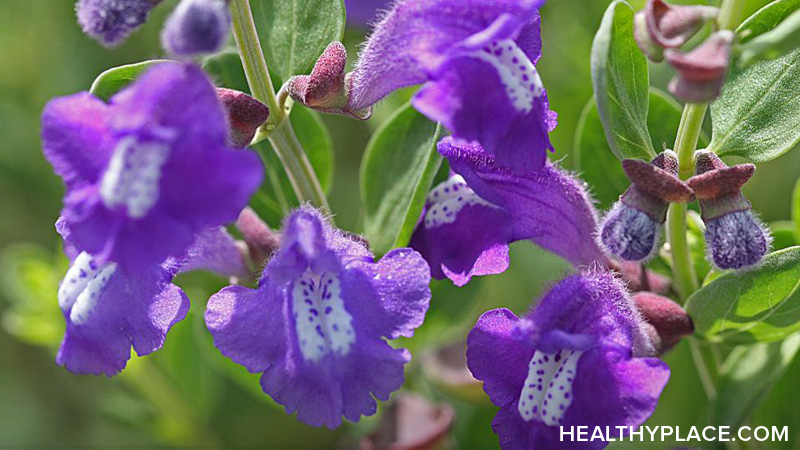
Skullcap is an alternative mental health herbal remedy for anxiety, nervous tension and convulsions. Learn about the usage, dosage, side-effects of Skullcap.
Botanical Name:Scutellaria lateriflora
Common Names:Mad-dog skullcap, scullcap
- Overview
- Plant Description
- Parts Used
- Medicinal Uses and Indications
- Available Forms
- How to Take It
- Precautions
- Possible Interactions
- References
Overview
Skullcap (Scutellaria lateriflora) is native to North America, but is now widely cultivated in Europe and other areas of the world. It has been used for over two hundred years as a mild relaxant and has long been hailed as an effective therapy for anxiety, nervous tension, and convulsions. Because of its calming effects on the nervous and musculoskeletal system, it was also at one time considered to be a remedy for rabies, thus it's name "mad dog weed."
Plant Description
Scutellaria lateriflora is one species of skullcap that is used in herbal preparations. The plant derives its name from the caplike appearance of the outer whorl of its small blue flowers. Skullcap is a slender, heavily branched plant that grows to a height of two to four feet and blooms each July.
Parts Used
The parts of the skullcap plant used for medicinal purposes are the leaves. These are harvested in June from a three- to four-year-old skullcap plant.
Medicinal Uses and Indications
While scientific studies have not been conducted on the medicinal properties of Scutellaria lateriflora, its current uses, based on traditional and clinical practice, include:
- Treatment of muscle spasms
- Calming of the nerves
It has also been used to treat symptoms associated with:
- Tension headache
- Anorexia nervosa
- Anxiety
- Fibromyalgia
- Restless leg syndrome and other causes of insomnia
- Mild Tourette's syndrome (a disorder characterized by multiple motor and vocal tics)
- Seizure disorders.
Chinese Skullcap
A closely related herb, Chinese skullcap (Scuterllaria baicalensis) has actually been the subject of a number of studies, including those on animals and people. It has anti-oxidative, anti-inflammatory, and antihistamine properties, which can help treat allergies such as hay fever (called allergic rhinitis), particularly when used with other herbs, including stinging nettle.
Cancer
Chinese skullcap is also used in Traditional Chinese Medicine to treat tumors. Early laboratory studies investigating this traditional use are emerging and showing preliminary promise for combating bladder, liver, and other types of cancers, at least in test tubes.
In terms of clinical studies on people, skullcap is also one of the eight herbs that make up PC-SPES, an alternative treatment for prostate cancer. (It is important to note, however, that the U.S. Food and Drug Administration [FDA] recently issued a warning to consumers that PC SPES may contain undeclared prescription drug ingredients that could cause dangerous side effects.)
Other
Chinese laboratory research has isolated an element present in skullcap that may prove useful in treating hepatitis B and has suggested that the antioxidant properties of Chinese skullcap may prove beneficial for preventing heart disease or limiting the damage following a heart attack. Much more research needs to be done in these areas before conclusions can be drawn.
Available Forms
Skullcap is available as a powder or liquid extract.
How to Take It
Pediatric
Although not common, skullcap may be used for calmative purposes in children and administered as a mild tea. Use either prepackaged tea bags, letting it steep for approximately 2 minutes or add 1 tsp of dried leaves to 1 cup of boiling water and steep for 2 minutes. (Shorter steeping time makes for milder strength teas).
The tea should be dosed according to the child's age and weight as follows:
- Children 1 to 2 years (24 lb [11 kg] or less): ¼ cup one to three times per day
- Children 3 to 6 years (25 to 48 lb [11 to 22 kg]): ½ cup one to four times per day
- Children 7 to 11 years (49 to 95 lb [22 to 43 kg]): ¾ cup one to four times per day
- Children 12 and older (over 95 lb [43 kg]): 1 cup one to four times per day
Adult
The following are recommended adult doses for skullcap:
- Dried herb: 1 to 2 grams per day
- Tea: Pour 1 cup boiling water over 1 teaspoon of dried herb. Steep 20 to 30 minutes. Drink 2 to 3 cups per day.
- Fluid extract (1:1 in 25% alcohol): 2 to 4 mL (40 to 120 drops), three times daily
- Tincture (1:5 in 45% alcohol): 2 to 5 mL (40 to 150 drops), three times per day
Precautions
The use of herbs is a time-honored approach to strengthening the body and treating disease. Herbs, however, contain active substances that can trigger side effects and interact with other herbs, supplements, or medications. For these reasons, herbs should be taken with care, under the supervision of a practitioner knowledgeable in the field of botanical medicine.
There are mixed opinions as to the safety of skullcap because it has, in the past, been contaminated with Teucrium species, a group of plants known to cause liver problems. It is therefore important that skullcap be obtained from a reliable source.
Overdose of skullcap tincture produces giddiness, stupor, mental confusion, twitching, irregular heartbeat, and epileptic-like symptoms. Skullcap should not be used during pregnancy and breastfeeding.
Possible Interactions
While there are no reports in the scientific literature to suggest that skullcap interacts with any conventional medications, it does possess sedative properties. Therefore, skullcap should be used with caution, if at all, by those who are taking benzodiazepines (anti-anxiety medications) such as diazepam or alprazolam, barbiturates (medications often prescribed for sleep disorders or seizures) such as pentobarbital, or other sedative medications (including antihistamines).
back to:Herbal Treatments Homepage
Supporting Research
Brinker F. Herb Contraindications and Drug Interactions. 2nd ed. Sandy, Ore: Eclectic Medical; 1998:163.
Cauffield JS, Forbes HJ. Dietary supplements used in the treatment of depression, anxiety, and sleep disorders. Lippincotts Prim Care Pract. 1999; 3(3):290-304.
Darzynkiewicz Z, Traganos F, Wu JM, Chen S. Chinese herbal mixture PC-SPES in treatment of prostate cancer (Review). Int J Oncol. 2000;17:729-736.
Fisher C. Nettles - an aid to the treatment of allergic rhinitis. European Journal of Herbal Medicine. 1997;3(2):34-35.
Foster S, Tyler VE. Tyler's Honest Herbal. New York, NY: The Haworth Herbal Press; 1999:349-351.
Gao Z, Huang K, Xu H. Protective effects of flavonoids in the roots of Scutellaria baicalensis Georgi against hydrogen peroxide-induced oxidative stress in HS-SY5Y cells. Pharmacol Res. 2001;43(2):173-178.
Gruenwald J, Brendler T, Christof J. PDR for Herbal Medicines. 2nd ed. Montvale, NJ: Medical Economics Company; 2000:678-679.
Huang RL, Chen CC, Huang HL, Chang CG, Chen CF, Chang C, Hsieh MT. Anti-hepatitis B virus effects of wogonin isolated from Scutellaria baicalensis. Planta Med. 2000;66(8):694-698.
Ikemoto S, Sugimura K, Yoshida N, et al. Antitumor effects of Scutellariae radix and its components baicalein, baicalin, and wogonin on bladder cancer cell lines. Urology. 2000;55(6):951-955.
Larrey D, Vial T, Pauwels A,et al. Hepatitis after germander (Teucrium chamaedrys) administration: another instance of herbal medicine toxicity. Ann Coll Physicians. 1992; 117: 129-132.
Miller LG, Murray WJ, eds. Herbal Medicinals: A Clinician's Guide. New York, NY: Pharmaceutical Products Press; 1998.
Newall C, Anderson L, Phillipson J. Herbal Medicines: A Guide for Health-care Professionals. London: Pharmaceutical Press; 1996: 239-240.
Shao ZH, Vanden Hoek TL, Qin Y, et al. Baicalein attenuates oxidant stress in cardiomyocytes. Am J Physiol Heart Circ Physiol. 2002;282(3):H999-H1006.
Watanabe S, Kitade Y, Maski T, Nishioba M, Satoh K, Nishino H. Effects of lycopene and Sho-saiko-to on hepatocarcinogenesis in a rat model of sponstaneous liver cancer. Nutr Cancer. 2001;39(1):96-101
White L, Mavor S. Kids, Herbs, Health. Loveland, Colo: Interweave Press; 1998:22, 40-41.
The publisher does not accept any responsibility for the accuracy of the information or the consequences arising from the application, use, or misuse of any of the information contained herein, including any injury and/or damage to any person or property as a matter of product liability, negligence, or otherwise. No warranty, expressed or implied, is made in regard to the contents of this material. No claims or endorsements are made for any drugs or compounds currently marketed or in investigative use. This material is not intended as a guide to self-medication. The reader is advised to discuss the information provided here with a doctor, pharmacist, nurse, or other authorized healthcare practitioner and to check product information (including package inserts) regarding dosage, precautions, warnings, interactions, and contraindications before administering any drug, herb, or supplement discussed herein.
back to: Herbal Treatments Homepage
APA Reference
Staff, H.
(2008, December 10). Skullcap, HealthyPlace. Retrieved
on 2024, April 24 from https://www.healthyplace.com/alternative-mental-health/herbal-treatments/skullcap