Lavender
Lavender is an herbal remedy used to treat ailments ranging from insomnia and anxiety to depression and mood disturbances. Learn about the usage, dosage, side-effects of Lavender.
Botanical Name:Lavandula angustifolia
Common Names:English lavender, French lavender
- Overview
- Plant Description
- Parts Used
- Medicinal Uses and Indications
- Available Forms
- How to Take It
- Precautions
- Possible Interactions
- References
Overview
Many people appreciate lavender (Lavandula angustifolia) for its aromatic fragrance, used in soaps, shampoos, and sachets for scenting clothes. The name lavender comes from the Latin root lavare, which means "to wash." Lavender most likely earned this name because it was frequently used in baths to help purify the body and spirit. However, this herb is also considered a natural remedy for a range of ailments from insomnia and anxiety to depression and mood disturbances. Recent studies bear out years of anecdotal evidence showing that lavender produces calming, soothing, and sedative effects.
Plant Description
Lavender is native to the mountainous zones of the Mediterranean where it grows in sunny, stony habitats. Today, it flourishes throughout southern Europe, Australia, and the United States. Lavender is a heavily branched short shrub that grows to a height of roughly 60 centimeters. Its broad rootstock bears woody branches with erect, rod-like, leafy, green shoots. A silvery down covers the gray-green narrow leaves, which are oblong and tapered, attached directly at the base, and curled spirally.
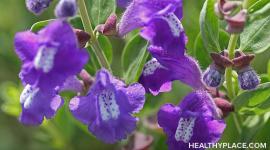
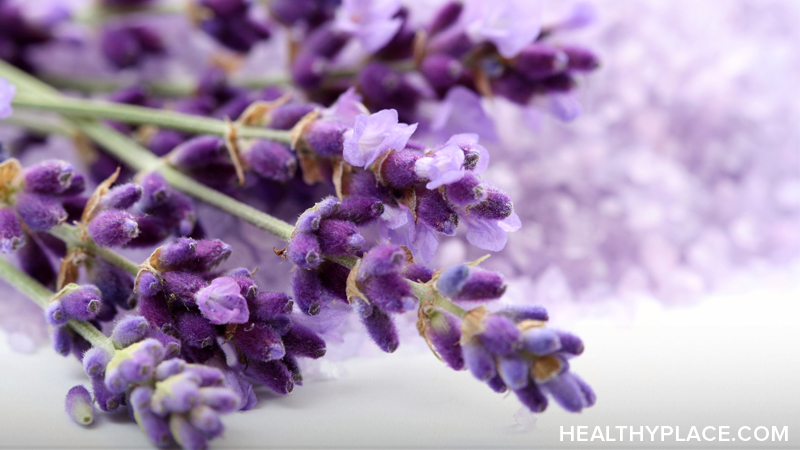
The oil in lavender's small, blue-violet flowers is what gives the herb its fragrant scent. The flowers are arranged in spirals of 6 to 10 blossoms, forming interrupted spikes above the foliage.
Parts Used
Essential oil is extracted from the fresh flowers of the lavender plant and used for medicinal purposes.
Medicinal Uses and Indications
Although professional herbalists and aromatherapists use lavender to treat a variety of conditions (described later), clinical studies thus far have only demonstrated benefit for insomnia and alopecia (hair loss).
Lavender for Insomnia and Reduced Anxiety
In folklore, pillows were filled with lavender flowers to help the restless fall sleep. There is now scientific evidence to suggest that aromatherapy with lavender slows the activity of the nervous system, improves sleep quality, promotes relaxation, and lifts mood in people suffering from sleep disorders. Studies also suggest that massage with essential oils, particularly lavender, may result in improved sleep quality, more stable mood, increased mental capacity, and reduced anxiety. In one recent study, participants who received massage with lavender felt less anxious and more positive than participants who received massage alone. Lavender flowers have also been approved by the Commission E in Germany as a tea for insomnia, restlessness, and nervous stomach irritations.
Alopecia areata
In one study of 86 people with alopecia areata (a disease of unknown cause characterized by significant hair loss, generally in patches), those who massaged their scalps with lavender and other essential oils daily for 7 months experienced significant hair re-growth compared to those who massaged their scalps without the essential oils. It is not entirely clear from this study whether lavender (or a combination of lavender and other essential oils) was responsible for the beneficial effects.
Other including Lavender for Headaches and Exhaustion
Aromatherapists also use lavender as a tonic in inhalation therapy to treat headaches, nervous disorders, and exhaustion. Herbalists treat skin ailments, such as fungal infections (like candidiasis), wounds, eczema, and acne, with lavender oil. It is also used externally in a healing bath for circulatory disorders and as a rub for rheumatic ailments (conditions affecting the muscles and joints). One study evaluating essential oils, including lavender, for treating children with eczema concluded that the oils added no benefit to therapeutic touch from the mother; in other words massage with and without essential oils was equally effective in improving the dry, scaly skin lesion.
Available Forms
Commercial preparations are made from dried flowers and essential oils of the lavender plant. These preparations are available in the following forms:
- Aromatherapy oil
- Bath gels
- Extracts
- Infusions
- Lotions
- Soaps
- Teas
- Tinctures
- Whole, dried flowers
How to Take It
Pediatric
- Oral use in children is not recommended.
- May be used topically in diluted concentrations to treat skin injuries.
- May be used as aromatherapy for children.
Adult
The following are recommended adult doses for lavender:
- Internal use: Tea: 1 to 2 tsp whole herb per cup of water.
- Tincture (1:4): 20 to 40 drops three times a day.
- Inhalation: 2 to 4 drops in 2 to 3 cups of boiling water; inhale vapors for headache, depression, or insomnia.
- Topical external application: lavender oil is one of the few oils that can be safely applied undiluted. For ease of application, add 1 to 4 drops per tablespoon of base oil.
Precautions
The use of herbs is a time-honored approach to strengthening the body and treating disease. Herbs, however, contain active substances that can trigger side effects and interact with other herbs, supplements, or medications. For these reasons, herbs should be taken with care, under the supervision of a practitioner knowledgeable in the field of botanical medicine.
Although side effects are rare, some individuals may develop an allergic reaction to lavender. Nausea, vomiting, headache, and chills have also been reported in some individuals following inhalation or absorption of lavender through the skin.
Pregnant and breastfeeding women should avoid using lavender.
Possible Interactions
Lavender and CNS Depressants
Although there are no known scientific reports of interactions between lavender and conventional medications, this herb could potentially enhance the effects of central nervous system depressants including narcotics (such as mophine) for pain and benzodiazepines (such as lorazepam, diazepam, and alprazolam) for anxiety and sleep. People taking these medications should consult a healthcare provider before trying lavender.
back to: Herbal Treatments Homepage
Supporting Research
Anderson C, Lis-Balchin M, Kifk-Smith M. Evaluation of massage with essential oils in childhood atopic eczema. Phyother Res. 2000;14(6):452-456.
Blumenthal M, Goldberg A, Brinckmann J. Herbal Medicine: Expanded Commission E Monographs. Newton, MA: Integrative Medicine Communications; 2000:226-229.
Cauffield JS, Forbes HJ. Dietary supplements used in the treatment of depression, anxiety, and sleep disorders. Lippincotts Prim Care Pract. 1999; 3(3):290-304.
Diego MA, Jones NA, Field T, et al. Aromatherapy positively affects mood, EEG patterns of alertness and math computations. Int J Neurosci. 1998;96(3-4):217-224.
Ernst E. The Desktop Guide to Complementary and Alternative Medicine: An Evidence-Based Approach. Mosby, Edinburgh; 2001:130-132.
Ghelardini C, Galeotti N, Salvatore G, Mazzanti G. Local anaesthetic activity of the essential oil of Lavandula angustifolia. Planta Med. 1999;65(8):700-703.
Gyllenhaal C, Merrit SL, Peterson SD, Block KI, Gochenour T. Efficacy and safety of herbal stimulants and sedatives in sleep disorders. Sleep Medicine Reviews. 2000;4(2):1-24.
Hardy M, Kirk-Smith MD. Replacement of drug treatment for insomnia by ambient odor. Lancet. 1995;346:701.
Hay IC, Jamieson M, Ormerod AD. Randomized trial of aromatherapy. Successful treatment for alopecia areata. Arch Dermatol. 1998;134(11):1349-1352.
Lis-Balchin M, Hart S. A preliminary study of the effect of essential oils on skeletal and smooth muscle in vitro. J Ethnopharmacol. 1997;58(4):183-187.
Motomura N, Sakurai A, Yotsuya Y. Reduction of mental stress with lavender odorant.
Percept Mot Skills. 2001;93(3):713-718.
Schulz V, Hansel R, Tyler V. Rational Phytotherapy: A Physicians' Guide to Herbal Medicine. 3rd ed. Berlin, Germany: Springer; 1998:74-75.
White L, Mavor S. Kids, Herbs, Health. Loveland, Colo: Interweave Press; 1998:34.
The publisher does not accept any responsibility for the accuracy of the information or the consequences arising from the application, use, or misuse of any of the information contained herein, including any injury and/or damage to any person or property as a matter of product liability, negligence, or otherwise. No warranty, expressed or implied, is made in regard to the contents of this material. No claims or endorsements are made for any drugs or compounds currently marketed or in investigative use. This material is not intended as a guide to self-medication. The reader is advised to discuss the information provided here with a doctor, pharmacist, nurse, or other authorized healthcare practitioner and to check product information (including package inserts) regarding dosage, precautions, warnings, interactions, and contraindications before administering any drug, herb, or supplement discussed herein.
back to: Herbal Treatments Homepage
APA Reference
Staff, H.
(2008, December 12). Lavender, HealthyPlace. Retrieved
on 2024, April 25 from https://www.healthyplace.com/alternative-mental-health/herbal-treatments/lavender